
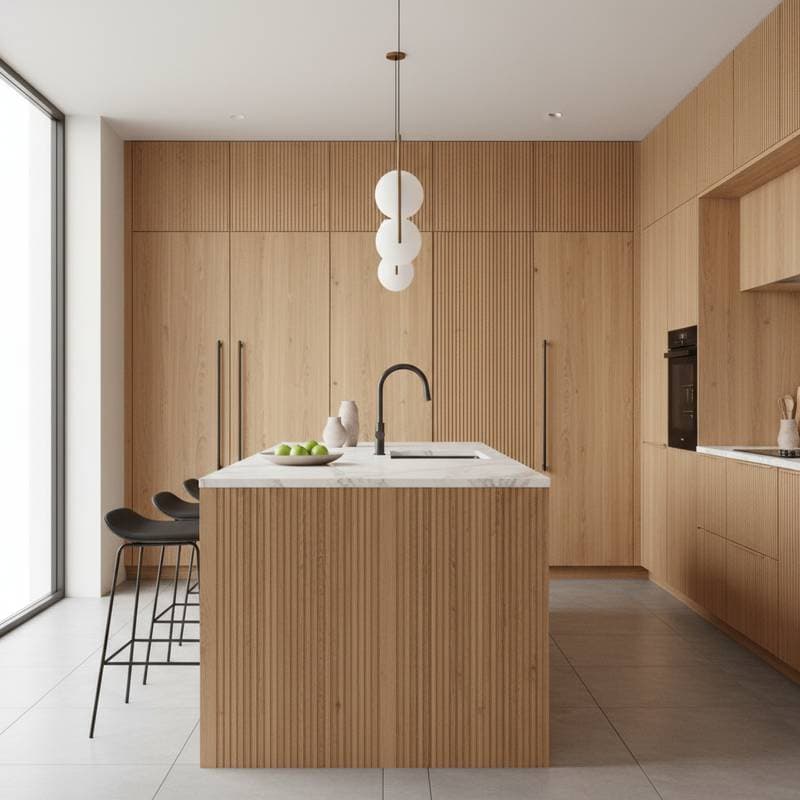
Ribbed Oak: The 2026 Kitchen Texture Trend That Changes Everything
Ribbed oak cabinetry reshapes kitchen design. Vertical texture, previously a subtle feature on furniture fronts, now defines modern kitchens. Designers value this element for the manner in which light interacts with its surface and elevates plain oak to a tactile centerpiece. Homeowners benefit from the added warmth, depth, and handcrafted sensation that complements sleek and minimalist environments.
At a Glance
Who lives here: A couple and their two children
Location: Portland, Oregon
Size: 360 square feet (33.4 square meters)
Design team: Lorne Studio Design
Photographer: Casey Hiller
Before the Remodel
The original kitchen featured standard slab oak fronts with a heavy stain that obscured the grain. Upper cabinets extended to the ceiling, creating a sense of confinement. A peninsula disrupted flow between the cooking and dining areas. Storage existed in sufficient quantity but lacked organization, with deep drawers that concealed small items and inaccessible corner units.
The homeowner noted, “We loved the oak, but it felt flat and lifeless. There was no rhythm or texture, just a wall of wood.”
After the Remodel
The renovation substituted every smooth cabinet face with vertical ribbed oak panels. This texture disrupts the flat plane of the cabinetry and captures natural light from the expanded window wall. Designers eliminated upper cabinets on one wall, installing open shelves in matching oak tones. The ribbed pattern unifies the island base, tall pantry, and integrated refrigerator panels.
The layout evolved into a U-shape, expanding counter space by 24 inches (60.9 centimeters). A new island offers 42-inch (106.6 centimeter) clearance on all sides, facilitating smooth family cooking. Lighting incorporates recessed ceiling fixtures, under-cabinet strips, and oak-trimmed pendants positioned over the island to blend task illumination with ambient glow.
Lead designer Mia Lorne explained, “The ribbed oak imparts a sculptural quality to the cabinetry. It softens geometric lines and makes the kitchen radiant as sunlight traverses the grooves.”
Design Details
- Cabinet fronts: Solid white oak with 1/4-inch (0.6 centimeter) ribs spaced evenly, finished with matte clear oil.
- Hardware: Edge-pull channels in powder-coated soft bronze.
- Countertops: Honed quartzite featuring subtle veining that contrasts the oak tone.
- Backsplash: Full-height quartzite slab rising 24 inches (61 centimeters) above the counter.
- Lighting: Three layers, including recessed LED downlights, under-cabinet strips, and dimmable pendants with oak detail rings.
- Storage: Pull-out spice racks, vertical tray dividers, and deep drawers for pots equipped with tiered inserts.
- Flooring: Wide-plank oak in a slightly lighter tone than the cabinetry for subtle contrast.
Photographs capture the ribbed fronts as they intercept daylight along their ridges. Vertical lines guide the gaze upward, amplifying the perception of the nine-foot (2.7 meter) ceiling height. Uninterrupted ribbing on the island conceals appliance panels for a seamless appearance.
Why Ribbed Oak Succeeds
Ribbed oak merges craftsmanship with technology. CNC milling ensures precise repetition of fine grooves, while the inherent variation in oak grain maintains surface vitality. The ribs scatter reflections and resist fingerprints more effectively than smooth lacquered surfaces, proving practical for high-use kitchens.
Designers employ ribbed oak to introduce rhythm without excessive pattern. This texture harmonizes with solid-surface counters and matte walls. It infuses neutral palettes with movement and dimension. In well-lit settings, it generates soft shadow lines, providing understated elegance absent in slab cabinetry.
Cabinetry specialist Jordan Kline observed, “Texture serves as the new color. Clients seek tactile interest rooted in authenticity. Ribbed oak achieves this through honest material expression.”
A Larger Design Evolution
The popularity of ribbed oak mirrors a broader emphasis on natural tactility in interiors. High-gloss smooth cabinets prevailed for years, yet homeowners now prioritize warmth and genuineness. The ribbed profile recalls mid-century tambour doors while integrating seamlessly into modern configurations.
Applications extend beyond kitchens to bathroom vanities, media consoles, and wall panels. Ribbed oak unifies spaces and preserves visual serenity. In open-plan homes, it delineates zones without introducing bulk or stark color differences.
Insights on Fabrication
Cabinetmakers emphasize that ribbed oak demands accurate milling and finishing. Uniform ribs require clean edges and consistent depth. Fabricators typically select solid oak or thick oak veneer over stable MDF cores to avoid warping. Finishing involves brushing along the grain to clear dust from grooves prior to sealing.
Small workshops route doors using jigs, although CNC machines enhance efficiency and precision. Crisp valleys between ribs ensure the texture remains distinct beneath finish layers. Oak’s durability and open grain suit this process ideally. White oak particularly withstands moisture and accepts finishes uniformly. Some fabricators wire-brush or sandblast to highlight grain before ribbing, deepening the effect.
Practical Advice for Homeowners
Ribbed oak cabinetry incurs 15 to 25 percent higher costs than flat-panel oak due to additional milling and finishing. Maintenance remains straightforward: dust grooves with a soft cloth regularly. For thorough cleaning, employ a vacuum with a soft brush attachment to eliminate buildup.
To implement effectively, restrict ribbed surfaces to one or two focal areas to prevent visual overload. Pair lower ribbed cabinets with smooth uppers or open shelving for equilibrium. Strategic lighting, such as grazing beams, accentuates shadow play. Matte finishes sustain tactile appeal, whereas gloss can diminish it.
Three Applications for Ribbed Oak in Your Home
1. Full-Wrap Kitchen Islands
Encase an island in ribbed oak to form a sculptural anchor. Vertical lines highlight craftsmanship and draw attention. A clear matte finish accentuates the grain. This method excels in open plans where the island remains visible from various viewpoints.
2. Accent for Pantry or Tall Units
Apply ribbed oak to floor-to-ceiling pantries or refrigerator walls for targeted texture. Panels elongate the wall visually. When combined with minimalist countertops, they establish harmony between intricacy and restraint.
3. Blended Material Approaches
Integrate ribbed oak with painted cabinets or stone for dynamic contrast. Soft white or pale gray uppers allow the oak to prominence. In compact kitchens, limit ribbing to drawer fronts to incorporate the style without overwhelming the area.
Essential Insights
- Ribbed oak adds depth and warmth to straightforward kitchens.
- It engages natural light dynamically, producing subtle daily variations.
- Precise fabrication and finishing preserve rib crispness and longevity.
- Apply in moderation alongside smooth counters and matte elements.
- Lighting orientation significantly shapes texture perception.
Experiencing the Design Daily
The homeowners describe their updated kitchen as serene and individualized. Morning light traces the ribbed fronts, unveiling tonal nuances. Each interaction underscores the material’s authenticity. Enhanced layout and storage streamline cooking and cleanup.
The homeowner reflected, “It feels handcrafted yet modern. We sought a design that matures gracefully, and the oak enriches with regular use.”
Credits
Design team: Lorne Studio Design
Cabinet fabricator: North Coast Woodworks
Photographer: Casey Hiller
Lighting supplier: Beacon Home Supply
Stone fabricator: Granite & Grainworks
Preserving the Design
Ribbed oak cabinetry responds well to careful maintenance. Maintain steady humidity to minimize wood expansion. Address spills promptly to protect the finish. Reapply oil to surfaces every few years with natural finishes. Steer clear of harsh chemicals that might dull texture or clog grooves.
Inspect hinges and drawer glides yearly for optimal function. The detailed surfaces accumulate dust on edges, so incorporate light brushing into cleaning routines to retain sharpness.
The Enduring Appeal
Ribbed oak marks a transition to kitchens that emphasize craft over mass production. Its tactile rhythm encourages interaction and tempers the gaze, anchoring spaces after an era of glossy minimalism. Woodworkers gain avenues to demonstrate skill and material knowledge. Homeowners receive a refreshed, lasting aesthetic that merges modern contours with organic warmth.
Thoughtful integration elevates ribbed oak cabinetry from functional elements to artistic highlights. The texture honors wood’s inherent qualities and the artisan’s expertise, crafting a visual narrative that endures across time.