
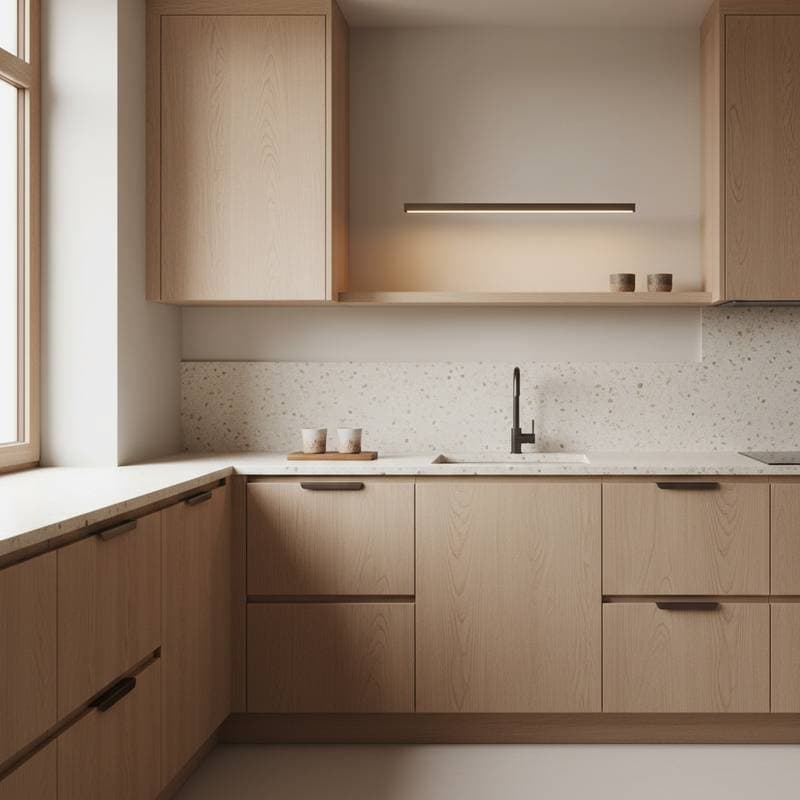
Why Japandi Redefines 2026 Cabinet Hardware Trends
Cabinet hardware once served as prominent accents in millwork, adding bold punctuation to kitchens and bathrooms. The emergence of Japandi introduces a quieter approach. This style combines Japanese restraint with Scandinavian warmth, emphasizing touch over shine and craftsmanship over excess. In cabinetry, Japandi reshapes aesthetics, tactile experiences, and functionality.
Japandi hardware prioritizes subtle details that reveal themselves gradually. Features such as small radiused edges, brushed finishes, and handleless systems convey a sense of stillness. This evolution extends beyond visuals to influence daily interactions with living spaces.
At a Glance
Style: Japandi minimalism enhanced by tactile warmth
Core materials: Solid oak, ash, maple, and matte metal finishes
Common hardware types: Integrated pulls, hidden channels, recessed handles, and push-to-open systems
Design philosophy: Quiet functionality, soft geometry, and nature-inspired textures
Why it matters: Cleaner sightlines, reduced maintenance, and enhanced mindful user experiences
The Shift Toward Invisible Hardware
Japandi design unites traditions that value simplicity and skilled craftsmanship. Japanese influences contribute wabi-sabi principles of calm and appreciation for imperfection. Scandinavian elements introduce practicality and natural light. In cabinetry applications, this blend promotes handleless drawers, seamless door fronts, and linear pulls that align with wood grain patterns.
Designers observe that clients appreciate the uncluttered appearance and remain committed for the ease of use. "You still need something to hold, but it should feel like part of the cabinet, not an accessory," stated interior designer Lina Cho of Studio Aki. Her projects often incorporate wood-on-wood channels paired with brushed bronze trims that reflect light subtly without harsh glare.
Integrated hardware also addresses practical concerns. Designs with fewer protruding elements enhance safety in confined kitchen areas and minimize visual distractions along extended cabinet runs. Fabricators must employ precise routing techniques and ensure consistent grain matching, which elevates craftsmanship while decreasing waste from hardware packaging and transportation.
Material Choices That Anchor the Look
Japandi hardware trends rely on authentic materials and subdued color palettes. While matte black previously prevailed in minimalist settings, it now gives way to options like muted brass, satin-finished stainless steel, or raw wood pulls sourced from the same material as cabinet doors. These selections maintain emphasis on form and tactile qualities.
A frequent pairing involves blond oak cabinetry with thin recessed pulls in aged brass or powder-coated taupe. The gentle color contrast evokes a textile-like sensation. Designers refer to this as "visual quiet," where hardware complements the overall architecture rather than competing for attention.
Cabinetmaker Rafael Torres of Northline Workshop noted, "Japandi hardware requires more patience in fabrication. Every edge radius and reveal line must feel intentional. The reward is a piece that looks handcrafted but lives easily day to day."
Function Meets Flow
Beyond aesthetics, Japandi hardware trends prioritize functionality. Continuous lines and concealed pulls facilitate better circulation, particularly in compact kitchens or open-plan layouts. Without knobs that snag clothing or disrupt counter edges, workspaces appear more expansive and secure.
Push-to-open systems and finger-ledges gain popularity, yet designers refine the sensory aspects of these mechanisms. Soft-close runners paired with magnetic catches enable delicate, quiet operations. Users experience a gentle guiding force rather than a sharp mechanical click, aligning with Japandi's emphasis on tactile serenity.
Lighting integration enhances these designs. Under-cabinet LED strips or recessed illuminations accentuate wood grain and shadow lines in handleless configurations. This approach transforms the absence of visible hardware into a deliberate design feature.
How to Apply Japandi Hardware Concepts at Home
Incorporating Japandi principles requires no complete overhaul. Begin by selecting hardware that minimizes clutter and highlights tactile elements. Opt for linear finger pulls, recessed edge details, or flat backplates that blend seamlessly with finishes.
For refinishing existing cabinets, replace glossy hardware with brushed or satin alternatives. When updating cabinet fronts, select materials that display genuine grain patterns. Flat slab doors featuring subtle microbevels replicate the understated luxury of bespoke Japandi millwork.
Maintain consistent spacing, limiting vertical reveals between doors to no more than 3 inches (7.6 cm), to preserve the style's fluid lines. In kitchens and bathrooms, complement these updates with warm neutral surfaces such as soft white quartz, light ash wood, and matte ceramic tiles. This creates a harmonious backdrop where hardware integrates as an architectural element rather than mere decoration.
Design Details
- Hardware profiles: Slim linear pulls, recessed finger channels, or tab pulls integrated into top edges.
- Finishes: Brushed brass, matte black, satin nickel, or stained wood matching door faces.
- Mechanisms: Push-to-open latches with soft-close runners and magnetic catch systems.
- Lighting: Under-cabinet LED strips at 3000K for consistent warm tones.
- Spacing: Finger pull recess depth between 0.6 and 0.8 inches (1.5 to 2 cm) for ergonomic comfort.
- Maintenance tip: Clean with non-abrasive cloths and mild soap to preserve matte finishes. Avoid silicone sprays that introduce unwanted sheen.
The Broader Influence on 2026 Hardware Trends
Japandi extends its reach beyond kitchens to furniture, built-ins, and bathroom vanities. Hardware manufacturers introduce collections featuring hand-carved-like profiles or hybrid materials such as wood and aluminum. The objective remains visual subtlety paired with improved ergonomics.
Modular systems emerge, with pulls milled directly into edge banding or hidden beneath continuous grooves. These require accurate CNC routing yet reduce installation hardware by up to 20 percent. Fabricators and installers benefit from fewer fasteners, faster alignment, and superior finish quality.
Low-sheen coatings gain traction as well. Glossy surfaces clash with matte cabinetry, so subdued finishes resist fingerprints and withstand humidity. This focus on texture rather than shine aligns with Japandi and broader sustainability practices.
Why the Philosophy Resonates
The appeal of Japandi cabinet hardware reflects a cultural shift toward serene, orderly environments. Individuals seek kitchens and bathrooms that promote restoration rather than ostentation. Eliminating visual clutter allows the eye to rest while the hand intuitively locates necessary elements.
Homeowner Maya Nilsen, following her galley kitchen renovation with handleless oak cabinets, shared, "It feels quieter, but also more human. Every surface invites touch instead of calling attention to itself." Her millworker incorporated a continuous recessed track in satin bronze, harmonizing with the faucet for seamless wall elegance.
This emotional connection operates subtly yet effectively. Japandi hardware encourages deliberate engagement, drawing attention to texture, proportion, and light over ornamentation. Such mindfulness transforms ordinary tasks, like opening a drawer, into brief moments of sensory awareness.
Key Takeaways
- Japandi cabinet hardware highlights calm simplicity via integrated and tactile designs.
- Natural materials, muted finishes, and handleless systems ensure uninterrupted sightlines.
- The approach enhances daily flow, improves safety, and simplifies maintenance.
- Precision fabrication and lighting integration raise craftsmanship levels.
- Homeowners achieve this aesthetic through material continuity, matte finishes, and uniform spacing.
Living with Japandi Design
Installed Japandi-inspired cabinetry alters room dynamics during use. Smooth lines from absent protrusions diffuse reflected light gently. Cleaning proves efficient with fewer dust-collecting edges. Over time, natural hand oils enhance patinas on wood and metal, imparting subtle character.
Woodworkers and designers face challenges in traditional detailing with this trend. It demands precision, balanced proportions, and meticulous care. Homeowners gain a more tranquil daily routine in return.