
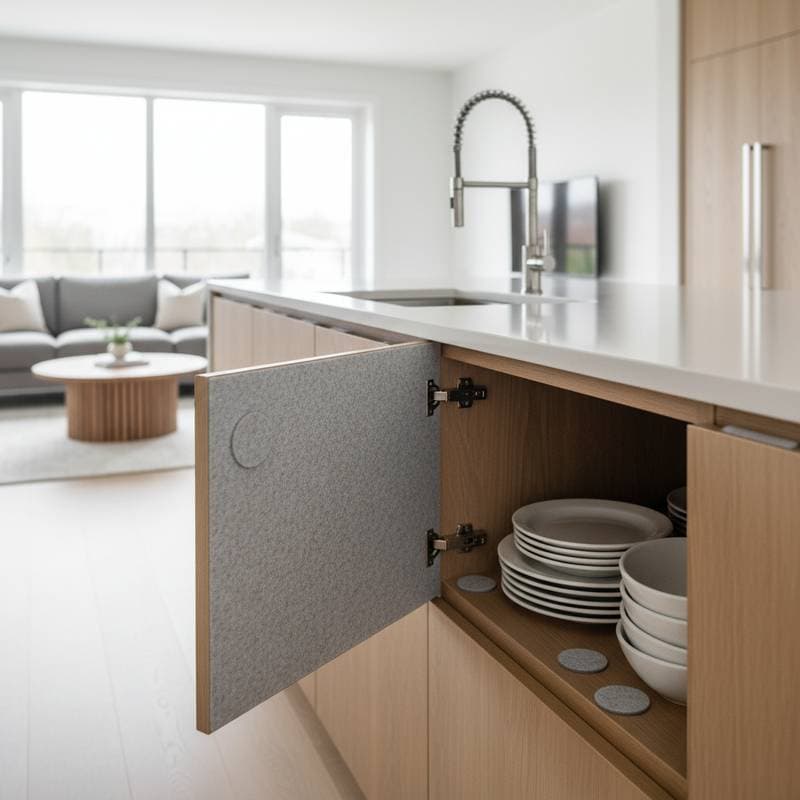
Why Felt Liners Silence Noisy Kitchen Cabinets
Kitchens serve as the heart of many homes, yet persistent sounds from slamming doors and rattling drawers can disrupt this central space. Hard materials like wood and metal amplify these noises, leading to accumulated stress over time. Applying felt liners offers a straightforward remedy that transforms auditory chaos into peaceful operation.
Felt functions as a sound-absorbing material due to its soft texture and fibrous composition. Homeowners often overlook such simple interventions until they experience the immediate relief. This approach not only quiets impacts but also improves the overall ambiance for cooking, dining, and gathering.
Understanding Noise Reduction with Felt
Hard surfaces in cabinets generate sharp sounds upon contact, as vibrations travel quickly through wood frames and resonate in the room. Felt intervenes by cushioning these collisions, converting kinetic energy into minimal heat rather than allowing it to propagate as noise. In environments with echo-prone features like tile floors or granite counters, the benefits become particularly evident.
Studies and user observations indicate reductions of up to 45 percent in perceived noise levels after installation. The material's density creates air pockets that trap sound waves effectively. Consider the parallel with acoustic panels in recording studios; felt achieves similar damping on a domestic scale.
To illustrate, untreated cabinets produce a crisp bang when closed, while felt-lined versions yield a muffled thud. This shift extends beyond doors to include drawer slides and shelf interactions. The result fosters a more inviting atmosphere where family conversations flow without interruption.
Initial test recommendation: Select one cabinet door and apply felt to its interior side. Operate it repeatedly alongside an untreated counterpart to gauge the auditory difference. This hands-on comparison builds confidence before committing to broader application.
Step-by-Step Installation Guide
Proper installation maximizes felt's effectiveness and ensures longevity. Begin by gathering tools: utility knife, measuring tape, cleaning cloths, and adhesive suitable for wood surfaces. Choose felt sheets or rolls in thicknesses of at least 1/8 inch for superior absorption.
First, measure each cabinet's interior dimensions, adding a half-inch margin for trimming. Clean all surfaces with a mild soap solution to remove grease and residue, then allow complete drying. Cut felt pieces to fit shelves, door backs, and drawer bottoms precisely.
Apply adhesive evenly to the felt's backside, or opt for pre-backed varieties for simplicity. Press firmly into place, starting from the center and smoothing outward to eliminate air bubbles. For doors, position felt pads near the closing edge to target impact zones without obstructing hinges.
Allow 24 hours for the adhesive to set before use. Test functionality by opening and closing components multiple times. Adjust any placements that hinder smooth operation, ensuring even coverage without excess overlap.
Pro tip: In high-use areas like base cabinets, reinforce edges with additional adhesive strips. This prevents peeling from frequent handling and maintains consistent noise control.
Evaluating Costs and Budget Options
Felt liners represent an economical alternative to extensive renovations or professional soundproofing. Material expenses vary based on quality and quantity, but overall outlays remain accessible for most budgets.
- Felt Material: High-density options range from $1.50 to $3 per square foot; wool blends offer natural durability, while synthetics provide moisture resistance.
- Adhesives and Tools: Expect $10 to $20 for double-sided tape or spray adhesive; basic cutting tools add minimal cost if not already owned.
- Full Kitchen Estimate: A typical setup covering 20 to 30 square feet totals $60 to $120 in DIY expenses.
- Professional Services: Hiring a specialist incurs $200 to $400, including labor and premium materials.
Bulk purchases from suppliers reduce per-unit costs significantly. Self-adhesive sheets streamline the process and cut adhesive needs. Prioritize investments in durable felt over thin varieties to avoid replacements within a year.
**Budget ** Target noise sources first, such as drawer interiors where utensils clatter. Upper cabinets warrant attention next due to their proximity to head height, amplifying echoes. Phase the project to spread expenses if necessary.
Avoiding Pitfalls in Felt Application
Success hinges on meticulous preparation and material selection. Overlooking key details can diminish results or lead to premature wear.
- Opting for Inadequate Thickness: Thin craft-store felt flattens under pressure, losing absorptive properties rapidly. Select industrial-grade or furniture-specific felt with a minimum density of 0.5 pounds per cubic foot.
- Neglecting Surface Preparation: Residue from cooking oils compromises adhesion. Use isopropyl alcohol for a thorough clean, followed by a dry wipe to ensure a strong bond.
- Impeding Mechanical Parts: Felt near hinges or slides can cause binding. Maintain clearance zones, applying material only to static surfaces like shelf undersides.
- Excessive Coverage: Layers that bunch up invite dust accumulation and moisture retention. Aim for single, flat applications to preserve cabinet alignment.
- Overlooking Internal Sources: External door sounds receive focus, yet internal vibrations from stacked plates persist. Line compartment dividers and back panels for comprehensive quieting.
Addressing these issues upfront prevents frustration. Conduct a trial run on a single unit to identify potential problems early. Document placements with photos for reference during full implementation.
Benefits of a Serene Kitchen Environment
Felt-lined cabinets extend beyond noise control to enhance daily routines. Doors close with a gentle whisper, encouraging mindful habits in a fast-paced household. Reduced clatter allows focus on meal preparation without auditory distractions.
Social interactions improve as ambient sounds fade, making the kitchen ideal for hosting. Families report less tension during shared activities, fostering a more harmonious home. The subtle upgrade elevates perceived quality without altering aesthetics.
Maintenance proves simple: occasional vacuuming keeps felt clean and effective. Over time, this investment yields compounding returns in comfort and enjoyment. Embrace the tranquility that accompanies a thoughtfully quieted space.