
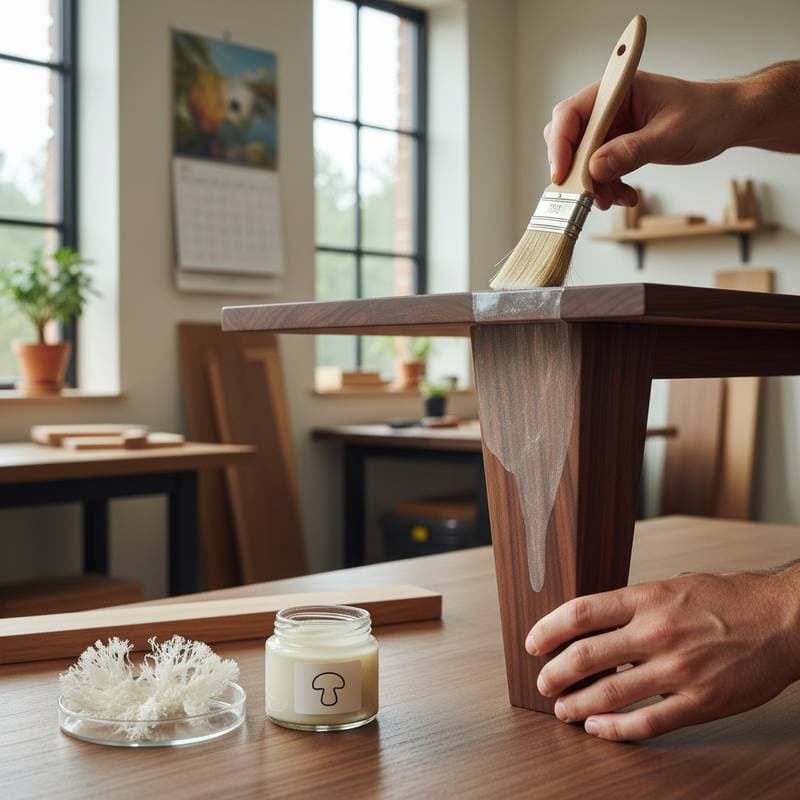
Mycelium: The Eco Wood Finish Redefining 2026 Workshops
A growing number of woodworkers seek finishes that protect their pieces without the fumes or waste associated with synthetic coatings. Mycelium, the root network of fungi, emerges as a living, bio-based finish that safeguards wood through natural means. This innovative material alters perspectives on durability, safety, and sustainability in both small shops and large studios.
At a Glance
| Attribute | Typical Range | Why It Matters |
|---|---|---|
| Cost per quart | $28 to $45 | Matches mid-tier polyurethane while relying on renewable ingredients |
| Application time | 2 to 3 coats, dry in 6 to 8 hours | Aligns with the workflow of oil finishes |
| Average coverage | 125 to 150 sq. ft. per quart | Provides efficiency for furniture and cabinetry projects |
| Shelf life | 9 to 12 months | Compares favorably to most water-based finishes |
What Makes Mycelium a Game Changer
Mycelium finishes incorporate fungal cultures suspended in a plant-based medium. These cultures penetrate wood fibers and bond at a cellular level. The outcome yields a breathable, moisture-resistant coating that reinforces the surface progressively rather than sealing it entirely.
In contrast to petroleum-based varnishes, which emit volatile organic compounds, mycelium coatings cure with minimal odor and without harmful off-gassing. Woodworkers note improved air quality upon adoption. For indoor shops, this shift reduces headaches and ventilation expenses.
The mechanism relies on the fungal network metabolizing briefly after application. It generates natural binding agents like chitin and glucans. These form a flexible layer resistant to cracking and abrasion. Within weeks, the finish settles into a matte or satin sheen that accentuates grain patterns without yellowing.
Action step: Test the finish on a small project, such as a cutting board or side table. Apply thin coats using a natural-bristle brush. Observe the deepening color as the finish cures.
How It Performs Compared to Traditional Finishes
Independent lab data indicate that mycelium coatings achieve a hardness of 2H to 3H on the pencil scale. This level equates to many waterborne polyurethanes. They withstand water rings for up to 30 minutes and exhibit less than 5 percent swelling following submersion tests.
In everyday scenarios, a kitchen countertop treated with mycelium endures spills and moderate heat without peeling or discoloration. The coating provides mild antimicrobial properties, decreasing surface bacteria by approximately 25 percent relative to untreated wood.
The open-pore structure permits wood to expand and contract with humidity fluctuations. This feature minimizes stress on joints in expansive panels. Woodworkers crafting wide tabletops or solid doors benefit from reduced risks of splitting and subsequent repairs.
Action step: Employ a moisture meter prior to finishing. Maintain wood moisture content between 6 and 8 percent to optimize fungal bonding. Higher moisture levels may hinder penetration and longevity.
Costs and Budget
Mycelium finishes range from $28 to $45 per quart, varying by brand and concentration. Each quart covers 125 to 150 square feet, akin to tung or linseed oil. For a medium-sized dining table, anticipate $15 to $20 in material expenses.
Although the per-quart price exceeds basic polyurethane, overall project costs align due to fewer required coats and water-based cleanup. Biodegradable residues dispose easily in compost systems, avoiding solvent disposal fees.
Money-saving strategies:
- Purchase concentrates in bulk and dilute with filtered water at a 1:4 ratio.
- Store sealed containers in a cool cabinet to prolong shelf life.
- Clean brushes with mild soap for reuse, bypassing specialized cleaners.
Where not to cut corners: Allow full curing between coats. The fungal network requires this interval to establish bonds. Hasty application risks a soft, scuff-prone layer.
DIY or Professional Application
Mycelium finishes suit beginners who grasp their distinct timing. They apply via brushing or wiping, similar to oils, yet demand extended drying with steady airflow.
When DIY Makes Sense
Handle small furniture, cabinetry, or art pieces independently if equipped with:
- Basic brushes, lint-free cloths, and gloves.
- A workspace maintaining temperatures above 60 degrees Fahrenheit and moderate humidity.
- Time for 6 to 8 hours of curing per coat.
When to Engage a Professional
For flooring, large installations, or commercial spaces, professionals ensure uniformity. They leverage controlled settings and UV-curing lamps to accelerate stabilization. Labor rates typically fall between $2.50 and $4.00 per square foot, encompassing preparation and application.
How to Select Contractors
Inquire whether candidates:
- Carry liability insurance and furnish references for bio-based coatings.
- Adhere to the ASTM D3023 standard for organic coatings or comparable environmental protocols.
- Supply sample panels prior to committing to full work.
Action step: Solicit a small mock-up on your chosen wood species. Mycelium interacts variably with oak, maple, and walnut based on tannin differences.
Common Mistakes
Novices frequently overlook the living nature of mycelium finishes. These materials differ markedly from inert coatings.
Frequent errors include:
- Over-brushing. Repeated strokes disrupt the fungal network. Apply once and permit settling.
- Neglecting surface preparation. Lingering oils or waxes impede absorption. Sand to 220 grit minimum and wipe with water before the initial coat.
- Disregarding temperature. Cooler environments delay curing and yield tacky areas. Introduce gentle heat or airflow for uniformity.
- Employing metal containers. Fungal cultures react with metal ions, potentially discoloring the finish. Opt for glass or food-grade plastic storage.
Fix: Address uneven sheen by sanding lightly with 400-grit paper and adding one thin coat. This reactivates the surface for seamless integration.
Living with Your Finish
Mycelium-coated surfaces develop gracefully over time. Refresh them through light buffing and a single maintenance coat every few years. The finish accumulates character without flaking, reminiscent of traditionally oiled wood.
Clean with mild soap and a damp cloth. Steer clear of harsh chemicals or alcohol sprays, which may harm embedded fungal cells. As the layer stabilizes, maintenance needs diminish.
Long-term benefits:
- Enhanced air quality within enclosed workshops.
- A renewable, compostable waste process.
- An organic aesthetic that appeals to discerning buyers.
Next Steps for Your Project
To explore this eco-friendly finish, acquire a test kit from a trusted supplier. Monitor drying times, odors, and sheen on sample pieces before scaling to larger endeavors.
Resources and Visual Aids
Consult supplier guides for species-specific application tips. Review user forums for real-world performance insights. Experiment with finish variations to match your project's aesthetic.