
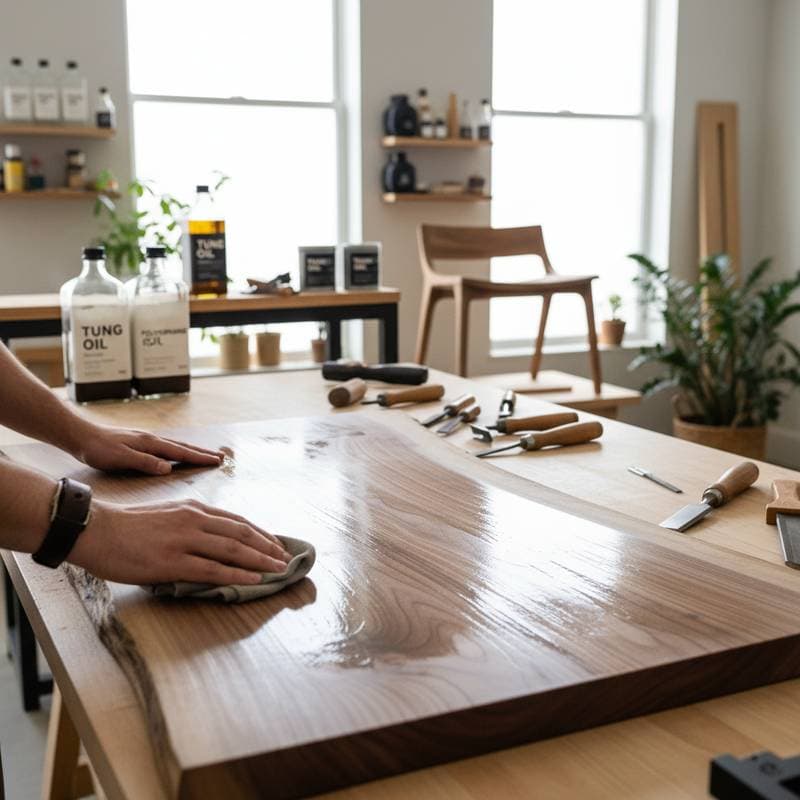
Why Woodworkers Choose Tung Oil Over Polyurethane in 2026
Workshops across North America witness a significant change. Woodworkers who previously relied on polyurethane now select tung oil for their projects. This transition extends beyond appearance. It represents a commitment to finishes that integrate with the wood, promote environmental responsibility, and enhance the sensory experience of craftsmanship.
Tung oil, a staple in traditional applications such as boatbuilding and fine furniture, experiences renewed popularity. It delivers a hand-applied luster that accentuates the wood's natural grain without forming a synthetic layer. Professionals and hobbyists alike appreciate its alignment with contemporary values, including straightforward maintenance, inviting texture, and genuine visual appeal.
At a Glance
Professionals Involved: Independent cabinetmakers, furniture restorers, and home-based woodworkers
Locations: Small-scale operations and personal studios throughout North America
Project Scales: From 20 square feet (1.8 square meters) for items like cutting boards to 600 square feet (55.7 square meters) for installations such as built-in cabinetry
Insights from Experts: Case studies drawn from shop owners and finishing experts
Visual Documentation: Photographs capturing studio setups and application techniques
Challenges with Polyurethane
Polyurethane held prominence in finishing for many years. It provided robust defense against moisture, abrasions, and thermal damage, along with a reflective polish. However, this protection came at a cost. The overlying film often discolored to yellow tones or flaked with age, complicating targeted fixes that demanded full-surface preparation.
A furniture artisan shared, “I valued the safeguard, but I disliked its appearance after several years. The luster seemed disconnected from the wood beneath.”
Environmental concerns amplified these issues. Numerous polyurethane formulas depend on volatile solvents and extended hardening periods, posing ventilation challenges in compact workspaces.
Advantages of Tung Oil
Tung oil presents an alternative approach. Applied in successive thin layers, it soaks into the wood's cellular structure rather than coating the exterior. This yields a subtle matte or satin finish that remains responsive to touch. Renewal occurs effortlessly through additional oil applications, eliminating the need for abrasive removal.
Experts in finishing note the methodical pace enhances satisfaction. Gradual layering fosters profound translucency, which sharpens grain contours and subtle hues. Visual comparisons reveal striking contrasts: maple acquires a cozy radiance, walnut develops nuanced shading, and oak displays its inherent texture without artificial sheen.
This evolution influences perspective. Woodworkers move from mere shielding to active enhancement. They weigh aesthetic allure against upkeep demands, favoring oil's enduring adaptability over polyurethane's singular fortification.
Technical Specifications
Formulation Options:
- Pure tung oil for maximum penetration
- Blends incorporating citrus-based thinners to facilitate absorption
- Low- or zero-VOC variants suitable for indoor environments
Step-by-Step Application:
- Prepare the surface by sanding to 320 grit, particularly for hardwoods like cherry or mahogany.
- Apply thin layers using lint-free cotton cloths or applicator pads.
- Permit 24 hours of drying between applications to ensure complete saturation.
- Polish gently with 0000-grade steel wool to achieve a refined, organic texture.
Performance and Upkeep:
- Achieves water repellency following three to five applications.
- Rejuvenate periodically every two to three years with fresh coats.
- Minor imperfections blend away through simple oil reapplication.
Aesthetic Outcomes:
- Produces a species-dependent satin glow.
- Enhances grain visibility progressively across layers.
- Intensifies natural tones without introducing unwanted yellowing.
Implications of the Transition
Adopting tung oil transcends sentimentality. It empowers greater influence and intimacy with materials. Polyurethane encases surfaces in an even shield, while tung oil permits natural evolution through daily interaction. Surface marks integrate into the overall character, transforming imperfections into valued history.
Finishing specialist Carla Nguyen observed, “Clients seek the authentic sensation of wood, free from synthetic barriers. Tung oil restores that essential bond.”
Practical gains benefit modest operations. Waste management simplifies, as applicators air-dry outside without hazard. The method aligns with deliberate workflows, bypassing complex equipment like spray booths or protective masks.
Implementing Tung Oil in Home Projects
Incorporate tung oil into everyday items such as kitchen boards, countertops, or frequently handled furnishings. The sensory distinction emerges right away: an oiled surface offers a reassuring grip, avoiding the slickness of varnishes. Maintain vibrancy with annual light applications or whenever dryness appears.
For expansive features like staircase risers or integrated shelving, combine tung oil with a polymerized variant in limited proportions. This accelerates setting times while preserving the signature warmth. Conduct preliminary tests on inconspicuous sections to assess uptake and color harmony.
Storage Best Practices
- Preserve oil in airtight glass containers to avert surface hardening.
- Submerge used cloths in water-filled metal bins to prevent combustion risks.
- Mark containers with blend details, as pure and altered formulas degrade at varying rates.
Potential Drawbacks
- Each layer demands a full day of curing.
- Ongoing care replaces permanent encapsulation.
- Resistance to substances like alcohol or harsh detergents proves marginally lower.
Practical Benefits and Forward Outlook
Tung oil equips woodworkers with a versatile, sincere finishing solution. It compensates diligence with layered richness and palpable comfort. While polyurethane suits high-traffic areas like flooring, creators increasingly limit it to functional roles. In all other instances, they embrace oil's understated elegance.
This preference signals a wider appreciation for sensory-immersive treatments. It prioritizes skilled execution and sustained care above expediency. Hand-applying oil invites exploration of each contour and texture, deepening the bond between maker and medium.