
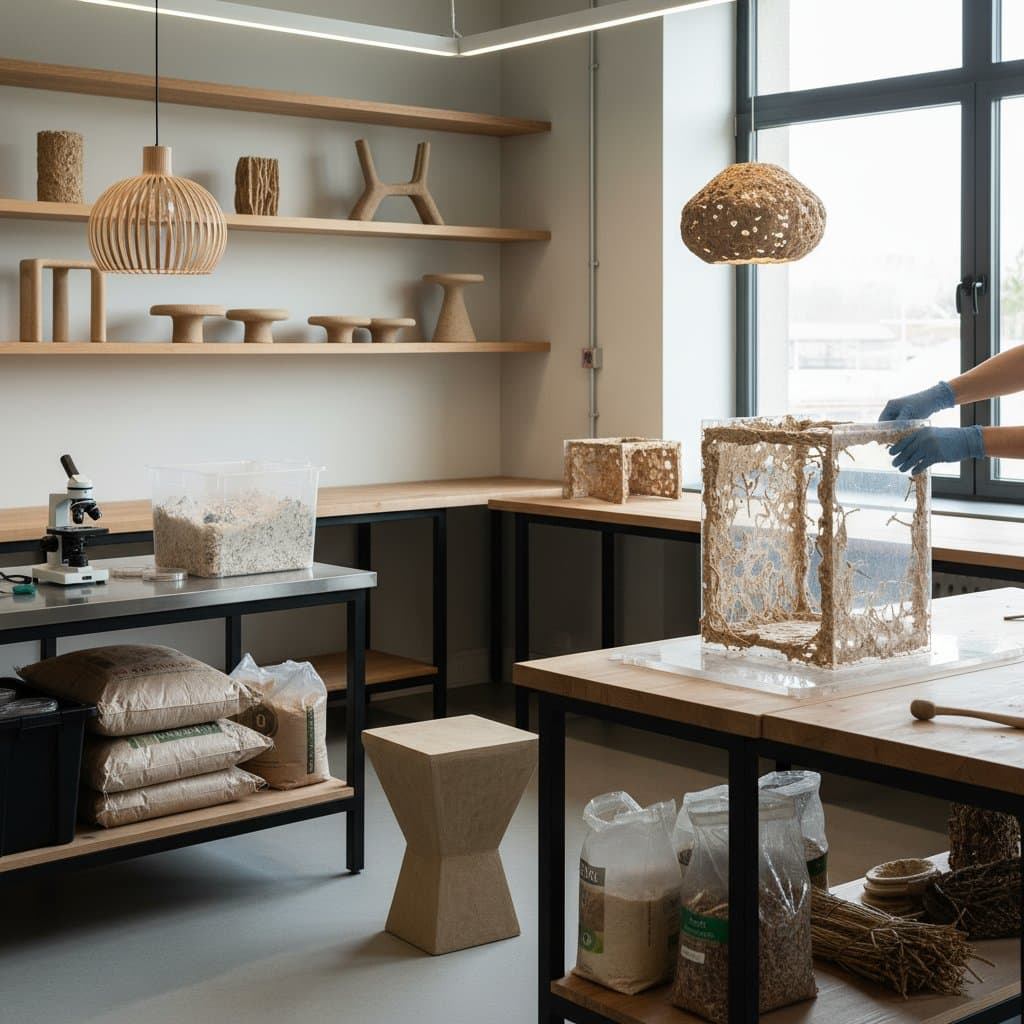
Mycelium Composites: The Future of Sustainable DIY
A chair grown, not built. A lamp that returns to the soil without waste. These concepts sound futuristic, yet they already take shape in garages and small studios through mycelium composites. As makers seek renewable, nontoxic, and easy-to-form materials, mycelium provides a path that combines ancient principles with inventive applications. It transforms agricultural waste into solid, workable components that replace wood, foam, and plastic.
At first glance, mycelium composites resemble lightweight cork. When touched, they feel warm and organic. Once individuals learn to grow this material, they discover its potential to reshape approaches to crafting furniture or decorative panels at home.
Understanding Mycelium Composites and Their Importance
Mycelium forms the root structure of fungi. When provided with agricultural byproducts such as sawdust, hemp hurds, or straw, it grows through them and binds the particles into a dense network. The outcome is a biocomposite that dries and shapes like engineered wood or foam.
Makers essentially allow a living organism to perform the binding. Unlike synthetic resins derived from petroleum, mycelium relies on cellulose and natural sugars, rendering the finished product fully biodegradable. Growth halts through heat treatment, after which the material becomes inert and safe for handling.
Key reasons this process succeeds include the following:
- Hyphae, the threadlike cells of mycelium, penetrate the substrate and form microscopic hooks that secure the material.
- The method demands low energy, typically under 100 degrees Fahrenheit, in contrast to the intense heat required for resin curing or plastic molding.
- It avoids chemical adhesives, thereby minimizing volatile organic compounds in workspaces.
To start, order a one-pound starter kit from suppliers like Ecovative or MycoWorks. These kits generally contain sterilized substrate and mycelium spores, sufficient to fill a one-gallon mold.
Assessing Mechanical Strength and Durability
Individuals often question whether a fungus-based material withstands daily use. The answer is affirmative, though with defined limitations. Laboratory evaluations indicate compressive strengths ranging from 0.5 to 1.2 megapascals, comparable to softwood foams employed in furniture cores. Density and strength vary with the substrate; sawdust blends produce stiffer panels, whereas hemp or straw yields lighter, more flexible blocks.
Enhance surface hardness by applying a thin layer of bio-resin or natural oils. For applications in seating or tabletops, laminate with veneer or seal with shellac. Wall panels and acoustic tiles require no additional coating.
Before structural implementation, test a small offcut. Apply weight incrementally and observe deflection to gauge load capacity for elements like furniture legs or supports.
Evaluating Costs and Planning a Budget
Total expenses hinge on project scale and whether one prepares substrate independently.
- Starter kits range from $25 to $40, adequate for a single small endeavor.
- Bulk spawn costs $15 per pound, capable of inoculating approximately ten pounds of substrate.
- Substrate materials, such as sawdust or straw, cost $0.10 to $0.40 per pound.
- Electricity for drying amounts to about $0.50 per project.
A medium-sized stool requires roughly $12 in materials, versus $25 for engineered plywood. Savings emerge, but time and precision represent tradeoffs. Growth cycles fluctuate by one or two days, and humidity variations influence texture.
Implement these budget strategies:
- Clean and reuse molds with diluted vinegar.
- Incorporate leftover wood shavings from the workshop into the substrate.
- Cultivate multiple small pieces simultaneously to optimize incubation space.
Avoid shortcuts in sterilization, as contaminated substrate fosters mold or bacteria that spoil the batch and produce odors.
Avoiding Common Pitfalls in Cultivation
Even seasoned makers encounter challenges when initiating mycelium composite projects. Fortunately, most issues prove preventable.
- Neglecting sterilization leads to green or black mold overtaking the mycelium. Sterilize and cool substrate before introducing spawn.
- Overpacking molds restricts airflow and impedes growth. Maintain small air gaps to allow the fungus to respire.
- Inadequate drying causes warping or persistent earthy odors. Employ a kitchen thermometer to confirm internal temperatures approach 200 degrees Fahrenheit.
- Disregarding humidity halts development. Cover incubating molds with a damp cloth or plastic lid.
- Applying excessive synthetic coatings undermines compostability. Opt for natural finishes.
For troubleshooting, inspect the surface if growth stalls. A dry crust signals low humidity, while a slimy texture indicates contamination. Discard affected material, prepare fresh substrate, and sanitize tools.
Ensuring Safety, Compliance, and Quality Standards
Mycelium projects seldom necessitate building permits except in structural contexts. Verify local fire-safety regulations for interior applications, as some areas rate mycelium composites as Class C flame spread, akin to untreated wood.
Adhere to these safety protocols:
- Wear gloves while mixing to avert contamination.
- Refrain from inhaling dust generated during sanding.
- Dry pieces completely to inhibit regrowth.
- Store spawn in sealed containers, separate from food areas.
For commercial applications, seek materials evaluated under ASTM E84 for surface burning or ASTM D1621 for compressive strength. These benchmarks confirm reliability when offering furniture or wall panels for sale.
Caring for Finished Mycelium Creations
Treat completed mycelium pieces akin to lightweight wood. Shield them from standing water or prolonged direct sunlight. Remove dust with a dry cloth, and address minor scratches by buffing with fine sandpaper.
Regular maintenance preserves the material's integrity and extends its lifespan. Periodic inspections for moisture damage ensure pieces remain functional and aesthetically pleasing. This approach maximizes the environmental benefits of mycelium by supporting longevity before natural decomposition.
Advancing Your Mycelium Projects
Mycelium composites empower makers to innovate with sustainable practices. By integrating agricultural waste into durable forms, individuals contribute to reduced environmental impact. Experiment with varied substrates to refine techniques, and scale projects from simple décor to functional furniture. This method not only cuts costs but also fosters a deeper connection to eco-conscious craftsmanship.