
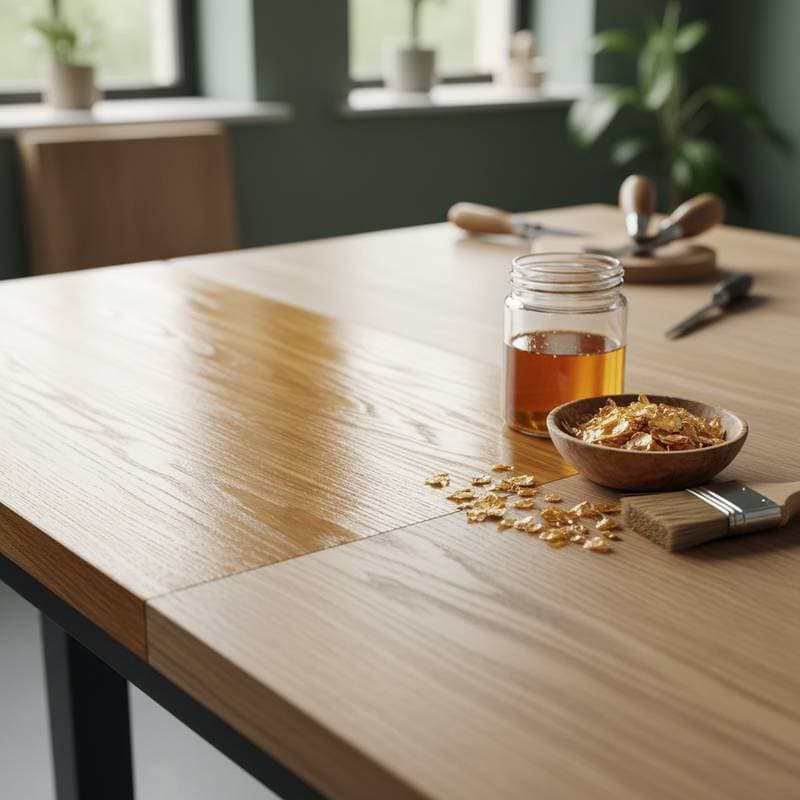
Shellac Flakes Revived: Eco Finish for 2026 Woodwork
The familiar sweet aroma of shellac lingers in traditional workshops, evoking memories of finely crafted cabinets and musical instruments. For decades, synthetic finishes overshadowed this natural option, yet shellac flakes now reemerge to meet contemporary demands for sustainability. This versatile material offers enduring luster while aligning with eco-conscious practices in woodworking.
At a Glance
| Feature | Detail |
|---|---|
| Material | Natural resin from the lac bug |
| Finish Type | Alcohol-soluble, rapid-drying coating |
| Cost | $30 to $45 per pound of flakes |
| Coverage | 300 to 400 square feet per gallon |
| Drying Time | 30 to 45 minutes per coat |
| Eco Rating | Biodegradable, low toxicity, easily repairable |
Why Shellac Flakes Are Back
Contemporary woodworkers favor shellac flakes for their ability to impart a rich, warm patina with minimal environmental footprint. Harvested from resin secreted by lac bugs on trees in tropical forests, the flakes undergo minimal processing before dissolution in alcohol. This renewable source eliminates synthetic additives, supporting certifications like LEED for green building projects.
One standout advantage lies in its repairability. Minor abrasions dissolve seamlessly upon application of fresh shellac, integrating with prior layers without visible seams. Unlike rigid polyurethanes that develop a glossy, artificial sheen, shellac enhances wood's inherent grain, appealing to restorers of vintage pieces.
To explore this, procure flakes from reputable suppliers such as those specializing in conservation-grade materials. Dissolve a small batch and observe how it amplifies the wood's natural tones compared to modern alternatives.
Action Step: Prepare a one-pound cut by dissolving one pound of flakes in one gallon of denatured alcohol. Apply to test samples of oak or maple to evaluate depth and adhesion.
Mixing and Application Basics
Preparing shellac from flakes requires precision but yields quick results. Start with a standard one-pound cut: one pound of flakes in one gallon of denatured alcohol. For smaller projects, scale down to four ounces of flakes per quart of alcohol. Seal the mixture in a glass jar and agitate periodically; full dissolution typically occurs overnight at room temperature.
Application methods vary by project scale. Use a cotton lint-free pad for hand-rubbing on furniture, a natural-bristle brush for broad surfaces, or an HVLP spray gun for even coverage on intricate carvings. Build four to six thin coats, allowing 30 to 45 minutes of drying between each. Sand lightly with 400-grit abrasive to eliminate imperfections before recoating.
Shellac adheres reliably to prepared surfaces like raw wood, existing finishes, or even metal. Its self-leveling property ensures a smooth result, while breathability allows moisture vapor to escape, reducing risks of warping in humid environments.
Pro Tip: Filter the solution through a fine mesh before use to remove undissolved particles, ensuring a flawless application.
Costs and Budget Planning
Budget-conscious creators appreciate shellac's affordability. Flakes cost between $30 and $45 per pound, with denatured alcohol adding $15 to $25 per gallon. A single pound produces approximately one gallon of finish, covering 300 to 400 square feet at typical build-ups.
This positions shellac as economical for boutique operations or hobbyists, often undercutting oil-based varnishes by 20 to 30 percent per project. Factor in longevity: repairable nature extends service life, minimizing replacement expenses.
Money-Saving Strategies
- Select dewaxed flakes for compatibility with overcoats like water-based polyurethanes.
- Prepare batches in quantities usable within 30 days, as alcohol evaporates over time.
- Maintain flakes in moisture-proof containers; they remain viable for years if stored properly.
For larger undertakings, calculate needs based on surface area: measure project dimensions and apply a 10 percent buffer for waste.
DIY or Professional Finish
Amateur enthusiasts find shellac accessible with minimal equipment: a mixing vessel, applicators, and abrasives suffice. Emphasize a dust-free area and methodical layering to achieve professional results. Its forgiving chemistry permits correction of errors by wiping with alcohol and reapplying.
Professionals excel in specialized techniques for premium work. French polishing, involving padded application of hundreds of thin layers with pumice and oil, yields a high-gloss finish ideal for antiques or musical instruments. Engage experts for projects demanding historical accuracy, such as restoring 18th-century paneling.
Regardless of skill level, practice on offcuts to refine technique. Document progress with photos to track improvements in evenness and sheen.
Common Mistakes to Avoid
Inadequate preparation undermines results; always clean and sand surfaces to 220-grit to prevent defects from showing through the clear coat.
Avoid reactive containers like uncoated metal, which can contaminate the mix; opt for glass or high-density plastic instead.
Over-application leads to drips and prolonged drying; maintain coats at 2 to 3 mils thickness using consistent pressure.
Environmental factors matter: apply in spaces above 65 degrees Fahrenheit and below 70 percent humidity to optimize flow and prevent blushing.
Maintaining Shellac Finishes Over Time
Shellac develops a subtle patina that enhances with age, rewarding periodic care. Revive faded areas by buffing in a 1:1 alcohol dilution, restoring vibrancy without full refinishing.
Protect against daily wear by using coasters and trivets; shellac withstands moderate use but softens above 120 degrees Fahrenheit or prolonged wetness.
For enduring performance, inspect annually and address issues promptly. This approach preserves the finish's authenticity while extending its lifespan in home or studio settings.
Next Step: Source flakes in varied hues, from transparent blonde to amber-rich orange, and test on diverse woods to discover personalized effects.