
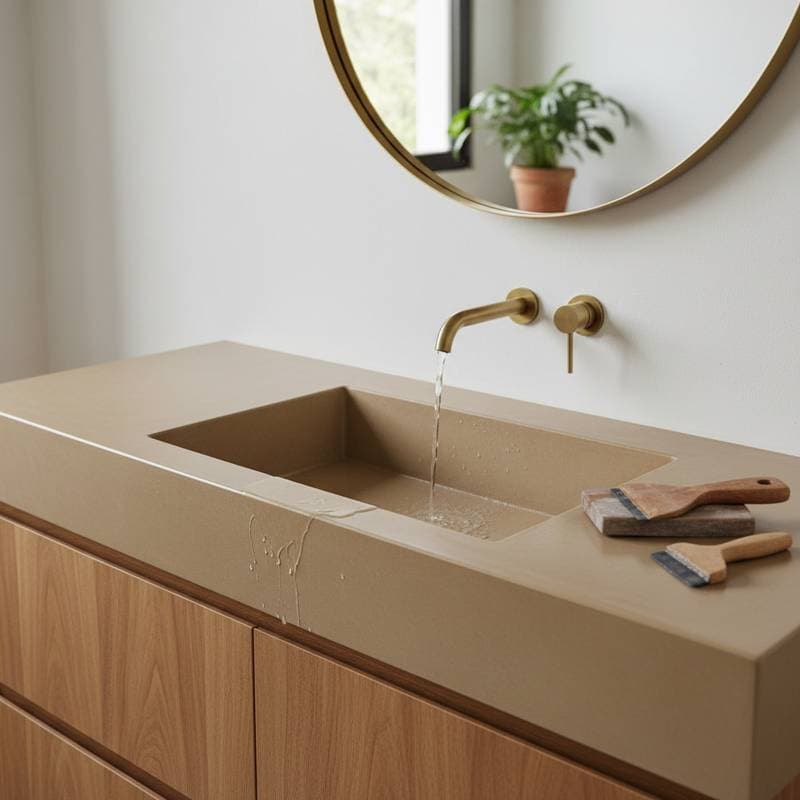
Why Tadelakt Transforms Wood into a Waterproof Masterpiece
Wooden vanities in steamy bathrooms often succumb to moisture damage. Steam infiltrates joints, finishes blister and flake, and swelling distorts once-pristine edges. Forward-thinking builders turn to Tadelakt, a venerable Moroccan plaster originally designed for stone and masonry, to shield wood effectively. Applied with precision, this technique yields a resilient, water-resistant layer that mimics polished stone while preserving wood's inherent warmth.
Plaster on wood might seem counterintuitive. However, targeted preparation, specialized materials, and deliberate timing enable Tadelakt to form an impermeable yet flexible coating. This rivals the performance of epoxy resins or marine varnishes, yet delivers a more inviting, natural texture. Explore the reasons behind its rising popularity among contemporary woodworkers and the steps to integrate it into your workflow.
Understanding Tadelakt's Unique Properties
Tadelakt stands apart from standard gypsum or cement plasters as a lime-based formula. Moroccan artisans developed it centuries ago to line hammams, fountains, and water reservoirs. Its moisture resistance stems from a reaction involving lime, water, and natural soap, producing calcium stearate. This substance fills microscopic voids and establishes a vapor-permeable seal that repels liquid while allowing air exchange.
Adapting Tadelakt for wood addresses the material's natural expansion and contraction in response to humidity. Rigid plasters crack under such stress, but Tadelakt's formulation incorporates flexibility through breathable primers and fiberglass mesh reinforcements. These elements permit subtle movement without compromising integrity. The cured result combines stone's sleek durability with wood's subtle grain visibility beneath.
Key factors contributing to its effectiveness include:
- The lime's microcrystalline formation, which densifies during curing to minimize water uptake.
- Burnishing with soap, which integrates a waterproof calcium soap film directly into the plaster matrix.
- Vapor permeability, which avoids moisture entrapment and subsequent wood decay, unlike impermeable paints or polyurethanes.
Woodworkers value Tadelakt for its toxin-free composition and visual richness, providing depth and endurance that surpass many commercial alternatives.
Step-by-Step Application Methods and Essential Tools
Authentic Tadelakt demands manual application using a trowel and polishing stone, eschewing brushes or rollers for optimal adhesion and finish. Multiple thin layers progressively enhance compactness and luster.
Detailed Application Sequence
-
Prepare the Base: Select kiln-dried, stable wood to minimize warping. Apply a breathable lime-based primer and embed fiberglass mesh for reinforcement. Allow 24 hours to dry fully.
-
Apply the Initial Coat: Use a stainless-steel trowel to spread a 1-millimeter layer evenly. Compact it immediately by pressing with the trowel's flat side, working in 2-foot sections to prevent drying inconsistencies.
-
Add the Build-Up Coat: Once the base sets for 4 to 6 hours, trowel on a 2- to 3-millimeter layer. Feather edges to avoid ridges, and lightly burnish with a trowel as it gains firmness.
-
Compress and Polish: When the surface resists finger pressure, use a smooth river stone to rub in overlapping circles. This action expels air pockets and reveals a subtle gloss. Continue until the texture feels uniform.
-
Seal with Soap: Dilute black olive oil soap in warm water to a milky consistency. Apply sparingly with a sponge, then polish vigorously with the stone. The lime-soap interaction forms the critical waterproof barrier.
-
Allow Full Curing: Protect the piece from drafts and direct water for 7 to 10 days. Carbonation with atmospheric CO2 gradually hardens the plaster to its peak strength.
Essential tools comprise a flexible Venetian trowel for curved surfaces, assorted polishing stones, a fine-mist sprayer for hydration control, natural sponges, and lint-free cloths. For a standard vanity top, anticipate 10 to 15 hours of hands-on work spread over a week, factoring in drying intervals.
Assessing Durability and Ongoing Care
Cured Tadelakt demonstrates remarkable resilience. The lime structure strengthens via ongoing carbonation, absorbing CO2 to form stable calcium carbonate. This process ensures the surface toughens progressively, resisting flaking or delamination common in painted finishes.
Surface imperfections, such as light scratches, respond well to revival techniques. Buff them gently with a soap-dampened cloth to restore smoothness without additional material.
Maintenance practices encompass:
-
Daily cleaning with a wrung-out cloth and diluted mild soap solution.
-
Periodic renewal of the soap layer every 3 to 6 months on frequently touched areas to maintain water repellency.
-
Steering clear of acidic or chemical cleaners, which erode the lime and diminish polish.
In high-moisture applications like sink surrounds, Tadelakt endures 10 to 15 years with minimal intervention. This lifespan matches high-end synthetics, but its breathability supports underlying wood health by facilitating moisture evaporation.
Avoiding Pitfalls in Tadelakt Application
Mastering Tadelakt requires attunement to its deliberate pace. Novices and veterans alike encounter hurdles, but foresight prevents most issues.
Frequent challenges and solutions include:
-
Unstable Substrates: Excessive wood movement fractures the plaster. Mitigate by selecting quarter-sawn lumber and acclimating pieces in the installation environment for two weeks prior.
-
Inadequate Preparation: Poor adhesion leads to delamination. Mandate a thorough sanding to 220 grit, followed by primer and mesh on all projects.
-
Premature Burnishing: Polishing unset plaster disrupts the surface. Test readiness by pressing; proceed only when it yields minimally under moderate force.
-
Incorrect Soap Formulation: Imbalanced mixtures compromise sealing. Prepare a 1:10 soap-to-water ratio, testing on scrap to achieve even absorption without residue.
-
Rushed Curing: Early water exposure dissolves uncarbonated lime. Enforce a minimum 7-day dry period, misting lightly if ambient humidity drops below 50 percent.
Embrace the method's unhurried nature. Patient application infuses each piece with authentic texture and patina, distinguishing it from hurried modern finishes.
Safeguarding and Extending Tadelakt's Performance
Treat Tadelakt-finished wood with the respect due to heirloom craftsmanship. Consistent, light-touch upkeep preserves its protective qualities and aesthetic allure.
Begin by evaluating any new cleaning agents in inconspicuous areas to confirm compatibility. Should the surface lose vibrancy, a fresh soap application and gentle buffing typically revives it fully.
For enduring results, prioritize ambient conditions. Install adequate ventilation in moisture-prone spaces to prevent condensation buildup. Before front-side application, coat the wood's reverse with a permeable sealant to block interstitial dampness without trapping vapor.
Implementing Tadelakt in Your Workshop
Integrate Tadelakt by starting small, such as a mirror frame or shelf, to build confidence. Source quality lime plaster from specialty suppliers and practice on test panels. This approach equips you to tackle larger commissions, delivering clients waterproof wood elements that blend timeless elegance with practical resilience.