
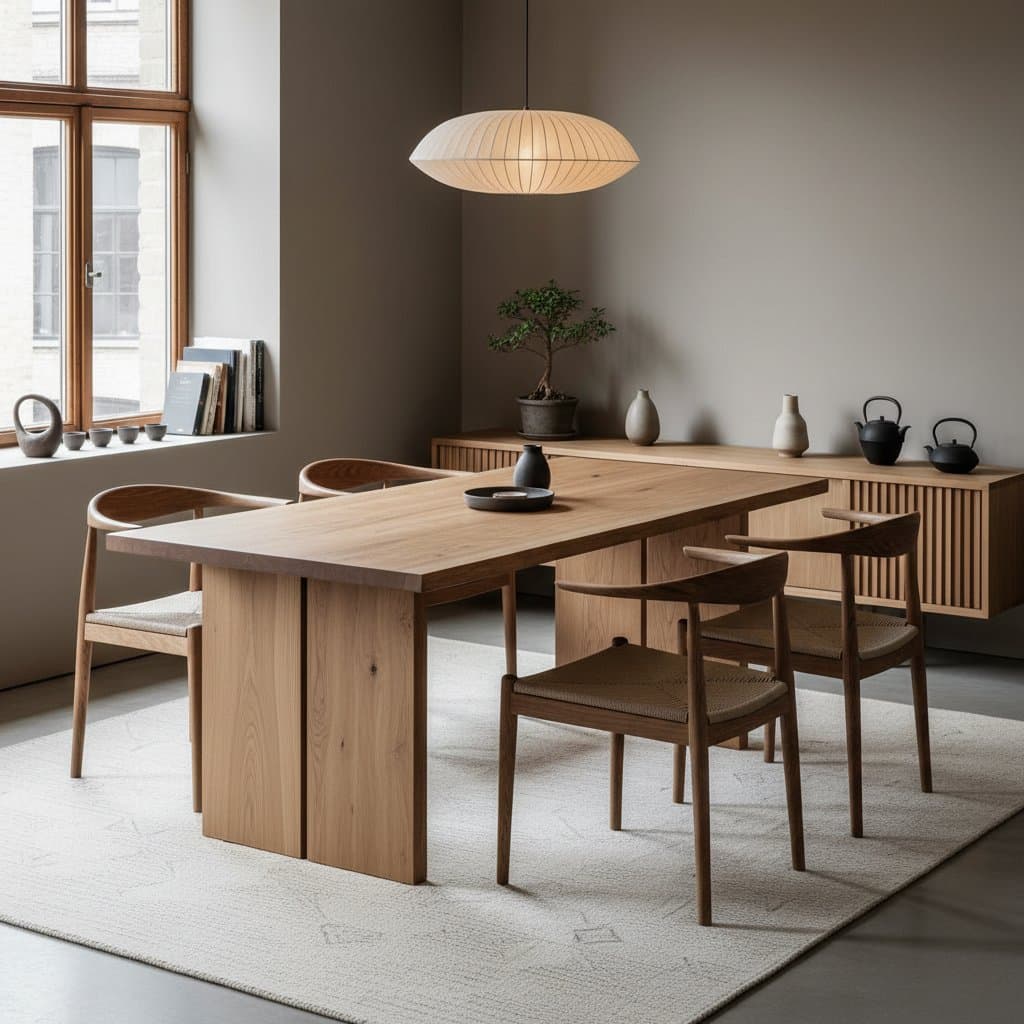
Japandi Minimalism Fuels the 2026 Custom Furniture Boom
A handmade oak dining table with soft edges and a matte finish can sell for over $4,000 in the current custom furniture market. The style driving this demand is Japandi minimalism, a fusion of Japanese restraint and Scandinavian warmth. This approach shapes how furniture makers design, price, and present their work. For woodshops and design studios, the movement represents a sustained shift toward calm, functional living that rewards craftsmanship and ethical sourcing.
At a glance:
| Element | Typical Range | Key Feature |
|---|---|---|
| Custom Japandi Table | $2,800 to $6,000 | Hand-finished oak or ash |
| Lead Time | 4 to 10 weeks | Minimal hardware, natural oils |
| Material Cost | 30 to 45 percent of retail | FSC-certified hardwoods |
| Skill Level | Intermediate to Advanced | Precision joinery and finish control |
The Market Shift Toward Calm Interiors
Interior designers report that clients spend more on statement furniture while reducing the total number of pieces in a room. A living room that once held twelve items may now feature seven, yet each piece carries higher value. This change directly benefits custom shops.
Surveys of boutique furniture buyers show that about 60 percent prefer handmade or limited-run pieces. Half of those buyers cite calm design or natural materials as their top priority. The Japandi effect centers on fewer visual distractions paired with greater tactile quality.
Clients who invest in Japandi furniture typically seek rounded corners and soft edges that feel safe and human. They also want open grain finishes that reveal wood character, balanced proportions with visible joinery, and sustainable materials that carry traceable origins.
Minimalist furniture proves easier to maintain and complements many interior styles. This broad appeal supports resale value and justifies premium pricing.
Photograph finished pieces in uncluttered settings with natural light. Buyers respond to authenticity rather than staged perfection. Keep background styling minimal.
Costs and Budget for Japandi Furniture Production
Japandi furniture involves higher material and labor costs than typical mid-market pieces, yet resale margins stay attractive.
A typical cost breakdown for a solid oak dining table includes lumber at $450 to $700 for FSC-certified white oak. Finishes and consumables range from $100 to $200. Hardware and joinery materials cost $50 to $100. Labor requires 35 to 60 hours valued at $45 to $80 per hour. Retail prices fall between $2,800 and $6,000.
Material costs represent roughly 35 percent of the total price. Buyers pay for the hours spent achieving perfect proportion and surface harmony.
Source lumber directly from local mills to reduce shipping costs. Use offcuts for smaller accent pieces such as stools or trays. Offer standard sizes with custom finish options to control complexity.
Never substitute low-grade plywood or particleboard. Japandi buyers often research materials carefully. Any compromise on quality undermines credibility.
Create transparent cost sheets for each product. Sharing honest pricing logic builds trust and supports higher markups.
Common Mistakes in Japandi Furniture Builds
Even experienced woodworkers can miss subtle details that define the style. The most frequent issues arise from over-design and finish problems.
- Overly complex joinery. Japandi values restraint. Visible dovetails work well, but elaborate patterns distract from calmness.
- Shiny or thick finishes. Polyurethane layers break the natural feel. Use penetrating oils or waxes instead.
- Poor proportion. A table that looks heavy defeats the lightness of the style. Keep top thickness below one inch when possible.
- Mixing wood tones. Consistency matters. Two species with conflicting undertones can clash visually.
- Ignoring ergonomics. Low seating and soft edges define comfort. Straight lines alone do not create serenity.
Simplify designs. Strip back elements until each part serves a clear purpose. Test finishes on sample boards and photograph them under natural light before committing.
Keep a reference board that shows preferred finish sheens and joinery details. This practice maintains consistency across projects and client approvals.
Emotional and Cultural Appeal of Japandi Design
Japandi minimalism connects emotionally because it offers relief from noise and clutter. Each surface tells a quiet story of balance and craft. For homeowners the appeal is both aesthetic and psychological. The furniture feels intentional rather than impulsive.
On a cultural level this style reflects global respect for sustainability and slower living. It invites materials to age gracefully rather than hide wear. That authenticity resonates across generations and markets.
Woodworkers who adopt Japandi principles often report renewed enthusiasm for their craft. The focus shifts from decoration to proportion and from speed to mindfulness. Every curve, joint, and finish becomes a meditation on quality.
Highlight the story behind each piece. Clients appreciate knowing where the wood came from and how it was shaped. Transparency transforms a table into a personal artifact.