
How DIY Batten Ceilings Quiet Noisy Homes
Open floor plans and hard surfaces often cause modern homes to echo. Voices, clattering dishes, and footsteps bounce off drywall, glass, and tile. A DIY batten ceiling offers a refined solution that absorbs and scatters sound waves, creating calm and usable spaces.
Homeowners complete this project with basic tools, common materials, and a weekend of effort. The evenly spaced wood slats introduce visual rhythm and texture overhead. Air gaps and fibers behind each strip soften echoes, blending craftsmanship with acoustic control.
How Battens Control Sound
Sound travels as vibrations through air. Hard, flat surfaces reflect these waves, causing them to overlap and amplify noise. A batten ceiling disrupts this reflection. Wood slats absorb vibrations, while gaps diffuse remaining waves.
Acoustic insulation above the battens enhances this effect, turning the ceiling into a sound trap. Acoustician and designer Liam Ortega emphasizes geometry's role. "Each slat and gap combination scatters different frequencies. Wood dampens mid-range tones, while spacing breaks up higher ones." The outcome is a room that feels hushed yet vibrant.
Project Overview
- Target users: Homeowners refreshing open kitchens, living rooms, or home offices
- Ideal settings: Urban apartments or suburban homes with high ceilings
- Room size range: 200 to 400 square feet (18.6 to 37.2 square meters)
- Core method: Wood battens installed over acoustic backing
- Visual credit: Studio Line Interiors
The Challenge Before Installation
Homes with minimal trim and painted drywall appear bright but sound harsh. One homeowner noted her kitchen felt like "a space where every plate clink echoed across the house." High ceilings, polished concrete floors, and limited soft surfaces exacerbated the issue.
Rugs and curtains provided partial relief, but noise persisted and lingered. Family meals became overwhelming. The goal was an acoustic improvement that preserved the modern aesthetic.
Results After Installation
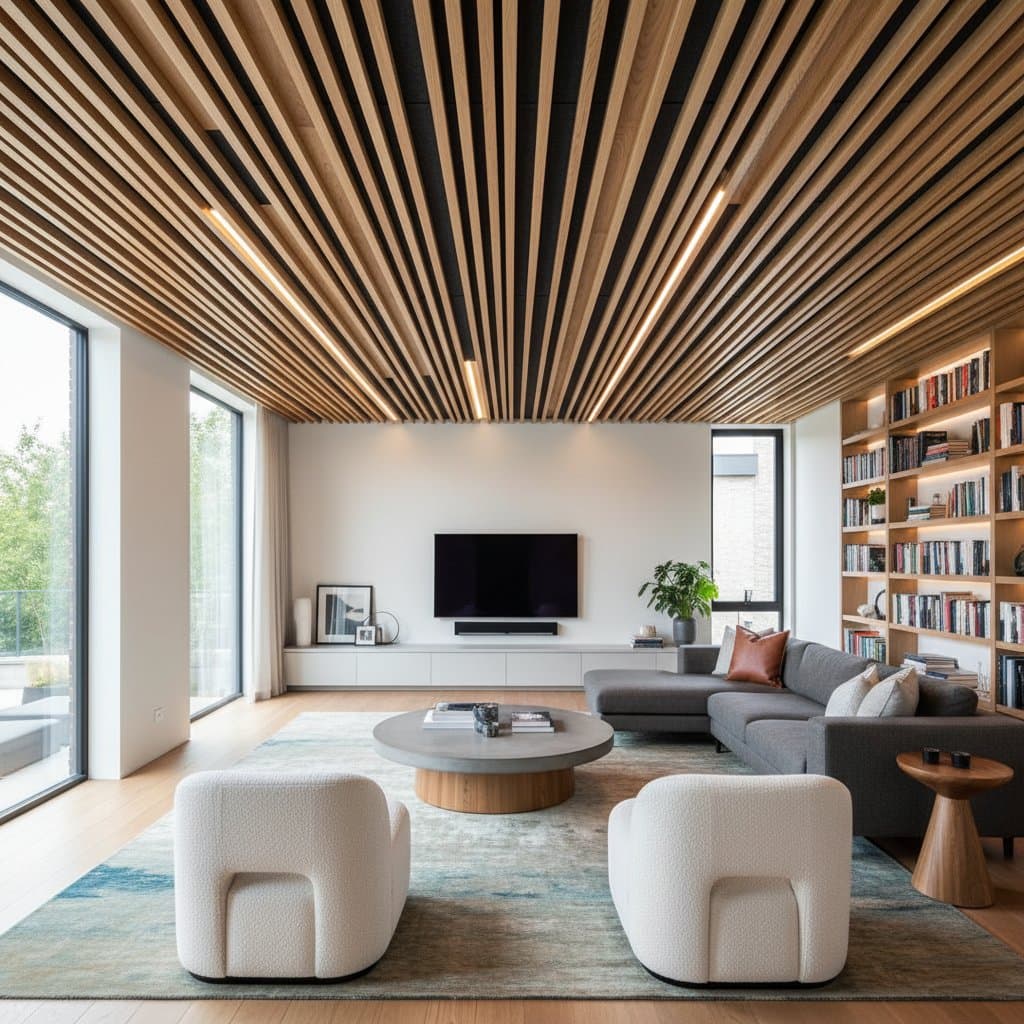
A linear batten ceiling addressed both acoustics and design. The installation featured narrow pine strips, 1.25 inches (3.2 centimeters) wide, spaced 0.75 inches (1.9 centimeters) apart across the full ceiling. Acoustic felt panels, color-matched to the walls, sat behind the battens.
The felt absorbed sound effectively, while battens added depth and direction. Conversations remained contained, music gained warmth, and the kitchen transformed into an intimate space. The wood tone softened stark lower surfaces. During daylight, slats cast shifting shadows, introducing subtle movement.
Designer Margo Lee observed the project's impact on daily life. "You do not realize how much ambient noise drains energy until it is gone," she said. "The battens made the kitchen calmer, and that calm spreads through the house."
Key Design Specifications
- Slat materials: Pine, oak, or walnut with a matte sealant for longevity
- Acoustic layer: Felt panels or recycled wool
- Gap dimensions: 0.5 to 1 inch (1.3 to 2.5 centimeters) for optimal diffusion
- Lighting integration: Recessed LED strips or directional downlights positioned between battens
- Attachment method: Cleats secured to joists every 16 inches (40.6 centimeters)
- Upkeep routine: Monthly dusting or vacuuming with a soft brush
Photographs reveal clean, parallel lines that guide the eye. Battens conceal fixtures and wiring for a seamless plane. LED strips between slats provide even illumination without harsh glare. At night, wood reflects warm light downward, grounding the space below.
Why This Project Suits DIY Enthusiasts
Batten ceilings appear bespoke yet rely on basic carpentry techniques. Cut slats using a table saw or source pre-milled options. Secure a grid of furring strips to the ceiling, then fasten battens with finish nails or clips.
Acoustic panels fit between furring strips before battens attach. Essential tools include a ladder, level, chop saw, and nail gun. Materials remain lightweight, allowing solo work or assistance from one person.
For a 300-square-foot (27.9-square-meter) area, plan for 180 linear feet (54.9 meters) of battens. Budget 5 to 9 dollars per square foot based on wood type and finish. Maintain uniform spacing with a spacer block for consistent gaps. The result elevates the ceiling's perceived height and infuses warmth through natural grain.
Step-by-Step Installation for Acoustic Improvement
- Evaluate the space. Pinpoint echo sources like open ceilings, glass walls, or tile floors.
- Determine coverage. Full installation maximizes dampening; partial sections over high-traffic zones offer benefits.
- Select wood types. Pine absorbs more sound due to its softness; oak introduces subtle brightness.
- Incorporate backing. Position 0.5-inch (1.3-centimeter) acoustic felt or mineral wool above battens.
- Integrate lighting. Pair recessed lights with wall-mounted fixtures to eliminate hot spots.
- Verify performance. Test with speech or music post-installation; tweak spacing or add felt if needed.
Avoiding Installation Errors
- Omitting backing material. Wood provides baseline absorption, but felt amplifies effectiveness.
- Applying glossy sealants. These reflect sound and light, diminishing acoustic benefits.
- Inconsistent gaps. Uneven spacing disrupts visuals and creates acoustic inconsistencies.
- Excessive weight. Use thin battens to prevent strain on the structure.
Expanding Applications
Batten ceilings extend utility beyond living areas. Home offices gain focus by minimizing call echoes. Bedrooms benefit from reduced inter-floor noise and added overhead warmth. Basements conceal ducts and wiring while dampening reverberations.
Café operators and studio professionals adopt similar setups to control noise without bulky alternatives. Modular panels assemble off-site for easy installation. Renters install framed sections that suspend like clouds, removable without damage.
Essential Benefits
- Acoustic design synergy. Wood and gaps minimize reflections for clearer, more comfortable sound.
- Aesthetic enhancement. Linear elements introduce structure, depth, and texture to plain ceilings.
- Accessible construction. Simple cuts and patterns enable broad participation.
- Eco-friendly choices. Reclaimed or FSC-certified woods support sustainability.
- Flexible scale. Targeted panels or complete treatments alter room acoustics noticeably.
Experiencing the Change
Homeowners report a shifted daily environment after installation. Conversations flow naturally, music envelops without distortion, and background hum diminishes. The ceiling integrates into the room's ambiance.
Visually, wood grain and tones break drywall monotony. Lines direct light to highlight space proportions. Paired with soft textiles and natural elements, the design achieves modern restfulness.
Designer Margo Lee summarizes the appeal. "It is more than silence. It is texture, light, and comfort working together." This integration of utility and elegance sustains batten ceilings' popularity across styles.
Preserving the Installation
Maintenance proves straightforward. Dust accumulates on upper edges; remove it with a vacuum's soft brush. Matte sealers require occasional touch-ups via foam brush. Felt panels need rare attention; use mild fabric spray if cleaning arises.