
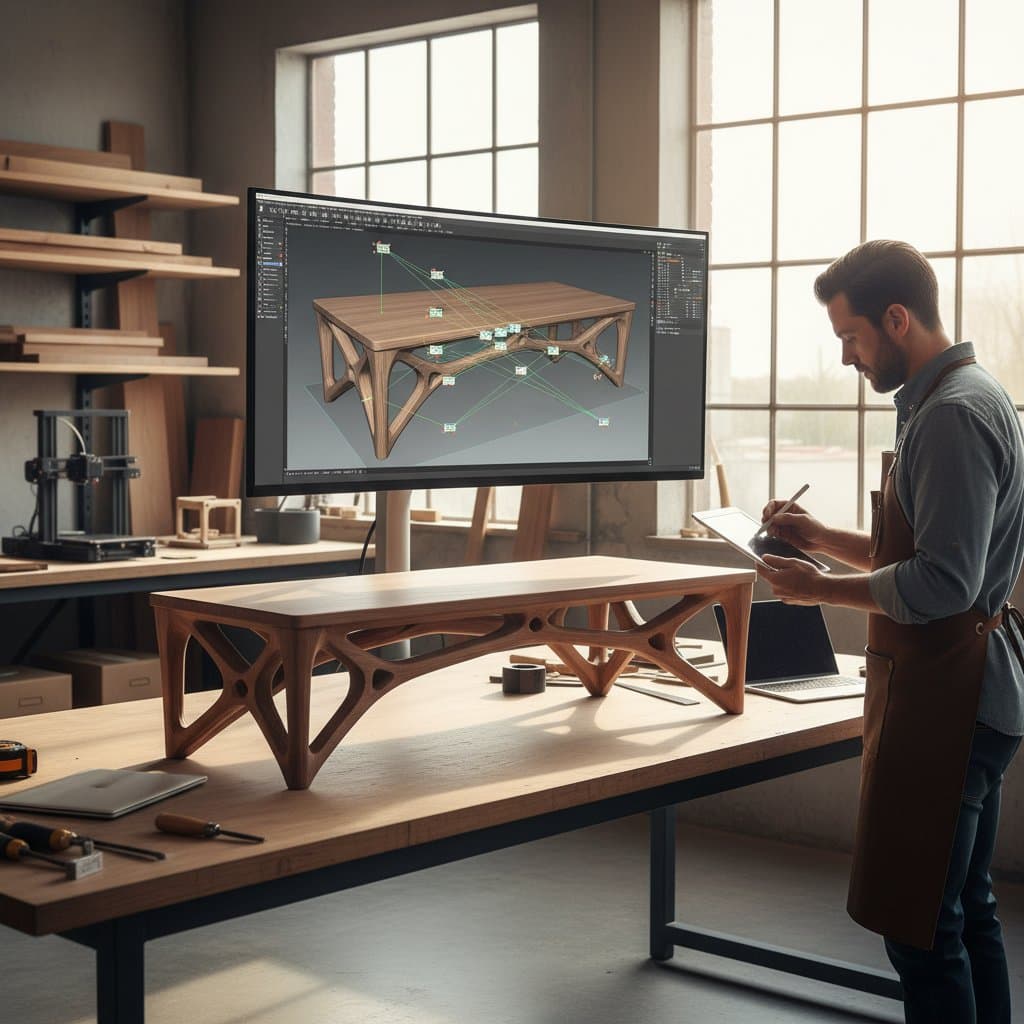
Parametric Tools Revolutionize DIY Furniture Builds
Digital fabrication reshapes woodworking design and assembly processes. Parametric software, previously confined to large-scale architecture and engineering, now reaches individual creators and modest operations. These programs generate adaptable models that respond to parameter modifications, yielding quicker prototypes, enhanced personalization, and reduced material loss.
At a Glance
Who: Solo artisans and boutique workshop teams
Where: In spaces equipped with digital cutting and milling equipment
Size: From petite 24-square-foot (2.2-square-meter) side tables to expansive 200-square-foot (18.6-square-meter) adaptable kitchen units
Design Teams: Collaborative efforts leveraging Grasshopper, Fusion 360, and Rhino
Photographer: On-site captures by Mark Ellis Visual
Traditional Challenges in Design
Conventional DIY furniture efforts relied on rigid blueprints. Artisans adhered to preset schematics or sketched unchanging representations manually. Altering a single measurement demanded complete overhauls of the layout. This approach frequently led to excess scraps and iterative physical adjustments to accommodate unique environments.
"Prior to parametric adoption, client requests for height variations forced me to recreate shelf configurations from scratch," noted furniture artisan Laura Chen. "Such revisions hampered output and constrained options."
The Parametric Advantage
Parametric systems supplant fixed illustrations with interconnected geometric rules. Define links among components, including leg proportions, interval placements, or connection tolerances. A shift in any element triggers immediate reconfiguration across the model.
Consider a compact workshop scenario: An artisan employed parametric scripting for a plywood credenza. Upon a client's demand for expanded media accommodation, the top dimension increased from 60 inches (152.4 centimeters) to 72 inches (182.9 centimeters). The algorithm seamlessly revised door alignments, hardware positions, and reinforcement structures.
This method halves revision durations and bolsters precision for machine operations. Output files integrate directly with CNC mills or laser engravers, eliminating estimation errors.
"The inherent logic of parametric modeling assures seamless assemblies post-scaling," observed digital craftsman Amir Patel. "It operates as if the design anticipates the fabrication."
Essential Design Elements
- Software Platforms: Grasshopper for algorithmic complexity, Fusion 360 for integrated simulation, Rhino for foundational modeling, and SolidWorks for engineering rigor stand as primary choices.
- Core Materials: Baltic birch plywood offers clean cuts, walnut veneer adds warmth, and laminated MDF provides stability for detailed work.
- Connection Techniques: Parametric slots and tabs adapt to sheet thicknesses, typically 0.71 inches (18 millimeters), ensuring snug fits without manual tweaks.
- Illumination Features: LED strips embed via parametric paths that follow edge profiles and divisions.
- Storage Solutions: Adjustable shelving and compartments scale to inputted spatial constraints, such as wall alcoves or floor plans.
- Surface Treatments: Opt for clear matte polyurethane to preserve sharp lines or natural oils to accentuate wood grains and contours.
Adjustments occur entirely in the digital realm prior to material commitment. This capability curtails overproduction and invites rapid prototyping of variants, from proportion trials to texture explorations.
Practical Insights for Implementation
Parametric workflows streamline the journey from concept to completion. They promote modular architectures and bold trials. Develop a single stool framework, then adapt it across scales or functions while preserving structural integrity.
For operations incorporating CNC or laser technologies, these tools fuse heritage techniques with computational exactness. Hobbyists benefit similarly through accessible repositories of communal algorithms. Download a base template, tailor it to your setting, and produce precise patterns swiftly.
The shift demands reorienting from isolated components to relational frameworks. Establish core parameters upfront; the software manages subsequent computations. Initial setup requires focus, yet it delivers consistent reliability for ongoing projects.
Amplifying Craft Through Precision
Designers: Laura Chen Studio, Amir Patel Design Lab
Photographer: Mark Ellis Visual
Parametric integration elevates rather than supplants manual expertise. Freed from repetitive drafting, creators invest in perfecting assemblies and aesthetics. The outcome: Furniture that aligns impeccably with spaces, embodies deliberate aesthetics, and advances the ethos of intelligent, technology-enhanced woodworking.