
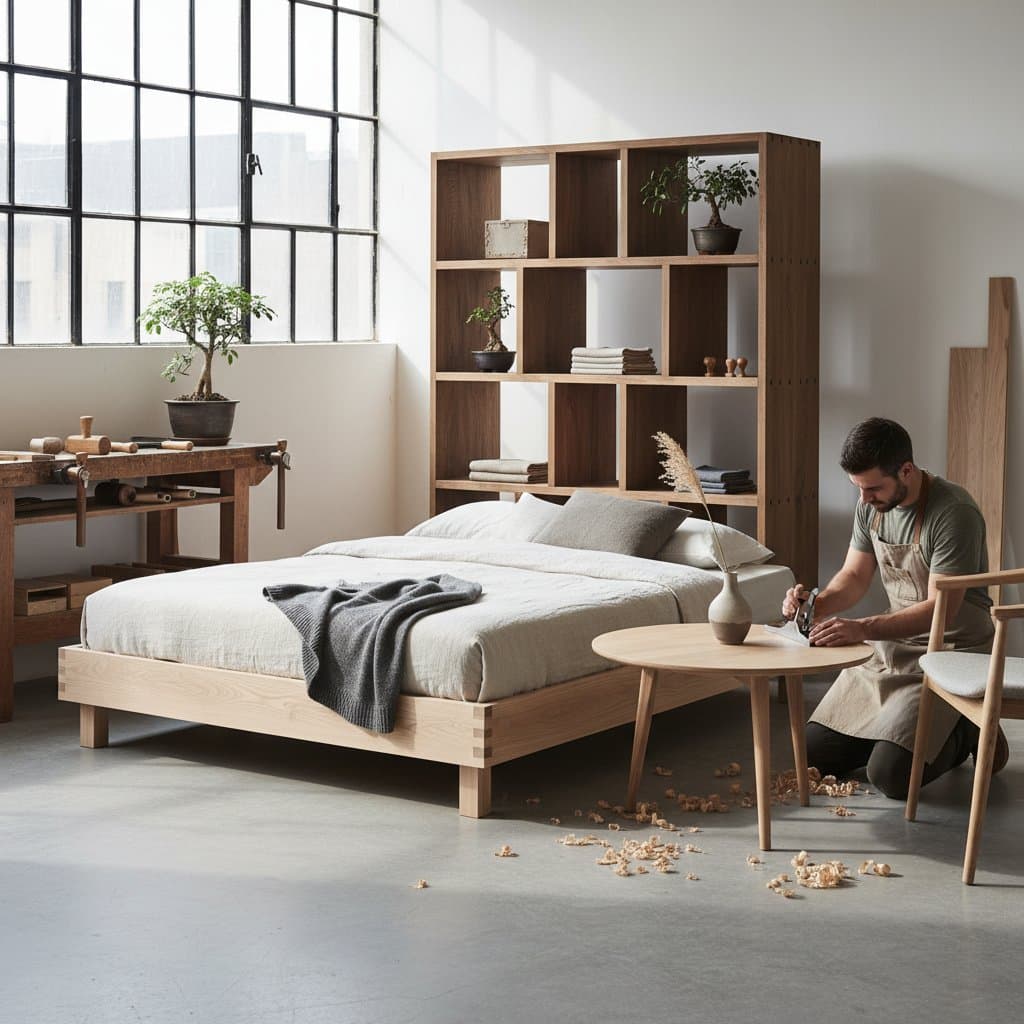
Japandi's Rise Powers the 2026 Furniture Surge
Clean profiles, light-toned timber, and understated elegance define the evolving furniture sector. Japandi, which combines Japanese minimalism with Scandinavian coziness, has transitioned from specialty publications to everyday fabrication spaces. This shift responds to compact living areas, where excess creates tension, and individuals seek tranquility. Artisans skilled in this fused approach experience increased orders for durable, enduring creations.
The Foundations of Japandi's Popularity
Japandi integrates the structured forms of Scandinavian pieces with the imperfect beauty central to Japanese making. These influences emphasize straightforwardness, organic substances, and purpose. The outcome produces items that appear contemporary yet inviting.
Consumers value Japandi's reliance on eco-friendly options like oak, ash, and bamboo. Sparse fittings, oil applications by hand, and rounded contours create an inviting texture. Property owners increasingly reject synthetic surfaces in favor of exposed patterns that develop character over time. Market data indicates that authentic Japandi consoles and cabinets fetch 15 to 25 percent more than factory equivalents.
Woodworking operations gain from this direction, as it supports streamlined workflows. Reduced embellishments allow shorter preparation phases and greater emphasis on accurate connections. To implement Japandi effectively, select straight-grained boards and practice consistent beveling techniques. This preparation ensures pieces maintain their serene presence in varied settings.
Budgeting for Japandi Projects
Expenses primarily stem from sourcing materials. Plan for these ranges:
- $300 to $700 for primary hardwood in a standard dining surface
- $100 to $250 for protective coatings, adhesives, and minimal fixtures
- $800 to $2,000 overall for a moderate-scale bespoke item
Skilled labor contributes $20 to $40 hourly when brought in externally. Compromising on timber integrity often undermines the final result, given the style's dependence on natural markings and flawless assembly. Cost-conscious makers sometimes opt for bamboo composites or layered ash alternatives to full planks, though this may reduce market price by 10 to 15 percent.
To optimize spending, source from certified suppliers who offer bulk discounts on sustainable stocks. Calculate yields carefully to minimize waste, and invest in reusable tools like precision planes for repeatable results. These strategies preserve quality while controlling outlays.
Pitfalls to Steer Clear Of in Japandi Crafting
Several errors can disrupt the intended harmony. Consider these avoidances:
- Adding excess detailing, such as carved edges or elaborate supports, which fractures the essential simplicity.
- Applying high-sheen varnishes that introduce glare and undermine the soothing effect.
- Neglecting scale and stance, as Japandi thrives on equilibrium and grounded silhouettes.
- Overlooking preparatory smoothing, since irregularities become prominent under subdued sheens.
Address these by prototyping with scale models and testing finishes on scrap material. Regular quality checks during assembly help sustain the philosophy's core principles.
Integrating Japandi into Daily Spaces
Japandi items thrive with routine maintenance. Refresh protective oils once a year, address liquid exposure promptly, and embrace minor marks as enhancements to authenticity. This care extends longevity and deepens the personal connection.
For fabrication experts, the potential stands out. Buyers prioritize selective, superior acquisitions that convey individuality and permanence. Hone techniques in seamless bonding and gentle surfacing to synchronize your skills with a movement rooted in subtle assurance. As 2026 approaches, positioning your output within Japandi positions your enterprise for sustained expansion amid rising consumer preferences for mindful design.