
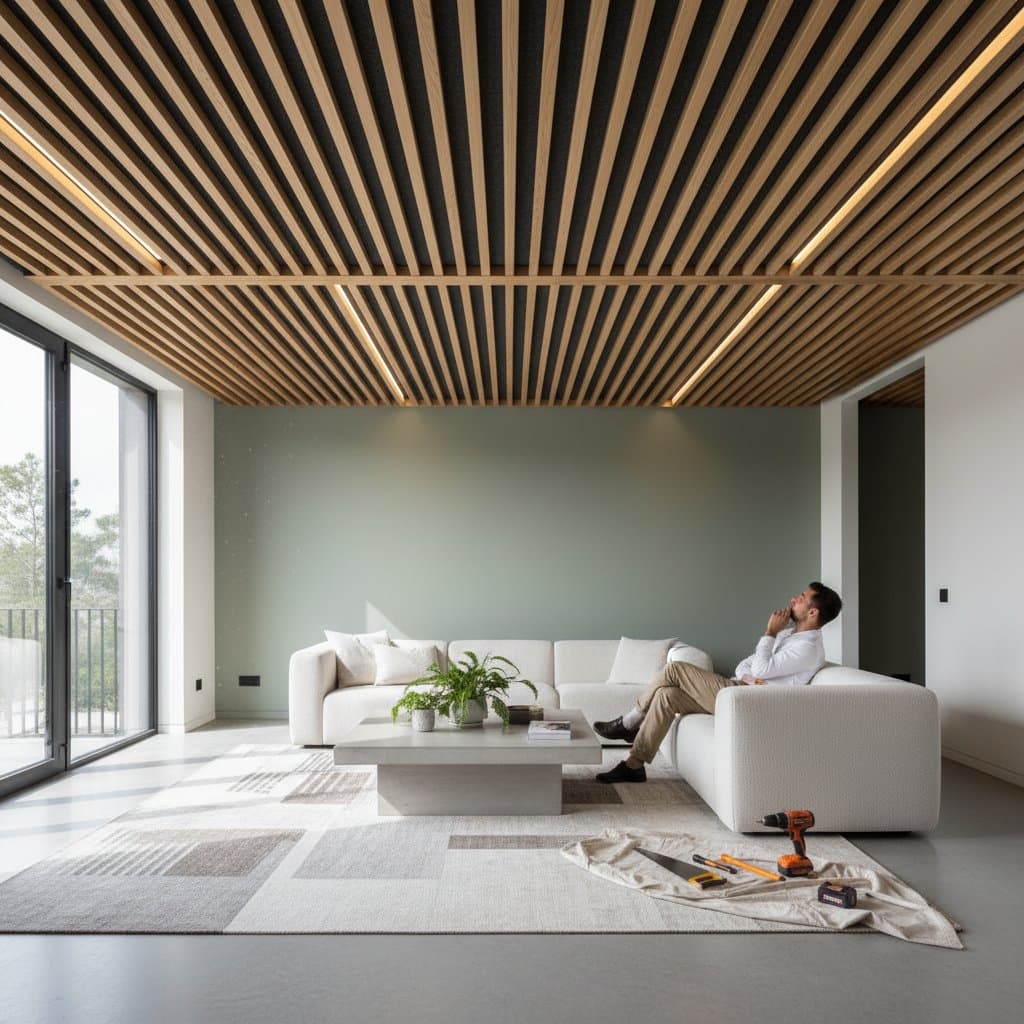
The Rise of DIY Wood Ceilings for Better Acoustics in 2026
Wood ceilings have evolved from bespoke millwork to projects accessible for dedicated DIY enthusiasts. This change stems from enhanced acoustic benefits, inviting visual appeal, and modular components that enable accurate installation using standard workshop tools. The result offers a natural aesthetic paired with subdued sound, all within easier reach than previous methods.
The Growing Importance of Wood Ceilings
Contemporary rooms feature increasing hard surfaces, such as concrete floors and glass partitions. These elements produce unwanted echo and auditory fatigue. Wood ceiling panels and baffles capture and scatter sound waves, reducing harshness while preserving intelligibility. Current trends emphasize grid and slat configurations that permit light penetration alongside sound disruption. Homeowners value this approach for its blend of artisanal quality and functional ease.
Designer Kate Morales noted, “People want rooms that sound as good as they look. Wood lets you do both.”
For woodworkers and renovation specialists, this domain unites technical expertise with scientific application. Familiar materials gain new emphasis through exact spacing, material density, and surface treatments.
Quick Overview
Primary users: Homeowners enhancing open-concept kitchens, creative studios, and entertainment areas
Central concept: Modular wood ceiling setups that dampen noise and establish visual patterns
Standard dimensions: Slats or panels at 4-inch (10-centimeter) widths with 1-inch (2.5-centimeter) gaps
Essential components: White oak, walnut, ash, birch plywood, plus acoustic felt supports
Average cost: $8 to $14 per square foot (0.09 square meter) for supplies
Aesthetic priorities: Grid layouts, baffle arrangements, and slat intervals that harmonize sound control with illumination
The Challenge Before Installation
In numerous residences, sound reflections turned interactions tiring. Flat drywall ceilings combined with rigid flooring generated a resonant void, particularly in communal areas like kitchens and living spaces. Illumination typically depended on basic recessed fixtures lacking depth or direction.
Homeowner Daniel Cruz described his experience: “We spent time and money on furniture, but it still sounded empty. You could hear every echo.”
The issue extended beyond appearance to pure sound management. Lacking overhead texture or absorption, noises and echoes dominated the environment.
The Transformation After Installation
A DIY wood ceiling grid provided the remedy. Cruz constructed a suspended framework with slim oak slats fastened to cleats and concealed acoustic panels. The wood introduces rhythmic patterns and subtle light play, as the felt layer absorbs mid-range and higher frequencies.
Images capture extended lines of aligned slats spanning the room, each treated with a warm matte oil finish. Dark acoustic fabric between the slats fades into the background, enhancing perceived depth. Linear LED lights recessed amid chosen baffles direct gentle illumination downward and highlight the wood texture.
Cruz observed, “Once the ceiling went up, we could hear the difference immediately. The space felt quieter, but still alive.”
The setup also facilitates seamless utility incorporation. Access panels integrated into the grid via magnetic latches allow straightforward reach to electrical and ventilation systems.
Essential Design Elements
- Framework: 1x2-inch oak slats positioned 1 inch (2.5 centimeters) apart on aluminum or wooden furring strips
- Support layer: 1-inch (2.5-centimeter) panels of recycled acoustic felt achieving NRC ratings around 0.8
- Surface treatment: Low-VOC matte oil to maintain natural hues and minimize gloss
- Illumination: Linear LED units recessed between slats at intervals of 4 feet (1.2 meters)
- Maintenance access: Detachable sections secured with rare-earth magnets
- Perimeter finish: Shadow gap trim creating an illusion of suspension
- Airflow integration: Diffusers embedded within grid spaces for uniform circulation
These specifications merge accuracy with usability. The intervals ensure reliable sound mitigation while sustaining a cohesive wood motif.
Step-by-Step Guide for DIY Construction
Emerging DIY acoustic ceilings draw from modular grids supplied by niche vendors. Pre-configured panels minimize measurement mistakes. Focus shifts from intricate woodworking to steady alignment and uniformity.
Follow this sequence for a standard project:
- Layout the framework. Assess ceiling measurements, locate joists, and decide on slat orientation.
- Secure furring strips. Employ laser levels for precise placement, typically at 2-foot (0.6-meter) centers.
- Install acoustic supports. Trim felt or foam to match strip gaps and affix with spray adhesive.
- Mount slats or baffles. Begin at the room's center, applying spacers for even separations.
- Incorporate lights and vents. Position fixtures prior to securing outer rows.
- Complete edges and protect. Install border trim or channels, then apply any necessary coatings.
Patience in each phase yields a prominent handmade feature that alters the room's ambiance.
Acoustic Principles Behind the Effectiveness
Hard surfaces rebound sound energy, yet a multi-layered ceiling interrupts this cycle. Wood elements diffuse waves by redirection, and underlying felt or foam captures residual vibrations. This combination shortens echo duration and enhances vocal distinctness.
Acoustic consultant Hannah Lee stated, “A slatted wood ceiling with absorption behind it can cut reverberation by almost half in a typical living area. The spacing ratio and backer thickness are what control performance.”
In spaces smaller than 300 square feet (27.8 square meters), 1-inch (2.5-centimeter) gaps paired with equivalent felt depth deliver substantial improvements.
Selecting Woods and Finishes
Wood type influences color warmth and light interaction.
- White oak: Balanced tone with uniform grain, suitable for broad installations.
- Walnut: Deep shade providing contrast against light surroundings.
- Ash: Pale hue with pronounced grain for added texture.
- Birch plywood: Economical option that accepts stains uniformly.
Penetrating finishes outperform surface coatings for sound consistency. While varnishes may increase reflections, oils or waxes in matte forms prove ideal.
Expert Advice for Professional Results
- Maintain uniform slat intervals. Minor irregularities become evident across a flat ceiling.
- Opt for dark supports. Charcoal or black felt adds depth and conceals attachments.
- Apply finishes off-site. Pre-treating avoids overhead spills and inconsistencies.
- Evaluate light temperatures upfront. Warm LEDs enhance wood's natural glow over stark alternatives.
- Incorporate access points. Design at least one removable panel for ongoing adjustments.
Such strategies elevate the finish to expert standards without sacrificing hands-on control.
Future Directions in Wood Ceiling Design
Professionals integrate wood ceilings with eco-friendly resources and automated lighting. Anticipate expanded prefabricated sets featuring FSC-certified timber and panels from reclaimed fabrics.
This style suits diverse settings, from retro kitchens to sleek workspaces. Its core strength addresses sound issues through minimal structural changes.
Morales added, “People realize sound is part of comfort. You can’t relax in a room that echoes. Wood ceilings solve that quietly.”
Core Insights
- Wood grids and baffles enhance audio quality and visual interest.
- Accessible systems support accurate builds using basic equipment.
- Backing materials like felt or foam provide genuine noise reduction.
- Precise gaps and diffused lighting achieve refined outcomes.
- Finish selections impact coziness, light bounce, and durability.
Everyday Benefits and Care
After setup, care remains straightforward. Wipe surfaces lightly or use a soft brush vacuum periodically. Steer clear of liquid cleaners that might swell the wood fibers.
The true gain emerges in routine use. Conversations flow effortlessly, audio playback gains equilibrium, and illumination dances softly over the grain. This overhead element serves as both an artistic expression and a practical enhancement to daily living.