
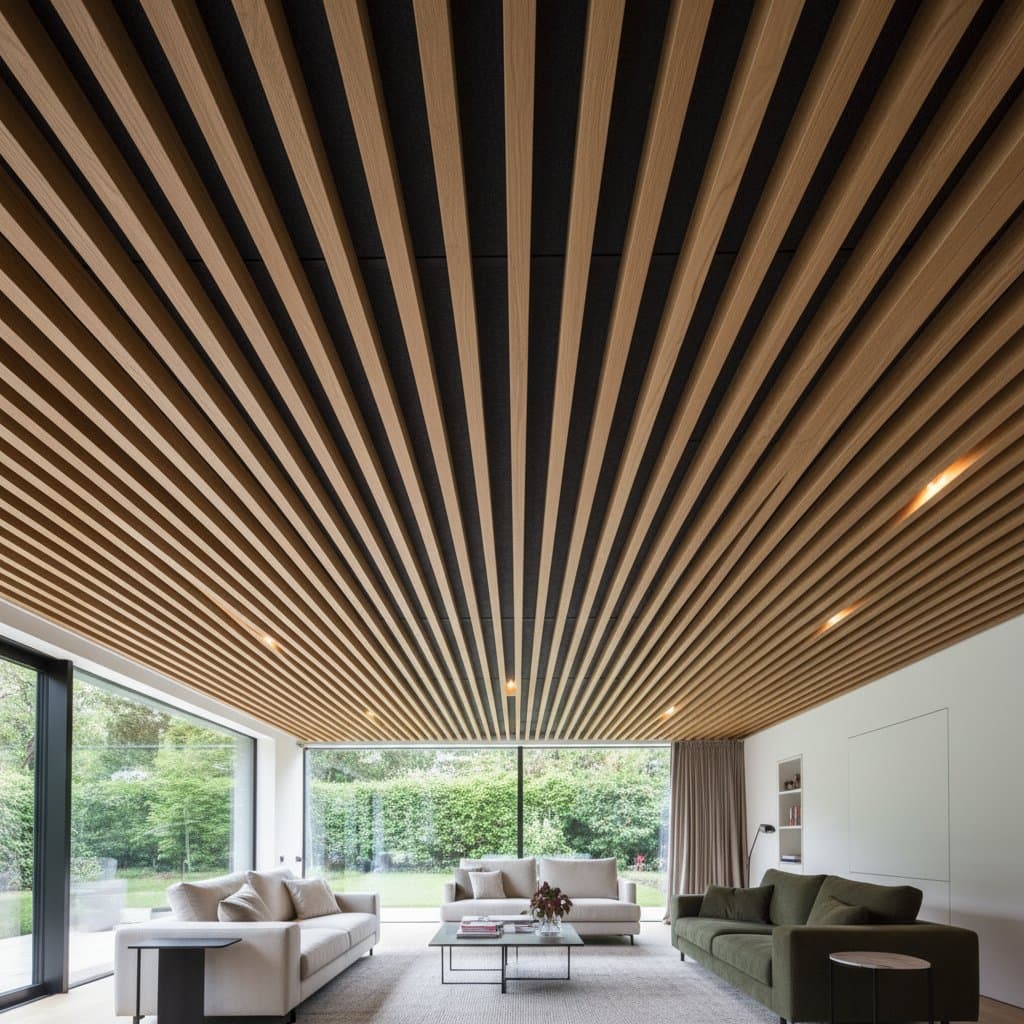
DIY Acoustic Wood Slat Ceilings: The 2026 Trend for Quieter Spaces
Wood slat ceilings have transitioned from commercial settings like restaurants and office lobbies into residential workshops and living areas. These installations soften sound reflections, introduce warmth, and create visual rhythm above. The emerging focus for 2026 emphasizes acoustic performance achievable with standard woodworking tools.
This guide details the reasons behind the popularity of suspended wood slats, planning strategies for a professional appearance, and key elements that enhance sound absorption.
The Importance of Acoustic Wood Slat Ceilings
Busy kitchens, open-plan living rooms, and workshops share a common issue: sound reverberation from hard surfaces. These echoes create fatigue and disrupt clarity. Acoustic slat ceilings interrupt reflections through a blend of solid wood and sound-absorbing materials, reducing noise while preserving aesthetic appeal.
Designer Mia Chen notes, “People want materials that do more than decorate. A slatted ceiling adds beauty, but it also calms the space.”
For builders, wood slats offer practicality with standard joinery techniques and straightforward suspension methods. Precise spacing in even a modest area converts harsh echoes into a subdued ambiance.
Project Overview
Target Audience: Homeowners, makers, and small shop owners
Suitable Locations: Living areas, studios, and workshops
Minimum Size: 50 square feet (4.6 square meters)
Design Inspiration: Studio Arc concepts
Visual Reference: James Laird photography
Before Installation
Standard rooms feature plain drywall or plaster ceilings that reflect sound and lack visual depth. In open layouts, noise travels freely between zones. Workshop ceilings intensify machine sounds and voices.
One homeowner from a recent project shared, “We loved the open space, but it sounded like a gym. We needed a fix that looked intentional.”
After Installation
The change arises from layered construction. A suspended framework supports narrow wood slats with uniform gaps, exposing acoustic fabric or panels underneath. This arrangement directs attention upward, enhancing perceived height and intentional design.
Light diffuses through the slats to reduce glare. Integrated LED strips illuminate the backing or accentuate wood grain. The outcome combines sculpture with utility, elevating the ceiling as a defining room element.
Essential Design Specifications
Materials and Finishes
- Slats: Solid oak, maple, or walnut, dimensioned at 1 by 2 inches (25 by 50 millimeters)
- Backing: Black acoustic felt or perforated MDF paired with mineral wool
- Finish: Low-sheen oil or water-based polyurethane
Framework and Spacing
- Standard Gap: 1 inch (25 millimeters) between slats
- Suspension: Aluminum T-grid or wood cleat system
- Drop Distance: At least 3 inches (76 millimeters) from existing ceiling for airflow
Lighting Options
- Task Lighting: Recessed mini downlights spaced every 3 feet (0.9 meters)
- Ambient Lighting: Concealed LED strips along the perimeter
- Control: Dimmable drivers for adjustable intensity
Acoustic Ratings
- Noise Reduction Coefficient (NRC): 0.70 to 0.90, varying by backing material
- Optimal Coverage: At least one-third of the ceiling surface
Practical Additions
- Access Panels: Removable slats for wiring or ductwork maintenance
- Storage Integration: Hidden hooks on perimeter rails for lightweight workshop tools
Step-by-Step Construction Guide
Step 1: Measure and Layout
Draw a detailed grid sketch prior to cutting materials. Identify joist orientations and mark lighting positions. Calculate spacing by dividing room width by the total slat-plus-gap measurement. For instance, a 10-foot (3-meter) width with 1-inch slats and 1-inch gaps accommodates 60 units.
Step 2: Construct the Support System
Secure furring strips perpendicular to joists with screws and anchors suited to the ceiling substrate. Ensure level alignment using a laser level or taut chalk line. Provide a minimum 3-inch (76-millimeter) drop to accommodate insulation or wiring.
In workshops, select kiln-dried pine or fir for durability. For residential spaces, aluminum rails minimize weight while promoting straight lines.
Step 3: Install Acoustic Layer
Affix acoustic felt by stapling or secure mineral wool panels between furring strips. Ensure complete cavity fill without voids. Opt for dark tones to minimize shadows and light bleed through slat gaps.
Step 4: Install the Slats
Apply finish to slats on sawhorses before mounting. Use two coats of oil or polyurethane, with light sanding between applications. Employ spacer blocks to achieve uniform gaps while nailing or clipping slats to the framework.
For a seamless appearance, terminate slats 2 inches (50 millimeters) from walls and cover edges with slim trim matching the backing color.
Step 5: Incorporate Lighting
Route wiring through the framework prior to slat installation. Align recessed or surface fixtures with slat intervals. Position LED strips on perimeter extrusions or within select gaps for targeted accents.
Electrician Leo Grant advises, “The trick is to pre route cables through the grid so you never have to remove slats later. It keeps the ceiling clean and serviceable.”
Step 6: Finalize and Test
Verify level surfaces, consistent gaps, and fastener security post-installation. Remove dust with a vacuum, then evaluate lighting and sound quality. Most spaces exhibit enhanced clarity immediately.
Achieving Visual Harmony
Project images demonstrate how slat orientation affects room dynamics. Aligning slats with the room's length extends the perceived space. Perpendicular placement fosters intimacy.
Warm woods such as white oak pair well with neutral walls and concrete floors. Lighter options like ash or maple reflect light in dim areas. Black-stained slats provide contrast and frame overhead fixtures effectively.
Align slats with nearby cabinetry or paneling in matching species and finish to unify the interior composition.
Budget and Timeline Considerations
- Core Materials: $6 to $9 per square foot ($65 to $97 per square meter), based on wood type and finish
- Acoustic Components: $1.50 to $3 per square foot ($16 to $32 per square meter)
- Lighting Enhancements: $2 to $4 per square foot ($22 to $43 per square meter)
- Labor Estimate: Two weekends for 120 square feet (11 square meters)
Cost-conscious approaches involve edge-banded plywood simulating solid lumber. Premium builds feature pre-slotted veneered panels for efficiency.
Core Benefits
- Noise Management: Slats and backing absorb mid- and high-frequency sounds, improving conversational clarity.
- Aesthetic Enhancement: Wood grain introduces texture to expansive surfaces.
- Practical Design: Removable elements simplify maintenance.
- Versatile Application: Suits modern, Scandinavian, and rustic styles.
- Accessible Construction: Relies on basic tools and meticulous planning for expert outcomes.
Daily Use and Care
Maintenance involves periodic dusting with a microfiber tool or vacuum attachment. In workshops, apply wax quarterly to repel particles.
Homeowner Sarah Malik reflects, “After the slats went up, our space felt quieter and more finished. The ceiling used to disappear, now it defines the room.”
This trend endures by merging craftsmanship with functionality. Precise execution yields a custom feel, delivering ongoing rewards in reduced noise, improved lighting, and elevated ambiance.