
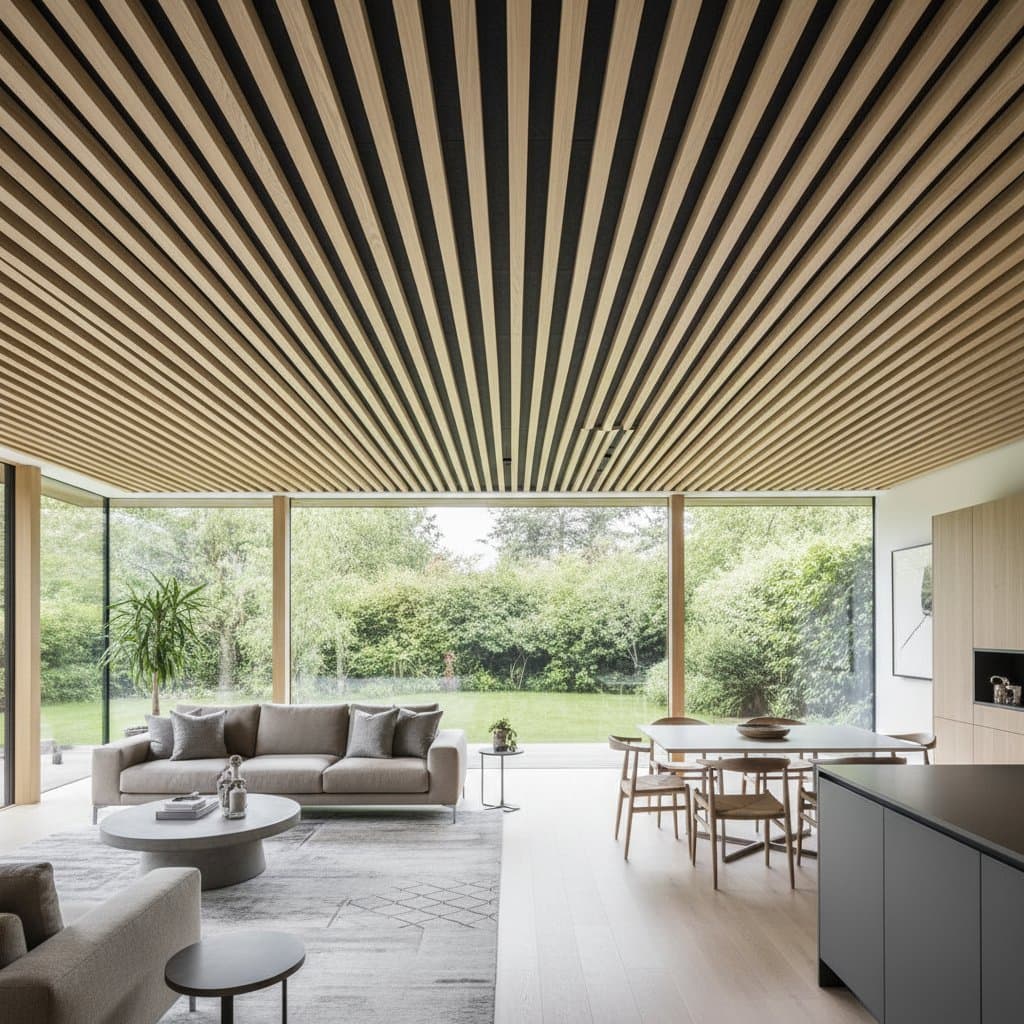
Why Wood Slat Ceilings Serve as 2026's Acoustic Solution
Noise fatigue affects daily life in open-concept homes, bustling restaurants, and collaborative workspaces, where sounds reverberate off hard surfaces like drywall and glass. Wood slat ceilings address this challenge effectively by integrating natural aesthetics with proven sound control. These installations provide warmth, superior acoustic performance, and contemporary design in a single application.
Key Specifications
| Feature | Typical Range | Significance |
|---|---|---|
| Cost per square foot | $12 to $25 | Encompasses wood, backing, and hardware |
| Noise Reduction Coefficient (NRC) | 0.6 to 0.9 | Indicates level of sound absorption |
| Installation duration | 1 to 3 days per room | Varies by room configuration and height |
The Mechanics of Wood Slat Ceilings
Wood slat ceilings consist of evenly spaced narrow timber strips mounted over an acoustic backing material. The slats disrupt sound waves, and the underlying felt or perforated panels absorb echoes. This setup achieves up to 70 percent reduction in reverberation when compared to untreated drywall ceilings.
Popular wood choices include oak, walnut, ash, and engineered veneers. Slats measure 1 to 2 inches in width, with gaps of approximately half an inch between them. These intervals form air pockets that capture sound energy, mimicking the principles of acoustic baffles found in professional venues like concert halls, adapted for everyday residential and commercial settings.
To estimate expenses, calculate the ceiling area in square feet and multiply by the selected rate per square foot. For instance, a 200-square-foot space at $18 per square foot totals approximately $3,600, which includes mounting rails and acoustic felt.
Integrating Design and Acoustic Performance
Wood slat ceilings adapt seamlessly to diverse interior styles. Vertical grain oak complements minimalist Scandinavian designs, whereas dark walnut enhances upscale office atmospheres. Installers often incorporate linear LED lighting between the slats for a streamlined appearance. The wood surface tempers harsh LED illumination and distributes light uniformly throughout the area.
Wood excels in sound scattering due to its density and irregular grain patterns, which minimize flutter echoes that distort speech. Acoustic experts recommend slat ceilings for environments such as conference rooms and dining areas, where clear communication relies on balanced acoustics rather than mere volume reduction.
For optimal longevity, apply a matte sealant to the slats to guard against humidity. Steer clear of thick varnishes, as they may reflect sound waves and undermine absorption.
Budgeting for Installation
Installed costs range from $12 to $25 per square foot. Budget options feature pine or MDF veneers suitable for modest spaces, while premium selections with hardwoods and dark acoustic felt command higher prices. Labor typically adds $6 to $10 per square foot, influenced by ceiling elevation and the inclusion of fixtures.
Opt for preassembled panels to reduce expenses; these units attach to mounting tracks and halve installation time. Never omit the backing layer, which contributes up to 60 percent of the overall sound dampening. Neglecting it reduces the ceiling to a purely decorative element.
Consider additional factors like room size and material quality when planning. Larger areas benefit from bulk purchasing, which can lower per-unit costs by 10 to 15 percent. Consult suppliers for samples to verify color and texture compatibility with existing decor.
Choosing Between DIY and Professional Installation
Individuals with carpentry experience may tackle smaller projects, such as a bedroom or hallway. Essential tools include a laser level, stud finder, mounting tracks, and a precise saw. Plan for a full weekend to complete a 150-square-foot installation.
Engage professionals for ceilings involving recessed lighting, ventilation systems, or intricate patterns. Expert teams complete jobs in as little as two days and maintain acoustic integrity through precise seam staggering and joint sealing.
Before starting, review local building codes, especially in commercial settings, to ensure compliance with fire safety and load-bearing standards. Professionals also handle permits, sparing homeowners potential delays.
Avoiding Installation Pitfalls
- Select unfinished slats that risk warping from moisture exposure.
- Omit essential acoustic backing like felt or foam.
- Align overlapping seams improperly, leading to visible gaps.
- Neglect clearances for lighting fixtures and fire suppression systems.
Address these issues during planning to preserve both appearance and functionality. Test a small section first if attempting DIY to confirm material behavior in the specific environment.
Ensuring Long-Term Performance
Clean slats every three months using a vacuum with a soft brush attachment to remove dust buildup. Refresh the protective finish every two to three years to shield against environmental wear. Manufacturers typically offer replacement panels for isolated damage, minimizing repair costs.
Regular upkeep extends the lifespan beyond a decade, preserving both acoustic benefits and visual appeal. Monitor for signs of moisture intrusion, particularly in humid climates, and address promptly to prevent broader issues.
Realizing the Benefits in Your Space
Wood slat ceilings transcend fleeting trends to deliver enduring acoustic and aesthetic value. They transform noisy areas into serene havens, enhancing comfort and productivity. Begin with a single room to experience the tangible improvement in sound quality and overall ambiance.