
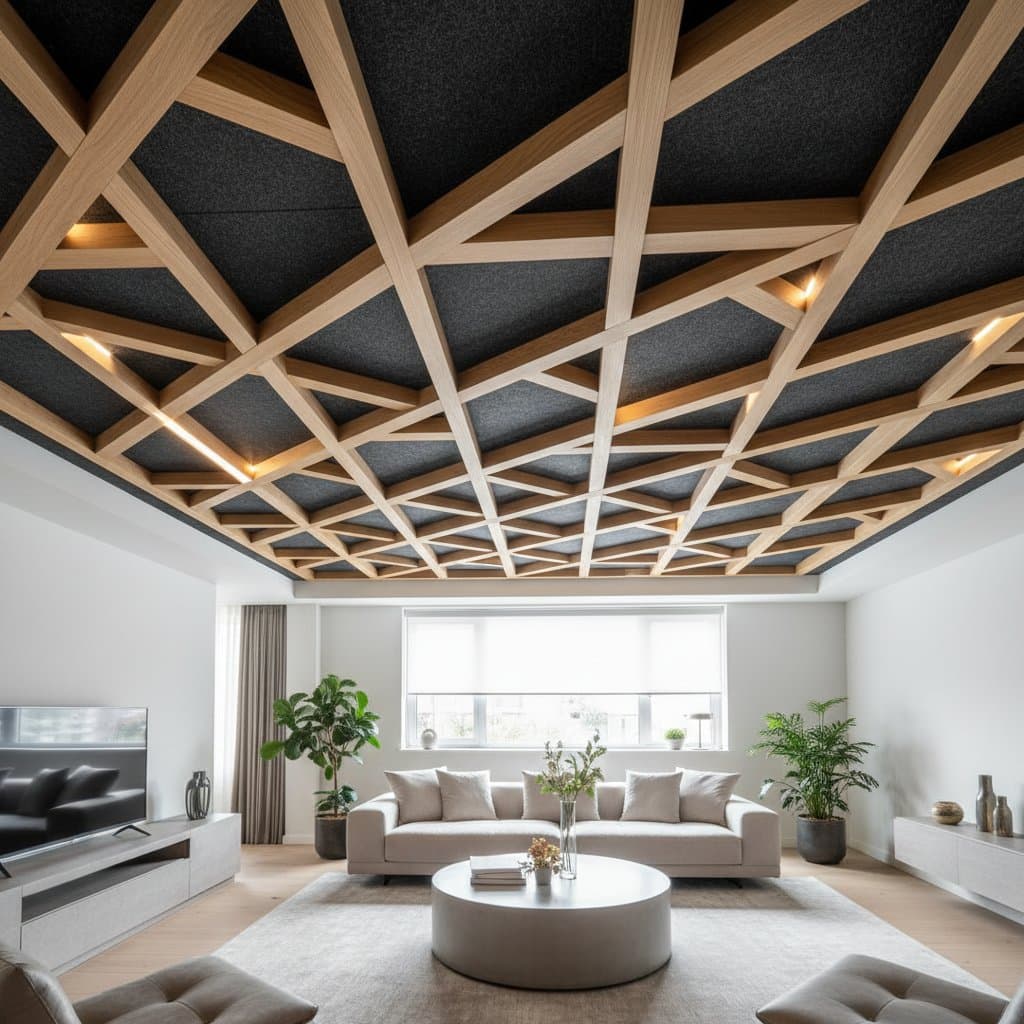
The DIY Wood Grid Revolutionizing Ceilings in 2026
Transform any ordinary ceiling into a striking architectural element using a wood grid system. Homeowners increasingly recognize that a custom grid provides a handcrafted appearance, enhances acoustics, and incurs costs significantly lower than a complete coffered ceiling installation. A straightforward weekend project elevates the aesthetic of an entire room while reducing echo by up to 40 percent.
Why Wood Grids Are Taking Over Ceilings
Standard drywall ceilings reflect sound waves effectively, which often results in a cold atmosphere in expansive rooms. Wood grids address this issue by introducing natural texture and absorbing midrange frequencies. Each cell within the grid functions as a compact acoustic baffle, disrupting echo paths to prevent sound from rebounding directly to listeners.
This system excels in its adaptability. Install the grid directly onto existing drywall with lightweight furring strips, or suspend it using metal channels to conceal wiring or ductwork. The outcome appears custom-made, yet requires only fundamental carpentry tools for assembly.
Key benefits include:
- The open lattice structure scatters sound waves, enhancing audio clarity in living areas and recording studios.
- Wood surfaces distribute warmth and light more uniformly compared to flat painted finishes.
- Modular panels facilitate repairs or modifications without necessitating complete removal.
Begin the process by sketching the grid layout on paper. Common configurations feature squares measuring 12 to 24 inches, though adjustments accommodate fixtures such as lighting or vents. Consider the room's dimensions and ceiling height to determine optimal spacing, ensuring the design integrates seamlessly with existing architecture.
Acoustic Performance and Design Flexibility
A wood grid ceiling extends beyond visual appeal to serve as an effective sound-dampening element, comparable to commercial acoustic tiles. Evaluate performance through the Noise Reduction Coefficient (NRC), where wood grids paired with backing panels typically achieve ratings of 0.60 or greater. In contrast, untreated drywall registers a mere 0.05.
Select from three primary acoustic approaches:
- Open grid configuration. Prioritizes visual elements with basic echo mitigation.
- Grid enhanced with acoustic backing. Incorporates moderate absorption, ideal for home theaters or office spaces.
- Hybrid grid incorporating baffles. Positions vertical wood fins or felt elements between cells for optimal sound control.
Design variations encompass square, rectangular, or diamond patterns. Opt for lighter species like maple or birch to illuminate lower ceilings, whereas denser options such as walnut or oak foster a more intimate ambiance. Experiment with staining techniques to match surrounding decor, ensuring the grid complements the overall interior palette.
Practical implications: Enhanced acoustics promote clearer dialogue, reduce listener fatigue, and establish a refined auditory setting for remote professional activities or audio production.
Materials and Cost Breakdown
Assemble a wood grid with accessible, budget-friendly materials. Select 1x2 or 1x3 lumber in your chosen wood type, estimating one linear foot per grid cell perimeter. Acoustic backing, if desired, involves rigid fiberglass panels or fabric-wrapped absorbers, available at hardware stores for approximately $2 per square foot.
Furring strips and metal channels cost under $1 per linear foot, while fasteners like brad nails and screws add minimal expense. Total material outlay remains below $9 per square foot for a basic installation, excluding tools. Source lumber from sustainable suppliers to align with eco-conscious building practices.
Calculate quantities precisely: For a 200-square-foot ceiling with 18-inch squares, prepare around 400 linear feet of wood strips. Factor in 10 percent extra for cuts and waste. This approach keeps projects economical while delivering professional-grade results.
Step-by-Step Installation Guide
Approach the installation methodically to ensure precision and safety. First, measure and mark grid lines on the ceiling using a chalk line and laser level for straight alignments. Secure furring strips horizontally at intervals matching your grid width, spacing them 16 inches apart to align with standard joists.
Cut wood strips to length with a miter saw, angling ends at 45 degrees for seamless joints in non-square layouts. Attach vertical and horizontal pieces alternately, starting from the room's center to minimize edge discrepancies. Use a brad nailer for secure fastening, followed by wood filler on joints and sanding for a smooth finish.
For suspended systems, install metal channels first, then hang the grid panels. Integrate acoustic backing by adhering panels to the grid's underside before mounting. Test the structure's stability by applying gentle pressure; adjustments at this stage prevent future issues.
Complete the project with a clear polyurethane finish to protect against moisture and wear. Allow 24 hours for drying before introducing furniture or use. This process typically spans 8 to 12 hours for a 150-square-foot area, depending on complexity.
DIY or Professional Assistance
Individuals with intermediate carpentry experience can manage most wood grid installations. Essential tools comprise a miter saw, brad nailer, and orbital sander. Engage a second person for handling and positioning extended sections.
Circumstances favoring DIY:
- Ceiling coverage below 250 square feet.
- Availability of a sturdy ladder or scaffolding.
- Proficiency in accurate measurements and cuts.
Situations warranting professional involvement:
- Heights surpassing 10 feet.
- Incorporation of recessed lights or ventilation systems.
- Requirement for suspended setups with integrated insulation.
When engaging contractors, verify liability insurance and review finish carpentry references. Request examples of miter joints and preparation techniques. A quality installation exhibits precise seams and consistent intervals throughout.
Long-Term Care and Upkeep
A installed wood grid demands little ongoing attention. Remove dust periodically using a microfiber cloth or soft vacuum attachment. Steer clear of abrasive cleaners that may compromise the wood's sheen.
Address minor imperfections by sanding lightly with fine-grit paper and applying a touch of compatible stain. For deeper scratches, employ fine steel wool followed by a protective topcoat. Annual inspections check for loose joints or warping, particularly in humid environments.
Regular maintenance preserves the grid's acoustic efficacy and visual allure. In high-traffic areas, consider adding a matte sealant to enhance durability without altering the natural wood grain.
Realizing Lasting Value in Your Space
Investing in a DIY wood grid ceiling yields enduring benefits, from improved sound quality to elevated design. This versatile solution adapts to evolving needs, whether refreshing a home office or enhancing entertainment areas. Embrace the craftsmanship to create a space that resonates with comfort and style for years ahead.