
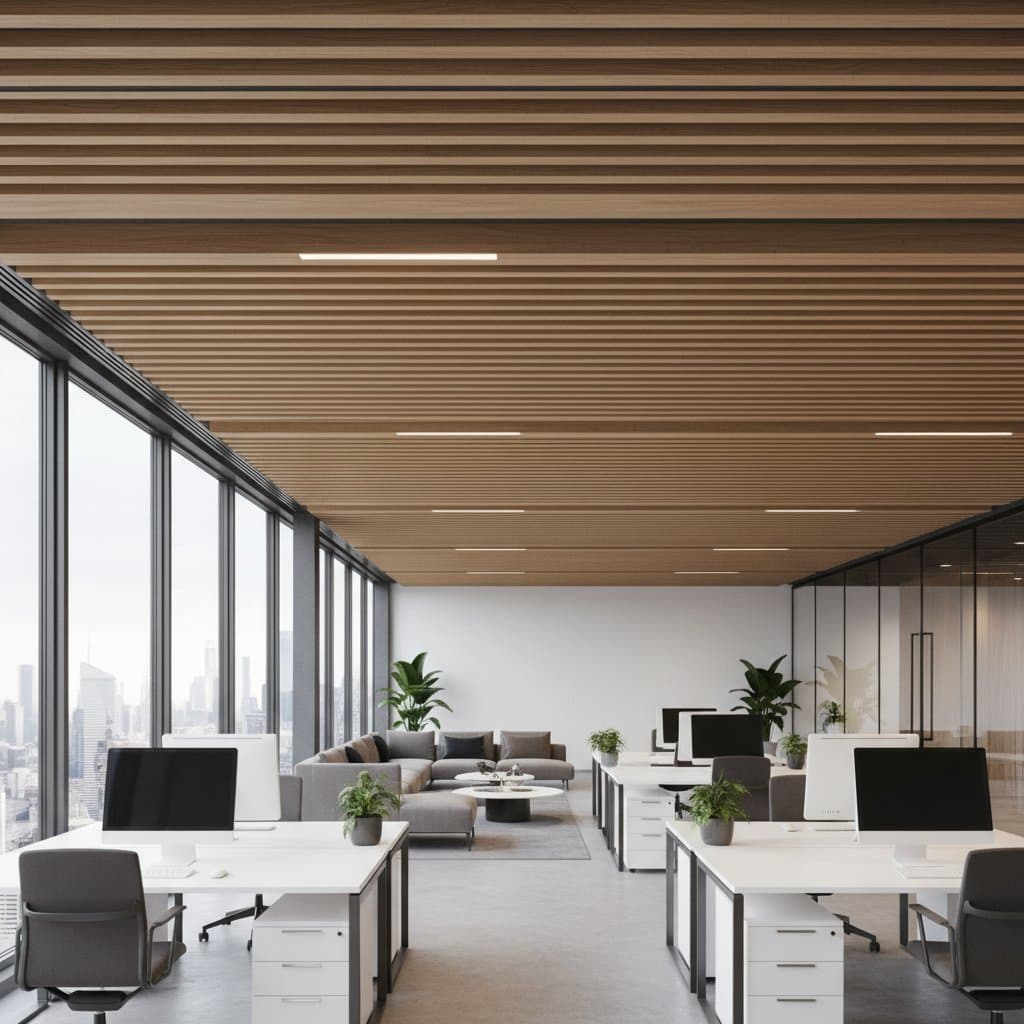
Introduction to Wood Slat Ceilings
Wood slat ceilings emerge as a versatile solution for modern interiors, particularly as acoustic demands grow in 2026. These installations feature parallel wooden strips mounted over an acoustic backing, creating a linear pattern that absorbs sound waves effectively. Unlike bulky fabric panels, they integrate seamlessly with contemporary architecture, offering both visual appeal and functional benefits.
The design works by allowing sound to pass through evenly spaced slats and into the absorbent material behind them. This setup achieves noise reduction coefficients (NRC) up to 0.90, cutting echo by 60 percent in typical rooms. Homeowners and designers appreciate the natural texture of wood, which adds warmth to spaces ranging from open-plan offices to cozy living areas.
Key Benefits and Performance
Beyond acoustics, wood slat ceilings enhance room ambiance through their material choices and customization. Options include oak, walnut, or reclaimed wood for a premium feel, with finishes that range from matte to glossy. The slats diffuse light softly, making them ideal for pairing with recessed or integrated LED lighting.
Performance metrics stand out in testing. According to standard evaluations, these ceilings absorb mid-to-high frequency sounds, such as voices and music, more effectively than painted drywall alone. In a 200-square-foot conference room, installation can lower reverberation time from 1.2 seconds to 0.5 seconds, fostering clearer conversations and reduced fatigue.
Sustainability adds another layer of value. Many manufacturers source FSC-certified wood, and the lightweight construction minimizes material use. Over time, these ceilings resist fading and maintain their acoustic properties, provided proper installation occurs.
Cost Considerations
Budgeting for a wood slat ceiling involves several factors, including material quality and size. Basic installations with standard pine slats and fiberglass backing start at $5 per square foot, covering materials and simple labor. Mid-range options, such as maple with mineral wool backing, range from $8 to $12 per square foot.
Custom hardwood with integrated lighting reaches up to $13,500 for a 300-square-foot area. This premium tier includes bespoke cuts, wiring, and finishes tailored to specific designs. To manage expenses, select veneered MDF cores over solid wood. These alternatives weigh 30 percent less, accelerate installation by up to 40 percent, and mimic the appearance of solid pieces after finishing.
Humidity control proves essential with any wood product. Maintain levels below 60 percent to avoid warping. Investing in quality acoustic backing prevents performance drops; inferior materials can lower NRC ratings from 0.90 to 0.60, diminishing sound control significantly.
DIY or Professional Installation
Installation methods vary based on project scale and complexity. A skilled individual can tackle small spaces, but larger or intricate setups benefit from expert involvement.
DIY Skill Checklist
- Proficiency working with ceiling joists and secure anchors
- Precision in cutting slats and ensuring consistent spacing
- Availability of tools like a laser level and finish nailer
For a 100-square-foot ceiling, one person might require a full weekend, focusing on accurate measurements and secure fastening. Professionals, however, complete the same area in one day, achieving superior alignment and finish.
When to Hire a Contractor
Consider professional help for projects involving integrated lighting or coordination with sprinklers. Ceilings over 10 feet high demand specialized equipment for safety and precision. A warranty on acoustic performance also justifies expert input.
Select installers carefully by requesting sample panels and client references. Verify adherence to ASTM C423 standards for acoustic testing. Top contractors provide liability insurance and detailed layout drawings prior to starting work.
Avoiding Common Mistakes
Small errors during planning or execution can compromise both acoustics and appearance. Addressing them upfront ensures optimal results.
Frequent Issues and Solutions
- Incorrect spacing: Wider gaps than specified hinder sound absorption. Measure and mark slat positions meticulously using templates.
- Skipping backing material: Exposed slats reflect sound despite their look. Always install full-coverage acoustic underlayment.
- Poor fastening: Inadequate anchors cause sagging over time. Use corrosion-resistant screws rated for overhead loads.
- Ignoring humidity: Failure to acclimate wood leads to expansion issues. Allow slats to adjust in the installation environment for at least 48 hours.
If panels cup or joints separate post-installation, incorporate expansion gaps along perimeter walls, typically 1/4 inch. In humid areas, opt for sealed or engineered wood products designed for moisture resistance.
Maintaining Your Wood Slat Ceiling
These ceilings endure for decades under routine care, preserving both form and function. Monthly vacuuming with a soft brush attachment removes dust without abrasion. Steer clear of liquid cleaners, which may cause swelling or discoloration on wood surfaces.
For oil-based finishes, apply a fresh thin layer every two to three years to renew luster. Acoustic efficacy remains consistent if the backing stays dry; moisture infiltration reduces absorption rates. Damaged sections allow for targeted repairs, with individual panels removable and replaceable.
Store spare panels flat in a controlled, dry space to facilitate quick fixes. Regular inspections, especially in high-traffic areas, catch issues early and extend the ceiling's lifespan.
Planning Your Wood Slat Ceiling Project
Begin by assessing the noisiest space in your home or office. Calculate the ceiling dimensions accurately, then use the cost ranges outlined to develop a budget. Weigh priorities between visual elegance and peak sound dampening to guide material selections.
This approach delivers a serene environment free from obtrusive panels. Wood slat ceilings unite architectural charm with proven acoustic advantages, enhancing comfort, productivity, and enjoyment across diverse settings.