
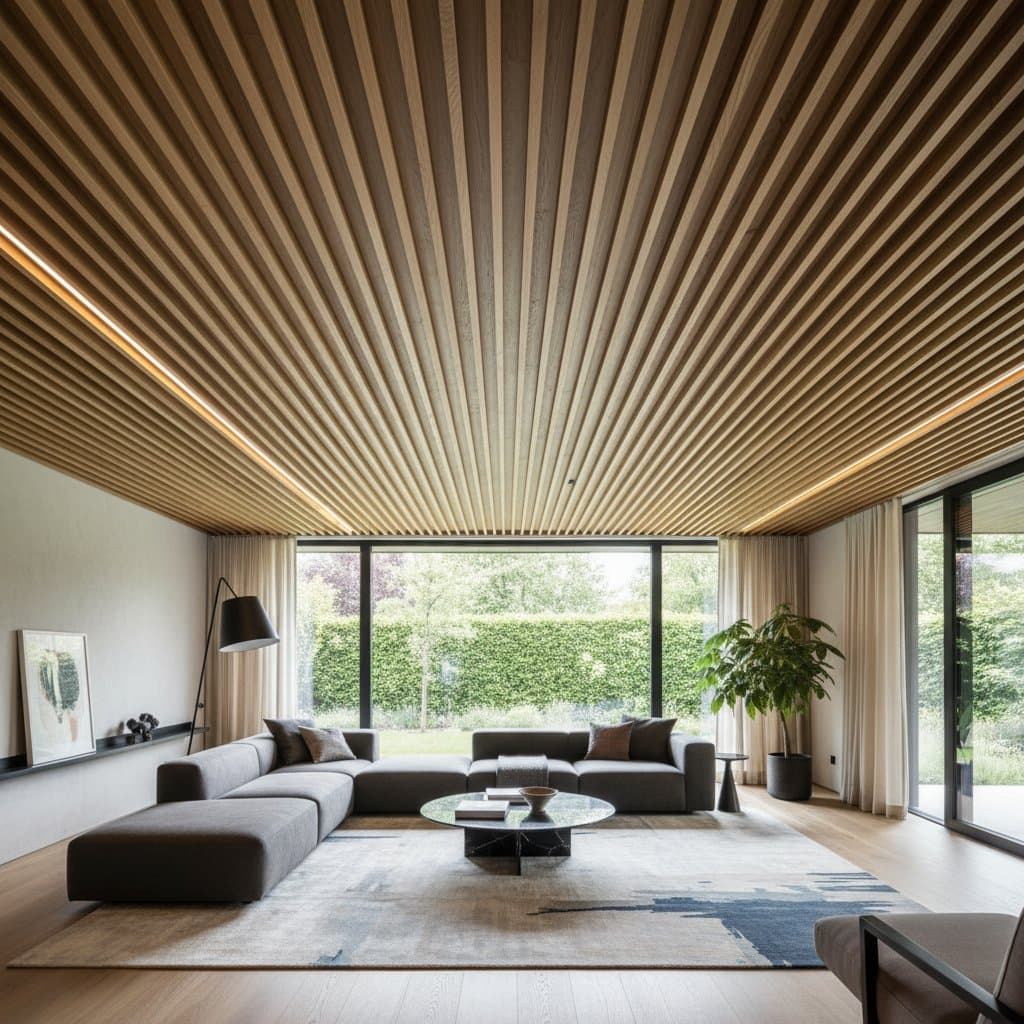
Bold Ribbed Wood Ceilings Transform Homes
Ribbed wood ceilings introduce a sense of depth and character that flat surfaces simply cannot match. Homeowners increasingly select these features to replace plain drywall, embracing elements that provide texture and inherent warmth from natural materials. The linear ribs capture shifting light throughout the day, infusing spaces with subtle rhythm and visual interest. This design achieves a luxurious appearance while accommodating diverse budgets and architectural contexts.
Why Ribbed Wood Ceilings Stand Out
The ribbed configuration serves both functional and aesthetic purposes, with each groove or slat forming shadow lines that impart three-dimensional quality to the ceiling. Light-toned woods, such as ash or white oak, reflect illumination to make rooms appear more spacious and airy. In contrast, richer options like walnut or mahogany create a sense of coziness and bold presence.
Professionals in interior design highlight how this pattern incorporates intricate detail without overwhelming the environment. The repeating lines guide attention upward, establishing a compelling overhead focal point. Within expansive, open layouts, ribbed ceilings subtly delineate areas for dining, lounging, or working, eliminating the need for additional partitioning.
Key Elements That Enhance Performance
- Acoustic Properties: The contoured surfaces scatter sound waves effectively, minimizing reverberation in expansive areas like living rooms or home theaters.
- Interaction with Light: Ribs accentuate ambient glow, and integrating them with downlights or track systems amplifies the textured contours for dramatic effect.
- Ease of Upkeep: Sealed panels repel accumulation of particles and require only gentle wiping with a moist cloth to restore cleanliness.
Select rib intervals from 1 to 3 inches to suit the desired mood; broader gaps evoke a rustic charm, whereas narrower ones convey sleek modernity. Apply a satin-finish sealant to preserve the wood's grain pattern while preventing reflective sheen.
To integrate ribbed ceilings seamlessly, consider the room's proportions. In low-ceilinged spaces, opt for shallower ribs to avoid a compressing feel. Pair the ceiling with complementary flooring, such as wide-plank hardwoods, to unify the design. For added personalization, incorporate subtle color variations within the ribs, like alternating stains for a layered appearance.
DIY or Professional Installation
Individuals with solid carpentry skills can tackle prefabricated ribbed panels using standard tools and an assistant. Allocate two full days for a typical 200-square-foot room, starting with precise measurements and ending with final touches. Essential equipment includes a stud detector, straightedge level, compound miter saw, and pneumatic nailer.
Engage certified professionals for installations involving embedded lights, ductwork outlets, or irregular geometries. Experts guarantee even spacing and structural integrity, adhering to safety protocols. Verify that contractors hold valid licenses, liability coverage, and familiarity with regional regulations before proceeding.
During DIY efforts, begin by marking joist locations on the walls for secure anchoring. Install furring strips perpendicular to the ribs to create a stable framework, then attach panels sequentially from the center outward. Test for level at each stage to prevent sagging. If adapting for sloped ceilings, use adjustable brackets to maintain uniform rib alignment.
Professional teams often employ laser levels for precision in high-ceiling applications. They can also integrate smart lighting controls within the ribs, enhancing functionality. Discuss timelines upfront, as complex jobs may span a week, including prep and cleanup.
Maintaining the Timeless Appeal of Ribbed Wood Ceilings
Ribbed wood ceilings develop a patina over time, with the material's hues intensifying to reflect evolving tastes. Perform monthly light vacuuming along the grooves to prevent buildup, using a soft brush attachment. Refresh the protective layer every three to five years, depending on exposure, to sustain vibrancy and equilibrium.
This feature marries artisanal precision with everyday usability, suitable for serene beach-inspired settings via light ash or sophisticated city dwellings with ebony-toned walnut. Begin the transformation in a high-traffic space to experience the uplift firsthand, then extend the design to adjacent rooms for cohesive elegance.