
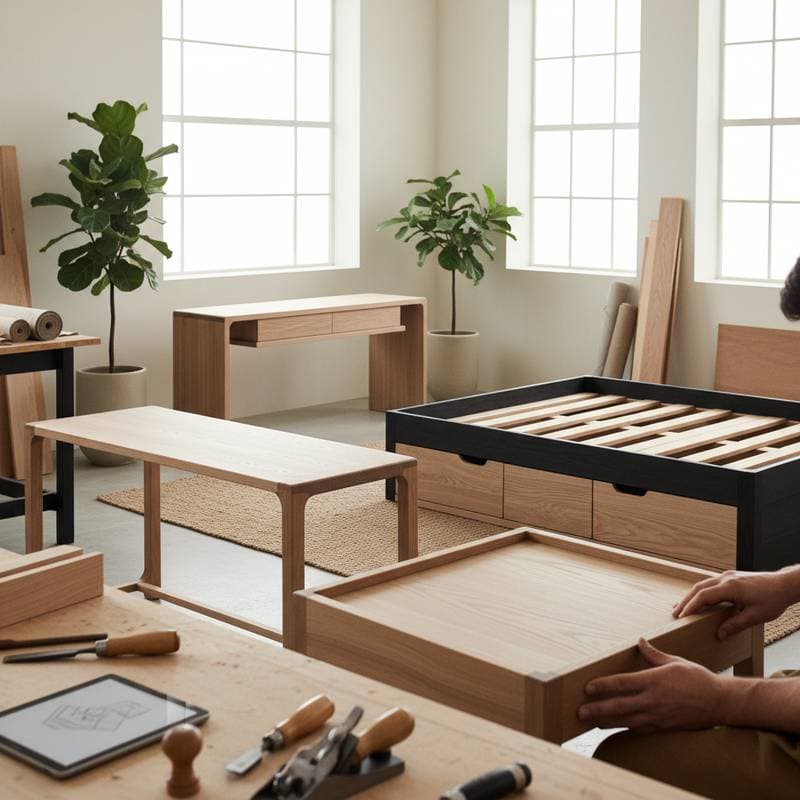
Japandi's Rise Fuels 2025 Custom Furniture Explosion
Minimalist wood furniture experiences its most prominent period to date, with a straightforward explanation. The Japandi style merges Japanese simplicity and Scandinavian warmth, evolving from specialized design publications to everyday home settings. Homeowners request streamlined spaces, tranquil surfaces, and purposeful furnishings. Custom woodworkers respond promptly, leading to increased demand for handcrafted items that emphasize intricate details while appearing both enduring and contemporary.
In an era where consumers face an abundance of factory-made options, bespoke Japandi creations provide a distinctive alternative. This approach combines skilled workmanship with serenity, encouraging woodworkers to enhance their techniques in joinery, material selection, and surface treatments. Such refinements foster profound connections with clients seeking meaningful pieces.
Why Japandi Reshapes the Custom Furniture Market
Japandi design integrates two longstanding philosophies in furniture production. Japanese wabi-sabi appreciates imperfection and the allure of natural aging. Scandinavian hygge prioritizes comfort, natural light, and equilibrium. Combined, these elements promote a style that honors skilled execution and moderation.
For woodworkers, this evolution extends beyond visual appeal; it presents a business prospect. Designers indicate that bespoke Japandi items constitute approximately 40 percent of new orders in upscale residential endeavors. Clients who previously sought rustic farmhouse tables or midcentury interpretations now inquire about low-slung benches, wall-mounted shelves, and gently contoured sideboards crafted from light-toned woods.
This transformation succeeds because Japandi furnishings fulfill essential client desires: longevity, tranquility, and authenticity. Each dovetail joint and meticulously sanded surface conveys dedication and material integrity. The style resonates with individuals who prioritize a select number of high-quality items over transient decorations.
Action step: Professional furniture builders should incorporate one or two Japandi-influenced designs into their portfolios. Employ neutral coatings and understated joinery elements to assist prospective clients in envisioning how your expertise aligns with their simplified objectives.
Step-by-Step: Building a Japandi-Inspired Table
Constructing a compact dining or coffee table in this aesthetic serves as an effective entry into the sector. The following outlines a standard procedure that harmonizes productivity with creative expression.
-
Design planning
Develop a sketch featuring a tabletop with softly rounded corners and a straightforward apron. Maintain a modest size, such as 48 inches in length by 28 inches in width, suitable for seating four at a dining table. -
Material selection
Select quarter-sawn white oak or ash for their structural reliability. Plan for roughly 30 board feet of timber. Anticipate costs of $6 to $9 per board foot, varying by location and quality. -
Joinery layout
Employ mortise and tenon connections for legs and aprons. Achieve a secure mechanical bond to avoid metal hardware. Both hand-cut and machine-cut methods prove effective with exact measurements. -
Surface finishing
Smooth surfaces through planing or scraping to eliminate machining traces. Apply a mixture of tung oil and beeswax for a subtle luster. Typically, two to three applications yield a refined, matte appearance. -
Assembly and inspection
Perform a dry assembly of all joints prior to applying adhesive. Verify leg positioning and diagonal dimensions to ensure rectangular alignment. After final assembly, allow the piece to set for at least 24 hours before completing the sanding.
An adept artisan completes this workflow in 45 to 60 hours. Established workshops may charge $3,000 to $4,500 for the completed item, based on hourly rates and detailing intricacy.
Action step: Capture images at every phase of construction. Prospective buyers appreciate insights into the artistry involved, and these visuals serve as potent promotional assets for portfolios or online platforms.
DIY or Professional: Choosing the Right Path
Japandi furnishings encourage capable amateur builders to explore, while demanding expert exactitude from specialists. The choice between self-construction and commissioning hinges on available equipment, schedule, and perseverance.
DIY-friendly projects
- Wall-mounted shelves supported by concealed brackets
- Low-profile benches or entryway organizers
- Compact coffee tables or bedside stands
These undertakings necessitate fundamental joinery and manual finishing abilities. Allocate 15 to 25 hours per project, plus $400 to $900 for materials and tools.
Professional-only projects
- Expansive dining tables with accurate mortise and tenon assemblies
- Integrated cabinetry featuring seamless doors
- Elaborate storage solutions incorporating sliding shoji-inspired panels
Such endeavors require superior precision, controlled finishing environments, and specialized fixtures unavailable to most enthusiasts. Errors in proportion or coating can extend timelines significantly.
Hiring a contractor:
When engaging a specialist, confirm the following:
- Evidence of liability coverage and operational permits
- Visual documentation highlighting joinery and surface quality
- Testimonials from previous customers
- Comprehensive written proposal including deadlines and pricing parameters
Action step: Commission-based woodworkers should create an extensive FAQ section detailing their fabrication methods. Such openness cultivates confidence and enables equitable assessments against established operations.
Market Drivers: Why Demand Keeps Growing
Interior specialists note consistent enthusiasm for Japandi pieces in both city and rural residences. Contributing factors blend sentiment and utility.
- Calming interiors: Subdued colors and clean profiles alleviate sensory overload.
- Sustainable materials: Preferences lean toward eco-conscious treatments and ethically harvested timber.
- Timeless appeal: Designs adapt seamlessly to modern, traditional, or eclectic surroundings.
- Customization: Individuals cherish tailored creations that match precise spatial needs.
This movement advantages independent woodworking enterprises. Buyers pursuing genuineness frequently select regional creators over overseas manufacturers. Studios emphasizing ethical procurement and artisanal techniques justify elevated pricing.
Action step: Integrate terms like “Japandi furniture,” “minimalist woodworking,” and “Scandinavian joinery” into your site’s search optimization. These adjustments enhance discoverability for style-conscious audiences.
Maintaining Your Investment
Japandi pieces develop gracefully with appropriate upkeep, preserving smooth coatings and secure connections over years.
Basic care routine:
- Wipe dust weekly using a gentle fabric; avoid microfiber that may abrade oil-based surfaces.
- Refresh with oil or wax every six to twelve months, adjusted for frequency of use.
- Shield from prolonged sun exposure to minimize color discrepancies.
- Place protective pads beneath objects to prevent impressions.
For minor abrasions, gentle sanding followed by renewed oil application revives the inherent glow. This philosophy echoes wabi-sabi, where items gain character through time, delighting owners.
Action step: Supply purchasers with a compact maintenance package, including a vial of your chosen finish and instructional guide. This thoughtful addition underscores expertise and fosters ongoing patronage.
Essential Resources for Japandi Woodworking
To deepen your practice, consider these foundational tools and references tailored to the style.
- Material suppliers: Seek mills offering FSC-certified hardwoods like ash or walnut, ideal for light, stable builds.
- Tool recommendations: Invest in sharp chisels for clean mortises and low-angle planes for flawless surfaces.
- Inspiration sources: Study works by Japanese carpenter Toshio Odate or Scandinavian designer Hans Wegner for joinery techniques.
- Community networks: Join online forums such as Woodworkers Guild or local craft associations to exchange Japandi-specific tips.
These elements equip artisans to produce pieces that embody the trend’s essence. By leveraging such resources, woodworkers position themselves for sustained success in the evolving market.