
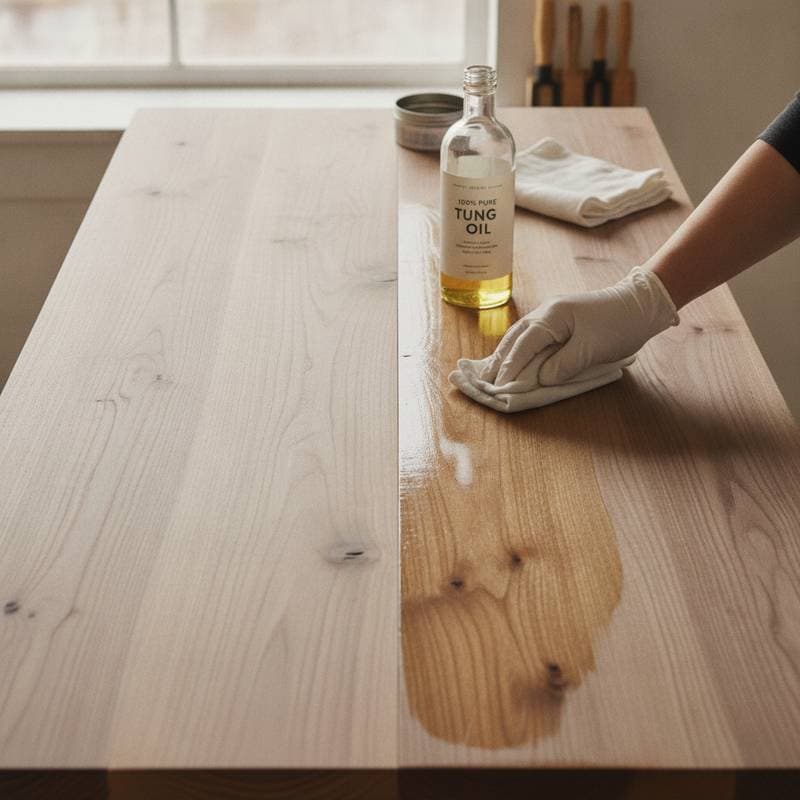
Tung Oil's Comeback as a Zero-VOC Wood Finish
A traditional wood finish is finding new attention among makers who want fewer fumes, a natural appearance, and a finish they can understand. Tung oil offers a warm, hand-rubbed look, but its safety depends on the product, the additives, and how you apply and dispose of it.
At a Glance
Material: Pure tung oil and tung oil based wood finishes
Best for: Furniture, cutting boards, trim, toys, and interior woodwork
Appearance: Low sheen, amber warmth, and visible grain
Application: Clean cloth, brush, or pad, followed by thorough wiping
Typical coverage: About 100 to 200 square feet per quart (9 to 19 square meters), depending on wood porosity
Key caution: Natural does not automatically mean zero VOC or non toxic
Tung oil comes from the seeds of the tung tree. Unlike a surface coating that sits mainly on top of wood, the oil penetrates open grain and cures through exposure to oxygen. That process leaves a durable film within and above the fibers.
The renewed interest comes from a practical concern. Woodworkers want finishes that look less plastic, produce less odor, and support simple repair. Social media videos also make the process easy to understand. A bare tabletop darkens as the oil wets the grain, then develops a soft sheen after repeated coats.
Why Tung Oil Is Back
Many modern finishing products use resins, solvents, or reactive chemicals that can release volatile organic compounds, commonly called VOCs. VOC levels vary widely, and a product labeled low VOC is not necessarily free of emissions. Some water based finishes have low odor but still contain additives that sensitive users may want to avoid.
Pure tung oil contains no added solvent when sold in its simplest form. That makes it attractive for people seeking a minimal ingredient list. It is also renewable, repairable, and compatible with many traditional woodworking methods.
The key distinction is between pure tung oil and a tung oil finish. A bottle labeled tung oil finish may contain varnish resins, mineral spirits, drying agents, or other ingredients. Those blends can cure faster and offer stronger water resistance, but they are not the same as pure oil.
Read the label before you buy. Look for a full ingredient statement, safety data sheet, and clear guidance about ventilation and disposal. A claim such as non toxic after curing describes one stage of use, not the wet product in the can.
What the Photos Reveal
A properly finished piece has a distinct visual character. The grain appears deeper, especially on walnut, oak, ash, and cherry. The surface usually has a satin or matte glow rather than a thick, continuous shine. Small pores remain visible, and the edges do not look buried under a heavy plastic layer.
The finish also changes the tactile experience. A well prepared surface feels smooth but still connected to the wood. You can see the difference in close photographs of a tabletop or cabinet door. The finish follows the grain instead of flattening it into a uniform shell.
Pure tung oil can add an amber tone. Test it on an offcut first, particularly with light woods. A sample also shows how many coats the wood needs and whether the final sheen matches your design.
Application That Works
Preparation determines the result. Sand the wood evenly, remove dust, and soften sharp edges slightly so they do not absorb oil unevenly. For most furniture, sanding through a consistent progression to about 180 or 220 grit (P180 or P220) gives the oil enough texture to penetrate without leaving deep scratches.
Apply a thin coat with a clean cotton cloth, brush, or finishing pad. Keep the surface wet for several minutes, then wipe away every visible excess. Pooled oil can wrinkle, remain tacky, or cure unevenly.
A Simple Coat Schedule
- Apply the first coat generously enough to wet the grain.
- Allow it to soak briefly, then wipe the surface dry.
- Let the piece cure in a clean, ventilated area.
- Lightly abrade raised fibers with fine abrasive if needed.
- Repeat with thinner coats until the surface looks even.
Drying depends on temperature, humidity, wood species, and coat thickness. Do not rush the next coat because the surface feels dry. A cured layer should feel firm and dry, without a cool or oily drag under your hand.
Three to five coats may suit a tabletop, while a decorative object may need fewer. High use surfaces need careful maintenance because pure oil does not provide the same hard chemical barrier as a catalyzed varnish.
Zero VOC Needs Careful Language
Pure tung oil is often described as a zero VOC finish because it contains no petroleum solvent. That statement only applies when the product is genuinely pure and free from added volatile ingredients. Some products marketed as tung oil include solvents that help the oil spread, shorten drying time, or improve penetration.
The safest approach is to separate three questions:
- What ingredients are in the wet product?
- What ventilation does the manufacturer require?
- What does the cured finish resist in daily use?
Use gloves during application, protect the work surface, and keep air moving without blowing dust onto the piece. Do not apply oil in a poorly ventilated room. People with respiratory sensitivities should avoid relying on odor alone as a safety measure.
The Rag Hazard
Oil soaked rags can heat up as the oil oxidizes. If the heat cannot escape, the pile can ignite. This risk applies to tung oil and many other drying oils.
Spread used rags flat outdoors on a noncombustible surface until fully dry, or place them in a listed oily waste container designed for this purpose. Never leave them crumpled in a bin, workshop corner, or cardboard box. Store and dispose of leftover product according to local requirements and the manufacturer's instructions.
Where Tung Oil Fits Best
Tung oil suits projects where grain, repairability, and a natural touch matter more than maximum chemical resistance. It works well on:
- Shelves and cabinets
- Interior doors and trim
- Decorative bowls and boxes
- Low use tables
- Wooden toys, when the product is specifically suitable
- Cutting boards, when labeled for food contact and fully cured
It is less practical for busy kitchen counters, bathroom vanities, exterior joinery, or floors unless the chosen product has additional resins and performance claims. Water can mark a pure oil finish, and repeated abrasion eventually requires another maintenance coat.
Design Details
- Surface character: Low sheen keeps pores and figure visible.
- Color: Test first because tung oil can warm pale wood.
- Repair: Clean, lightly abrade, and recoat worn areas.
- Maintenance: Use mild soap, avoid standing water, and refresh before the wood looks dry.
- Tools: Reserve finishing cloths for oil work and wash brushes according to product directions.
- Testing: Make a sample board with the exact wood, sanding grit, and number of coats.
Choosing the Right Product
Pure tung oil products list only tung oil on the ingredient panel. Blends may list mineral spirits, alkyd resins, or metallic driers. Check the safety data sheet for VOC content and required ventilation. If the label claims food contact approval, verify that the product meets current FDA or equivalent standards before use on cutting boards or utensils.
Living With the Finish
A pure tung oil surface develops a soft patina over time. Light cleaning with a damp cloth and mild soap maintains the finish. When the surface begins to look dry or water no longer beads, apply a maintenance coat. Touch up small worn areas by sanding lightly and adding one or two thin coats. The finish remains repairable throughout its life, which distinguishes it from film forming coatings that require complete removal when damaged.