
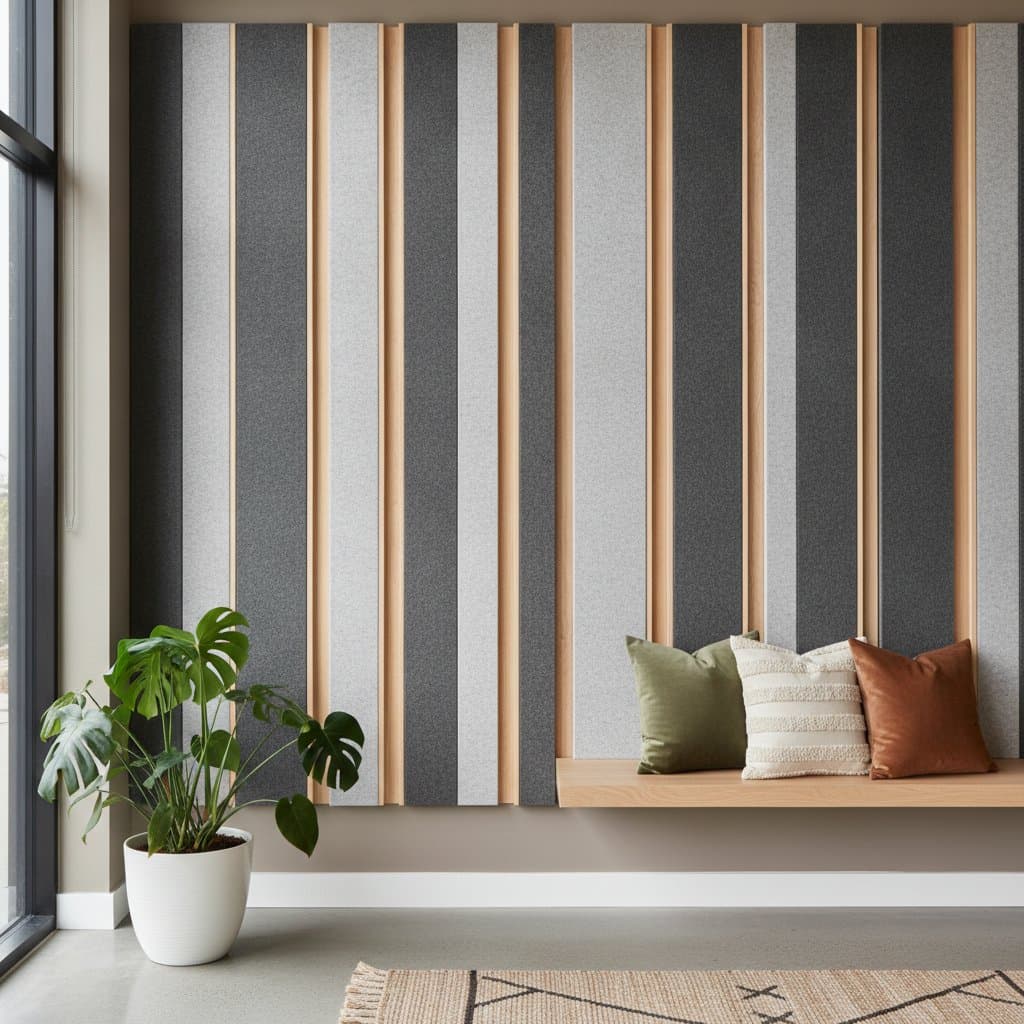
Acoustic Felt Battens: The DIY Sound-Dampening Trend
A noisy home office or echo-filled living room can make daily life stressful. Acoustic felt battens offer a practical and stylish way to reduce sound without hiring a full renovation team. These simple wall panels have become one of the most popular DIY upgrades for people who want professional sound control with a designer finish.
At a Glance
- Average cost per square foot: $6 to $12
- Installation time: 3 to 6 hours per wall
- Skill level: Moderate DIY
- Noise reduction: Up to 35 percent less echo in common rooms
Why Acoustic Felt Battens Work
Acoustic felt battens combine dense polyester or wool felt with narrow wooden or MDF slats. The felt absorbs sound waves while the spacing between slats scatters reflections that cause echo. Even a partial wall installation can lower noise levels noticeably in rooms with hard surfaces such as wood floors or glass windows.
This approach succeeds because it pairs absorption with diffusion. A single felt layer absorbs mid and high frequencies, yet the battens break up the flat surface so sound does not bounce back evenly. The result is a softer, quieter tone that feels calm rather than muffled.
For best results, aim for at least 40 percent wall coverage in rooms larger than 200 square feet. Corners and ceilings reflect sound as well, so adding panels near those areas helps balance the acoustic field.
Step-by-Step Installation
You can install acoustic felt battens with basic carpentry tools. Follow this practical sequence to keep the project clean and safe.
- Measure and plan. Mark wall studs and decide on panel layout before cutting anything.
- Cut and prep battens. Trim felt and slats to fit with a fine-tooth saw or utility knife.
- Mount the backing. Use construction adhesive and finish nails to attach each batten.
- Attach felt strips. Press the felt firmly to avoid gaps that can weaken sound absorption.
- Seal edges. Add a thin bead of acoustic caulk where panels meet corners or trim.
A typical 10 by 10 foot wall requires about 25 to 30 linear feet of battens. Expect to spend half a day on setup, cutting, and mounting when you work carefully.
Costs and Budget
Material quality drives most of the price range. Synthetic felt panels cost $6 to $8 per square foot, while wool felt can reach $10 to $12. Pre-mounted kits with hidden fasteners add convenience but raise total cost by about 20 percent.
To save money, install panels only on the main reflective wall behind a desk, television, or bed. You will still notice major improvements in echo control. Avoid cutting corners with adhesives or backing boards, since weak bonding leads to sagging over time.
DIY or Professional Installation
DIY installation makes sense for smaller rooms or accent walls. You need a level, stud finder, circular saw, and patience for alignment. If your project covers multiple large walls or includes ceiling panels, hiring a professional may be safer. Expect labor rates between $3 and $5 per square foot. Ask for proof of insurance and confirm that installers use acoustic-rated materials rather than decorative imitations.
Common Mistakes to Avoid
- Forgetting to account for baseboards or outlets before cutting panels
- Using thin craft felt that lacks acoustic density
- Mounting panels too tightly and leaving no air gap behind them
- Skipping wall prep, which can cause adhesive failure
Maintaining Your Acoustic Panels
Acoustic felt battens do more than quiet a space. They add warmth, texture, and a sense of calm that improves how you experience each room. Keep panels dust-free with regular vacuuming and inspect edges once a season for loose spots.