
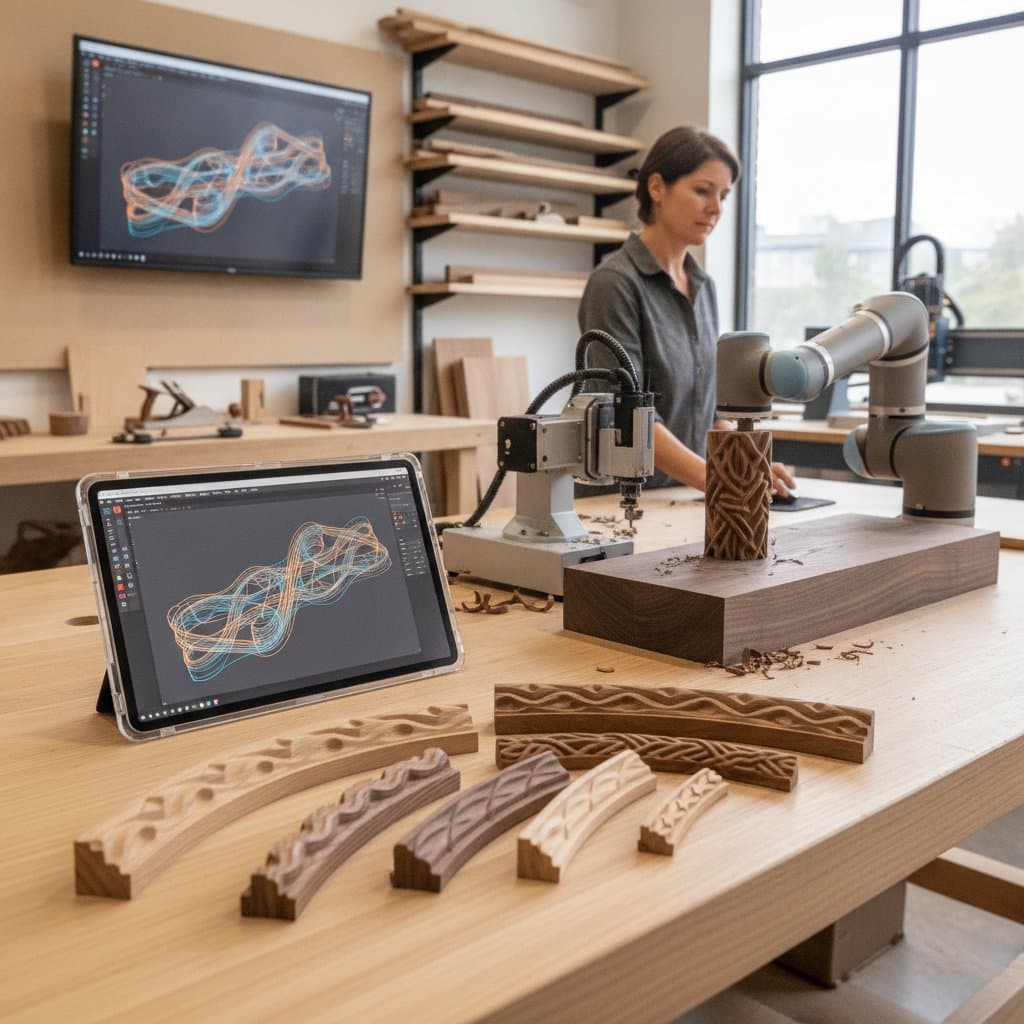
AI Molding Designs Transform Woodshop Workflows
Woodworkers are adopting digital tools that generate trim and molding patterns once limited to lengthy hand drafting. Artificial intelligence shapes curves, profiles, and reliefs that follow walls with exacting accuracy. The key advance lies in turning complex geometry into CNC-ready files that respect real joinery and production constraints.
Project Overview
- Independent furniture makers and boutique millwork shops lead adoption.
- Projects typically cover 150 to 600 square feet.
- Digital fabrication specialists collaborate with studio woodworkers.
- Images are supplied by participating shops.
Traditional Limitations
Earlier methods depended on a fixed catalog of classical profiles. Shops routed a handful of standard shapes and repeated them by hand or with custom knives. Clients could choose ogee, cove, or bead, yet fluid blends remained difficult.
Cabinetmaker Laura Finn noted that clients sought fresh designs still rooted in craftsmanship. Teams sketched by hand, scanned the drawings, and redrew them to match dimensions. Each new profile demanded a dedicated cutter, and proportion changes often required remachining or extra hand sanding.
Current Capabilities
AI-assisted platforms now produce parametric trim profiles within seconds. Makers enter keywords or move sliders for scale, depth, and rhythm. The software delivers a three-dimensional profile ready for direct milling.
Shops preview shadow lines and joint intersections before any wood is cut. Iteration accelerates and material waste drops sharply. Recent walnut baseboards undulate like soft waves, while white oak crowns display tessellated patterns drawn from historical plaster analysis.
Designer Daniel Cruz explained that the goal was trim appearing hand carved yet repeatable by machine. AI supplied that balance, preserving craft warmth at production scale.
Technical Specifications
- Software exports STL or DXF files for CNC routing.
- Walnut, maple, white oak, and ash receive matte oil or low-sheen lacquer.
- Workflow includes digital preview, CNC roughing, and light hand sanding.
- Files are archived by code for future orders.
- Layered lighting accentuates relief depth.
- Hidden spline joints maintain pattern continuity on long runs.
Shop Advantages
AI molding tools shift makers from catalog selection to original pattern creation. The design cycle shortens from days to minutes while retaining full control over proportion. Clients review realistic light simulations before approval, and shops replace multiple custom knives with a single CNC setup.
Daily Workflow Example
One maker reviews overnight algorithm suggestions each morning. From ten generated shapes, two are selected, scaled to wall height, and sent to the router. The machine operates while the woodworker completes other tasks.
A maple molding emerges from the bed still covered in shavings, its looped pattern continuing cleanly around a door frame after hand finishing.
Testing the Process
To evaluate AI molding design, begin with software that exports clean tool paths. Select a short project such as a mantel or mirror frame.
- Enter a simple base curve as the starting profile.
- Modify frequency, amplitude, and symmetry to generate options.
- Simulate directional lighting to check shadow behavior.
- Mill a 24-inch sample before full production.
- Sand edges by hand to soften machine marks.
Record feed rates, bit types, and grit sequences for each archived pattern.
Core Benefits
Parametric scaling prevents distortion and saves setup time. Lighting and finish choices are planned early to reveal relief depth. Digital files form a reusable library that can be licensed or adapted for later work.
Ongoing Care
Installed moldings need routine dusting and humidity control. Apply a clear coat matched to the species and check joints yearly. When refinishing, scuff lightly rather than stripping carved areas to preserve edge definition.
Lasting Value
Every stored file becomes a reusable asset that can generate additional revenue. Homeowners receive consistent custom trim across rooms, and designers gain rapid iteration with predictable results. As Daniel Cruz observed, the computer does not replace the hand but frees it for the work that matters most.