
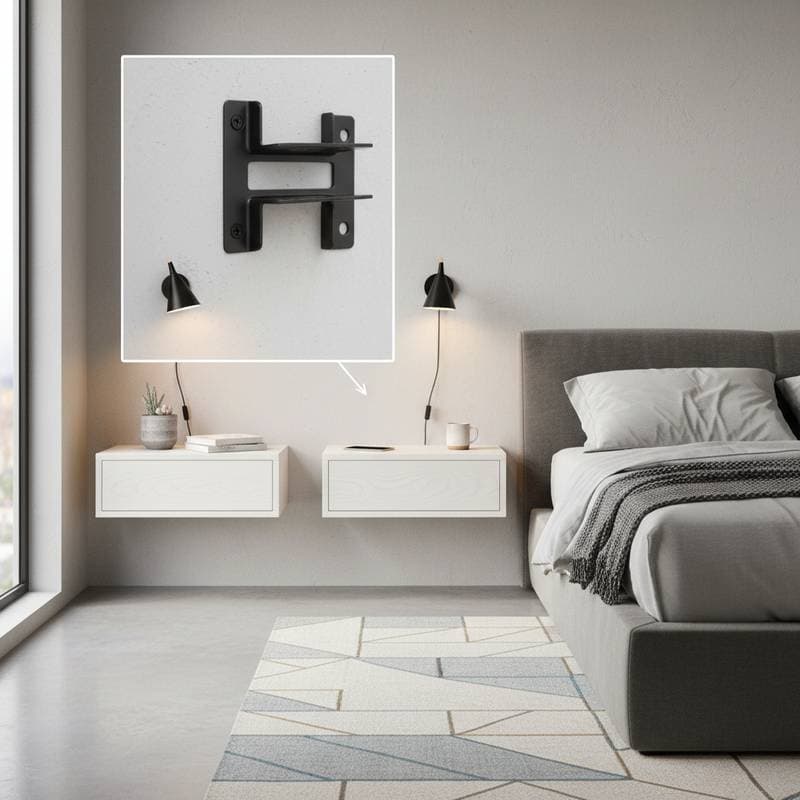
Skill level: Moderate woodworking and basic wall anchoring
Hardware type: Concealed brackets or French cleats rated for 75 to 150 pounds
Why Hidden Mounts Matter
Hidden mounting hardware eliminates visible brackets and screws, allowing the beauty of the wood grain and joinery to take center stage. This approach creates a clean, modern aesthetic that draws attention to the furniture's design rather than its supports. In addition, floating nightstands free up valuable floor space, which simplifies cleaning and contributes to a more airy bedroom atmosphere.
Proper installation ensures that these mounts support substantial weight without compromising stability. Heavy-duty options typically handle 100 to 150 pounds, accommodating lamps, books, alarm clocks, and other bedside items with ease. The system secures the nightstand flush against the wall, minimizing any risk of wobbling or sagging over time.
Begin the process by using a stud finder to identify wall studs accurately. Attach the bracket directly to the solid framing with 3-inch structural screws for maximum hold. Drywall anchors prove unreliable for this application, as they may loosen with repeated use and cause the unit to fail.
Step-by-Step Mounting Plan
- Measure and mark the installation height, generally positioning the nightstand top at 24 to 28 inches from the floor to align with bed height and user comfort.
- Locate studs using an electronic stud finder, then mark the center points where the bracket will attach for optimal load distribution.
- Attach the hidden bracket to the wall, ensuring it remains perfectly level with a bubble or laser level before driving in the screws.
- Mount the nightstand by aligning it with the bracket and sliding or locking it into place until the front edge sits flush against the wall surface.
- Test stability by pressing down firmly on the surface and shaking the unit gently; adjust as needed before adding any weight.
Expect the entire installation for one nightstand to take approximately three hours, assuming all materials are prepared in advance. Double-check every measurement and alignment, as even a minor deviation can disrupt the seamless floating effect.
Material Choices and Design Options
Select solid hardwoods such as oak, maple, or walnut for their inherent durability and compatibility with hidden mounting systems. These woods resist warping and provide a sturdy base that distributes weight evenly across the bracket. Plywood with a hardwood veneer serves as a cost-effective alternative, provided the back panel receives additional reinforcement through cleats or blocking.
Limit the nightstand's depth to no more than 16 inches to prevent excessive torque on the mounting hardware, which could lead to stress fractures in the wood or wall. For a streamlined minimalist design, incorporate finger grooves instead of traditional drawer pulls to maintain clean lines. Apply a matte polyurethane finish to protect the surface from spills, such as water from glasses or condensation from mugs, while preserving the wood's natural texture.
Enhance the floating illusion by installing slim LED strips along the underside, creating a subtle glow that accentuates the weightless appearance at night. Experiment with edge profiles, like chamfered or rounded corners, to soften the design and improve tactile appeal.
Costs and Budget
Building a DIY floating nightstand with hidden hardware generally ranges from $45 to $110, influenced by the quality of wood and finishing options. Consider this typical cost breakdown:
- Hidden hardware kit: $15 to $35, including brackets, screws, and any leveling components.
- Wood and finish materials: $25 to $60, covering lumber, veneer, and protective coatings.
- Fasteners, glue, and sanding supplies: $5 to $15 for clamps, adhesives, and abrasives.
Opt for professional installation if precision concerns arise, which adds roughly $75 per unit in labor costs. Homeowners often prefer the DIY route to control expenses, but attention to detail remains essential. Misaligned brackets can compromise the visual appeal and structural integrity of the piece.
Reduce expenses by selecting pre-assembled mounting kits that feature integrated leveling guides and shims. Prioritize hardware with appropriate weight ratings to avoid safety issues; lower-rated options risk failure under routine loading from books or electronics.
DIY or Professional Help
Tackle this project independently if you possess familiarity with tools like a drill, level, and stud finder. DIY suits situations where wall framing is straightforward and the nightstand construction uses robust wood. Proceed with confidence on standard drywall surfaces backed by wooden studs.
Seek professional assistance for challenging walls, such as those made of plaster, masonry, or those concealing electrical wiring and plumbing. A skilled carpenter can assess and reinforce inadequate studs or fabricate a custom wall plate to distribute the load more effectively. This ensures long-term reliability without the guesswork.
Pro Tips for Success
- Verify the hardware's load capacity through manufacturer specifications and conduct a preliminary test with added weights before permanent installation.
- Employ a laser level for precise horizontal alignment, especially in rooms with uneven floors or walls.
- Apply sealant to all wood surfaces, including the underside and back, to prevent moisture absorption and warping.
- Organize brackets and screws by labeling kits to guarantee compatibility and avoid mix-ups during assembly.
Everyday Benefits of Floating Nightstands
Installed floating nightstands streamline bedroom maintenance by eliminating hard-to-reach crevices where dust accumulates. The elevated design opens up the floor for storage solutions like under-bed bins or easy vacuuming paths. This configuration fosters a sense of spaciousness, ideal for smaller rooms, while the hidden supports elevate ordinary furniture into a sophisticated element of interior architecture. Practical storage meets elegant form, resulting in a versatile piece that enhances daily routines.