
DIY Wood Slat Ceilings That Transform Room Acoustics
A wood slat ceiling changes how a room sounds and feels. It softens echo, warms tone, and adds rhythm overhead. The look remains handcrafted and architectural while delivering acoustic control without the institutional appearance of foam panels.
Project Overview
- Project Type: DIY ceiling upgrade
- Skill Level: Intermediate woodworking
- Room Size: Works best for spaces from 120 to 400 square feet
- Materials: Solid or engineered wood slats, cleats, acoustic backing, fasteners
- Design Lead: Homeowner build with input from acoustic consultant
The Challenge
Many small studios and home offices struggle with poor sound quality. Hard surfaces bounce sound, and even rugs or curtains do little overhead. The ceiling often acts as a giant reflector. One homeowner noted that conversations felt sharp and hollow, like talking inside a box.
The challenge required keeping ceiling height while adding texture and acoustic depth. The space featured drywall overhead, recessed lights, and wiring that limited heavy framing. The goal centered on quieting the room without closing it in.
The Result
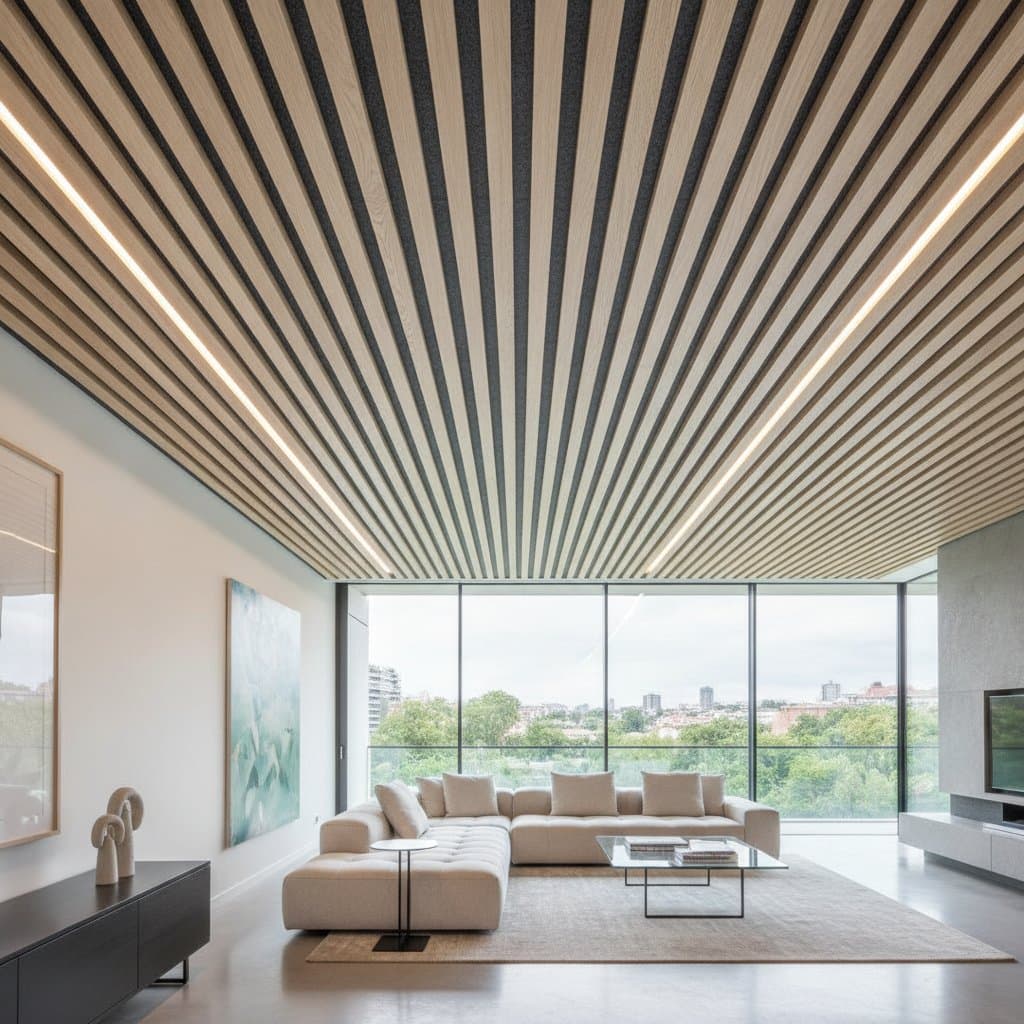
The finished ceiling added warmth, shadow, and silence. Linear wood slats now run the length of the room, suspended on narrow furring strips with black acoustic felt behind them. The felt absorbs reflections while the slats scatter remaining sound waves. The result delivers balanced tone for music, calls, and daily quiet.
Light filters between the slats, and small LED channels sit recessed in line with the boards. The rhythm of repetition makes the room feel longer, while the wood grain softens the visual plane. The homeowner observed that even the kids notice how calm the room sounds.
Design Specifications
- Slat Size: 1 x 2 inch poplar strips spaced 1 inch apart
- Attachment: Mounted to 1 x 3 inch pine cleats secured to joists
- Backing: Acoustic felt, 3 millimeters thick, stapled before slat installation
- Lighting: Low-profile LED channels set flush with slat edges
- Finish: Clear matte polyurethane for natural tone and easy dusting
- Access Panel: Hidden magnetic section for wiring and maintenance
The pattern acts as a visual baffle that breaks up sound while keeping depth to less than 2 inches. The spacing leaves enough air gap for absorption but avoids an unfinished appearance.
Build Steps
1. Map the Grid
Measure room width and length. Divide evenly so slat spacing ends symmetrically at both edges. Mark centerlines with chalk. For a typical 12-foot span, plan for about 36 slats when spacing stays consistent. Check for recessed lights or vents that need clearances.
2. Install Furring Cleats
Attach cleats perpendicular to the slat direction. Use screws into joists at 16 inches on center. Shim where needed to keep the surface level. The cleats form a stable base and maintain an air gap for sound absorption.
3. Apply Acoustic Backing
Roll out black felt or fabric. Staple it to cleats while keeping seams tight. This layer absorbs mid and high frequencies. It also hides mechanicals between slats and deepens contrast for a clean visual line.
4. Cut and Finish Slats
Rip boards to width on a table saw. Sand with 180 grit, then apply finish before mounting. Pre-finishing saves overhead work and gives even coverage. Let boards cure flat to prevent twist.
5. Mount the Slats
Start at one wall and use spacers for consistent gaps. Nail or screw through each slat into cleats. Keep fasteners aligned and slightly recessed. Work across the room while checking straightness every few rows. Leave a 1/2 inch expansion gap at edges.
6. Integrate Lighting
For accent lighting, route shallow channels before installation. Fit LED strips or small fixtures into those recesses. The glow between slats accentuates rhythm and avoids glare. Connect wiring through the hidden access panel.
Acoustic Performance
A slatted surface works as both diffuser and absorber. The gaps scatter reflections while the backing absorbs energy. This approach tames flutter echo without deadening the room. The result feels natural rather than muffled. In test recordings, sound decay shortened by about 30 percent, creating a perceptible calm in speech and music.
Visually, the ceiling reads as crafted joinery. Light and shadow animate the surface through the day. The wood tone anchors the space and pairs with most wall finishes. For small rooms, running slats in the long direction draws the eye outward and makes the ceiling appear higher.
Perimeter Integration
For multi-use spaces, combine the acoustic ceiling with hidden storage along the perimeter. Shallow soffits can house speakers, wiring, or slim shelves. Maintain at least 7 feet of head clearance for comfort.
Practical Considerations
- Plan spacing carefully for symmetry and clean terminations.
- Use black or dark acoustic fabric to conceal structure.
- Pre-finish slats on a flat surface for control and speed.
- Integrate lighting early, since retrofitting proves difficult later.
- Maintain small air gaps for absorption without reducing ceiling height.
Long-Term Benefits
This project rewards patience and precision. A weekend of cutting and layout creates years of acoustic comfort. Once installed, maintenance stays simple. Dust occasionally with a microfiber wand and reapply finish as needed. The slats resist sag when kiln-dried and sealed properly. Over time the wood mellows and deepens in color, adding character.
Homeowners often notice improved focus and less fatigue. The sound quality invites conversation and music. The same approach adapts well to basements, studios, or open-plan living areas. Treating the ceiling as a design surface improves everything below it.