
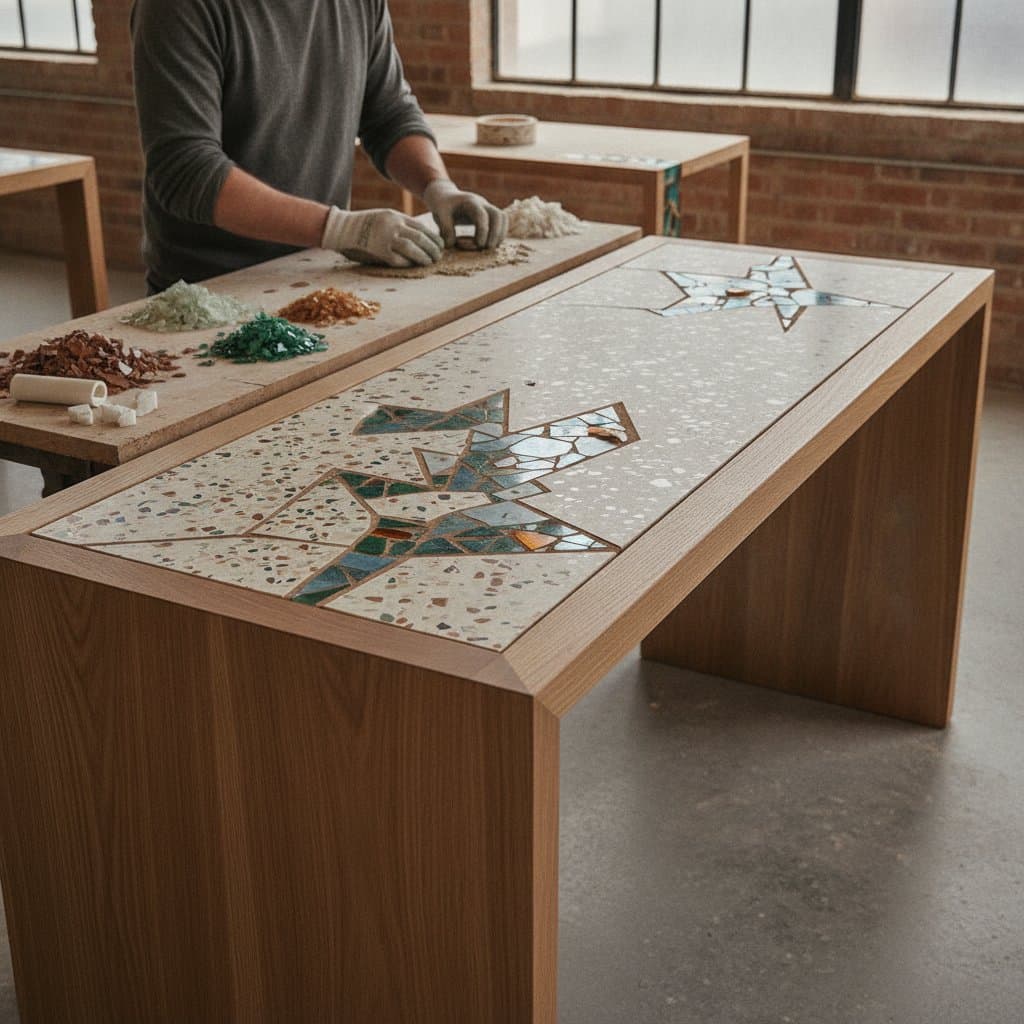
Terrazzo Inlays Transform Custom Furniture
Terrazzo inlays are moving from floors and countertops into custom furniture. This shift gives woodworkers a fresh way to combine craftsmanship with color. Artisans embed fine chips of marble, glass, and quartz into wood surfaces. The result creates a tactile contrast that feels both nostalgic and new.
These pieces catch light and invite touch. They tell a material story through mixed textures.
At a Glance
- Trend focus: Terrazzo inlays in custom furniture
- Locations: Studios across North America and Europe
- Size range: Coffee tables from 36 inches wide to dining tables at 84 inches long
- Makers: Independent woodshops and boutique furniture studios
- Images: Courtesy of participating makers
Traditional Limits
Wood inlay once meant traditional marquetry or metal accents. Those methods often leaned formal and required specialized techniques. Designers noticed that younger clients wanted something more relaxed and expressive.
People love the warmth of wood but want a little play, said furniture designer Clara Vance. Terrazzo brings that energy without losing the craftsmanship.
The challenge was combining the two materials without compromising durability or clean lines.
Modern Solutions
The new generation of terrazzo inlays solves that problem with precision. Makers pour thin terrazzo sections directly into routed cavities. They also cast panels separately and set them flush with the wood surface.
Tabletops now show walnut frames cradling pale terrazzo fields dotted with soft pink and gray chips. Console fronts feature narrow terrazzo bands that break up the grain like jewelry.
The effect is light catching and grounded. The terrazzo adds rhythm and color to minimal forms. Each piece becomes a small architectural statement.
Terrazzo works like a landscape, said maker Julian Vega. When you sand and finish it next to oak or ash, the fragments look like pebbles in a tide line.
Design Details
- Materials: Common pairings include white oak with neutral terrazzo, walnut with multicolored chips, and maple with recycled glass terrazzo.
- Finish: Two part epoxy sealers or low sheen polyurethane protect both surfaces evenly.
- Joinery: Floating tenons or biscuit joints maintain stability around inlay sections.
- Thickness: Most terrazzo pours measure 0.25 inch to keep weight manageable.
- Edge treatment: Slight chamfers prevent chipping where terrazzo meets wood.
- Lighting: Position pieces under pendant lights or near windows to enhance sparkle.
Practical Benefits
This approach bridges craft traditions with sustainable material use. Many terrazzo mixes use waste marble and glass. The method turns offcuts into decorative detail. Small studios produce high impact surfaces without sourcing large slabs.
For clients, terrazzo inlays feel custom but approachable. They bring pattern and texture without the commitment of full stone furniture. The terrazzo element can highlight a tabletop center, a drawer face, or a shelf edge.
From a workflow perspective, the process introduces a hybrid discipline. Woodworkers learn casting, sanding, and finishing techniques borrowed from flooring trades. That cross training expands what small shops can offer.
How to Experiment
Start with small projects like trays or side tables. Route a recess about 0.25 inch deep. Line it with painter tape and pour a simple terrazzo mix using epoxy resin and fine aggregate. Once cured, sand the surface flush with the surrounding wood using progressive grits up to 320. Seal the entire piece for an even sheen.
Keep clearances tight. A neat edge makes the inlay look intentional. Use contrasting tones for maximum effect, such as pale terrazzo set in dark walnut.
If you prefer less mess, buy pre cast terrazzo tiles and cut them to fit. Set the piece into a rabbet and glue securely. Finish edges with a slim wood frame or metal band to protect from impact.
Core Advantages
- Material mix: Combining terrazzo and wood creates visual depth and a modern artisan look.
- Durability: Proper sealing prevents moisture transfer and keeps surfaces stable.
- Sustainability: Terrazzo often includes recycled content and reduces material waste.
- Customization: Color and aggregate size can be tailored to suit each design.
- Market appeal: Clients view terrazzo inlays as both nostalgic and contemporary.
Daily Care
Daily care is simple. A damp cloth and mild soap keep surfaces clean. Avoid abrasive pads that could dull the finish. Over time the terrazzo may gain a soft patina that matches the wood mellow tone.
Homeowners often describe these pieces as conversation starters. They link familiar wood textures with unexpected color. For open plan interiors, terrazzo topped pieces help define zones.
It is about bringing craftsmanship into the everyday, said designer Clara Vance. The terrazzo inlay makes a table feel made for you, not just made for a catalog.
Future Applications
Expect to see terrazzo inlays on credenzas, bed frames, and seating. Smaller accents will appear in kitchens on custom stools and cutting boards. The flexibility of the material means every piece can tell its own story.
For makers, terrazzo inlays offer a strategic advantage. They refresh product lines without retooling entire collections.
Terrazzo inlays show that innovation often starts by reimagining a familiar surface. When wood and stone meet in perfect proportion, the result is both timeless and current.