
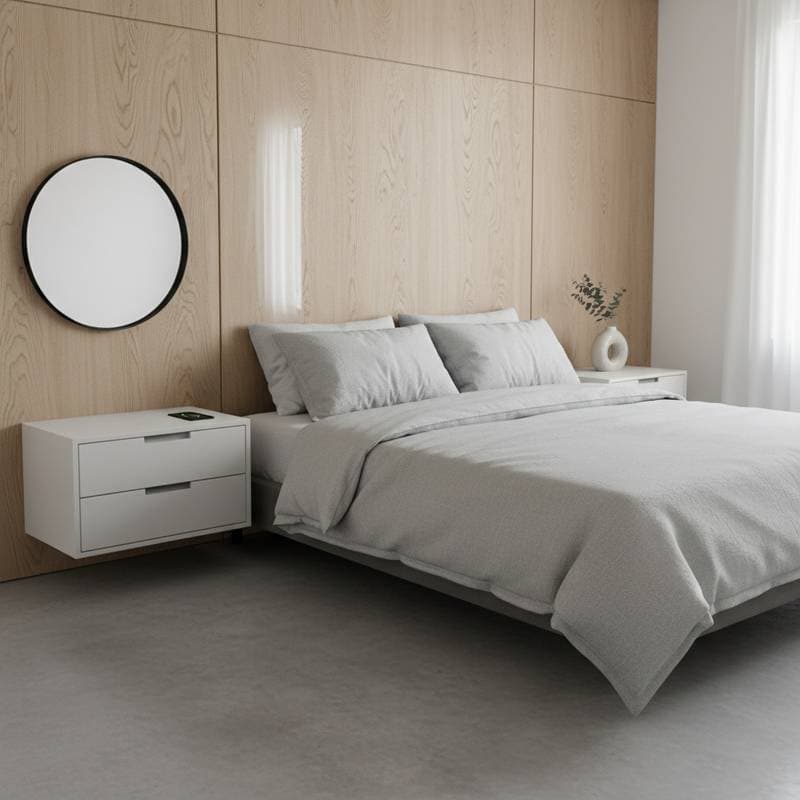
Why Floating Nightstands Revolutionize Bedrooms
You can tell a lot about a bedroom by the nightstand. It holds the last thing you touch before bed and the first thing you reach for in the morning. Yet traditional nightstands often eat up floor space, block air circulation, and add visual clutter. A floating nightstand changes that dynamic completely. Mounted directly to the wall, it seems to hover, creating more room to move, clean, and breathe. Once you live with one, it is hard to go back.
The Space-Saving Breakthrough
A floating nightstand frees up about 3 to 5 square feet around each side of a bed. That might sound small, but in a compact bedroom, it can make the difference between feeling cramped and feeling open. By lifting storage off the floor, you gain visual space and easier access for cleaning.
Most models mount 19 to 24 inches above the floor, matching the height of a standard mattress top. This placement keeps essentials within reach while allowing a vacuum or robot cleaner to glide underneath. For small apartments or secondary bedrooms, that flexibility is priceless.
Why it works: The human eye reads uninterrupted floor lines as spaciousness. When furniture legs and bases disappear, the room feels larger and lighter. This optical effect is the same principle used in minimalist interiors and boutique hotel design.
Action step: Measure from your mattress top to the floor, then mark that height on the wall. That line becomes your mounting reference for perfect reach and symmetry.
Smart Storage for Modern Living
A floating nightstand may be smaller than a traditional one, yet smart design makes it surprisingly efficient. Drawer interiors typically offer 150 to 250 cubic inches of storage, enough for a phone, glasses, and a small book. Some models add hidden cord channels or wireless charging pads built into the top surface.
Modern versions use soft-close slides rated for 50 pounds, so you can store heavy items without stress on the wall anchors. For shared bedrooms, symmetrical twin units keep each side organized and balanced.
Why it works: Vertical mounting transfers load to wall studs, which can handle far more weight than furniture legs on carpet or uneven floors.
Action step: Before installation, locate wall studs with a stud finder. Secure mounting brackets into at least two studs per nightstand to support loads up to 100 pounds safely.
DIY or Professional Installation
Installing a floating nightstand is within reach for most handy homeowners, but it requires precision. The challenge lies in achieving perfect level alignment and proper stud anchoring. A single-degree tilt becomes obvious when two units flank a bed.
DIY Installation Checklist
- Stud finder and level
- Tape measure and pencil
- Drill with pilot bits
- Heavy-duty wall anchors or lag screws
- Mounting bracket or French cleat system
A confident DIYer can complete both sides in about 90 minutes. The key is to pre-drill and test-fit before tightening. Always check that drawers open fully without hitting baseboards or outlets.
When to Hire a Pro
Hire a professional if your walls are plaster, masonry, or have hidden wiring. A carpenter or handyman will charge around $75 per hour but ensures safe, clean results. They can also hide cables inside the wall or add integrated lighting. For multi-unit projects or built-ins across a wall, professional help is worth the cost.
Action step: Ask your installer to confirm stud locations and show you how the mounting system works. That knowledge helps if you ever need to remove or reposition the piece.
Living with Your Design
Once installed, floating nightstands change how you experience the room. Cleaning becomes easier, the floor feels open, and light reflects more evenly. Many homeowners report that their bedrooms feel larger even when nothing else changes. That mental clarity matters, especially where you rest and recharge.
You can personalize the look further by styling the surface carefully. A single book stack, a small plant, or a ceramic dish often looks better than multiple small items. Because the wall space below remains visible, the entire room feels balanced and intentional.
If you have hardwood floors, consider extending the same wood tone onto the nightstand. This continuity ties the surfaces together visually. For painted walls, white or neutral finishes keep the floating piece subtle and airy.
Maintenance tip: Wipe the underside occasionally. Dust collects less than on floor-based furniture, but keeping it clean maintains that floating illusion.
Maintaining Your Investment
A well-made floating nightstand lasts decades with minimal care. Check hardware once a year to ensure screws remain tight, especially in humid climates where wood can expand slightly. If drawers start to stick, apply a small amount of beeswax to the slides. For solid wood units, oil the surface every few months to prevent drying.
Making It Your Own
Personalize your floating nightstands to match your bedroom's vibe. Select finishes like matte black for a contemporary edge or warm oak for rustic charm. Integrate smart features such as USB ports or LED underlighting to enhance functionality. These touches ensure the design aligns with your daily routines while elevating the overall aesthetic.