
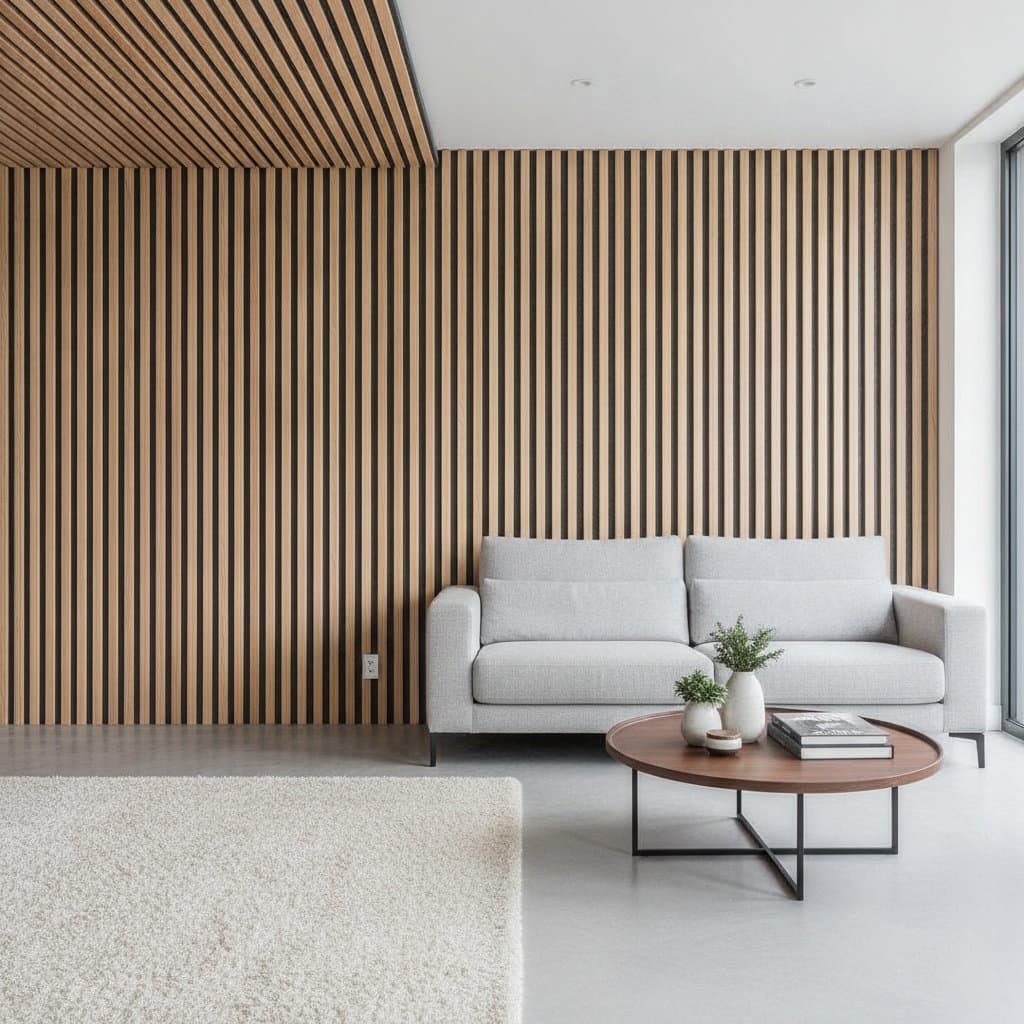
DIY Acoustic Slats Blend Style With Sound Control
When a room sounds as good as it looks, the improvement stands out. DIY acoustic slats deliver that balance. They reduce echoes, introduce warmth, and create a custom millwork appearance that suits nearly any interior. Whether you tune a home office or upgrade a workshop, these panels combine sound control with clean wood design.
Project Overview
- Target users include homeowners, makers, and small studio owners.
- Suitable spaces feature hard surfaces that produce noticeable echo.
- Typical panel size measures 2 by 4 feet and adapts to walls or ceilings.
- Design draws from Scandinavian interiors yet remains practical for DIY builders.
Current Room Challenges
Drywall and hard flooring reflect sound throughout many rooms. Conversations lose clarity, equipment noise increases, and music lacks definition. One homeowner noted that the open layout felt empty because of persistent echo. Standard soundproofing solutions often appear bulky or visually unappealing, which discourages action.
Results After Installation
Slatted acoustic panels altered both acoustics and room character. Wood battens placed over sound absorbing felt added rhythm and depth. The space now feels calm and complete. Light plays across the vertical slats and produces soft shadows that change during the day. The panels function as both artwork and acoustic treatment, which makes them effective in offices, studios, or living areas.
Tight vertical slats maintain consistent spacing of roughly one inch. Dark felt behind the slats absorbs reflections. This arrangement quiets the room without creating a closed or technical appearance. Texture, tone, and performance remain balanced.
Material and Construction Choices
- Select solid oak, walnut, or ash strips three quarters of an inch thick.
- Mount strips on black acoustic felt or recycled PET backing.
- Maintain one inch gaps between strips to support both appearance and sound diffusion.
- Attach panels with screws or construction adhesive over furring strips to create an air gap that improves absorption.
- Integrate LED channels to highlight grain and supply ambient light.
- Apply clear matte oil to preserve natural color and reduce glare.
- Clean surfaces with a vacuum and soft brush attachment.
Installation Sequence
- Measure the wall and sketch panel positions while allowing one quarter inch clearance at edges.
- Prepare acoustic felt or dense polyester mat at least four tenths of an inch thick.
- Cut slats to uniform widths of one and one half inches and sand all edges.
- Apply finish to every surface before installation.
- Use a scrap block as a spacing guide and verify alignment after each row.
- Route wiring behind the slats when adding lighting or cable channels.
- Finish edges with trim or metal angles for a clean frame.
Practical Considerations
Acoustic slats lower reverberation while supplying natural warmth. The system works on walls, ceilings, or freestanding screens. Begin with a single panel behind a desk and expand as needed. Material costs range from twelve to twenty dollars per square foot depending on species and finish. Most builders complete a small room over one weekend.
Daily Experience
After installation, speech becomes clearer and music gains richness. The panels create visual rhythm that anchors furniture arrangements. Pair the treatment with rugs or upholstered seating to adjust acoustics further.
Designer Carla Nguyen observed that wood slats bring sound down to a human scale so that detail returns. This combination of clarity and calm alters daily use of the space.
Readers can test the approach on a headboard wall or television backdrop before covering an entire room. Precision and patience produce panels that quiet the environment and enhance its appearance. Acoustic slats connect craftsmanship with comfort while celebrating wood grain and solving a practical acoustic issue.