
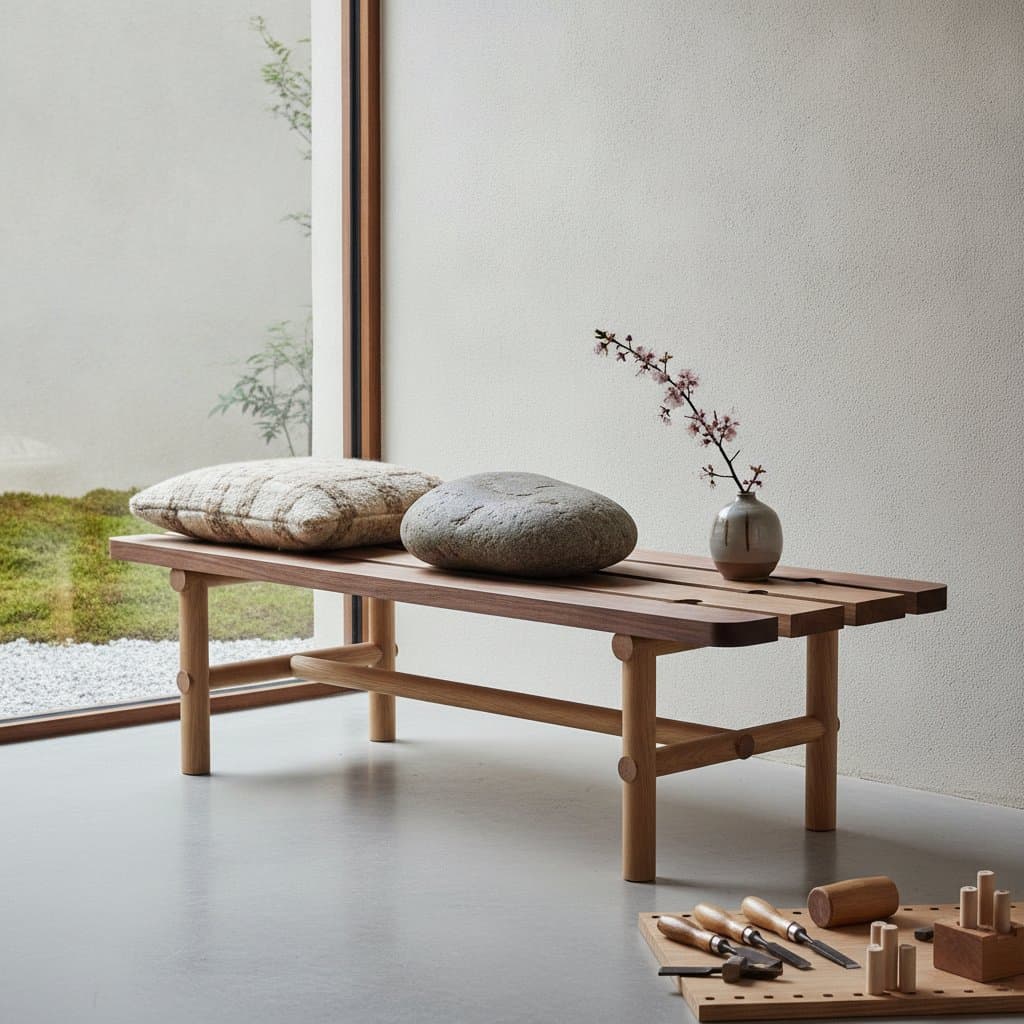
Japandi Dowel Joints Deliver Strength Without Visible Fasteners
A new wave of minimalist furniture is sweeping social feeds. Videos of smooth wood joints snapping together without a single screw have captivated millions. What looks effortless rests on centuries of craftsmanship. Japandi dowel joinery fuses Japanese precision with Scandinavian calm and redefines how people design, build, and live with furniture.
Core Specifications
- Average cost per piece: 250 to 1200 dollars
- Difficulty level: moderate
- Assembly time: 1 to 3 hours
- Required tools: drill, dowel jig, clamps, mallet, wood glue
- Recommended materials: oak, ash, birch, walnut
Design Principles Behind the Technique
Japandi furniture unites Japanese wabi-sabi restraint with Nordic simplicity. Both traditions prize natural materials, clean lines, and durable construction. Dowel joinery replaces metal fasteners with wooden pins that rely on friction and glue. The outcome is a seamless surface that appears organic and deliberate.
A properly formed dowel joint sustains 150 to 250 pounds of shear load according to standard woodworking tests. Multiple dowels spread force evenly and eliminate wobble. Tight tolerances render the joint nearly invisible while removing corrosion risks and maintenance demands. Full disassembly remains possible for transport or refinishing.
Start with a side table or bench when first exploring the method. These projects involve fewer alignment points and allow practice before larger builds.
Construction Sequence for a Coffee Table
A basic Japandi-style coffee table requires four legs, two stretchers, and one top panel. Total shop time averages three to five hours.
- Mark dowel locations one inch from each edge and at least two inches apart.
- Drill holes with a dowel jig to maintain alignment; three-eighth-inch hardwood dowels suit most legs and rails.
- Perform a dry fit to verify square assembly before applying glue.
- Spread a thin film of glue inside each hole, insert dowels, and clamp until dry.
- Sand with 180-grit paper and apply oil or satin lacquer.
A digital caliper helps maintain tolerances within half a millimeter.
Budget Ranges and Material Choices
Costs vary with material grade and finish quality. DIY builds using solid oak or birch typically total 200 to 400 dollars. Custom commissions range from 900 to 1200 dollars. Pre-drilled flat-pack kits start near 250 dollars.
Professional shops charge 45 to 70 dollars per hour for precision drilling. Bulk dowel stock reduces expense; one 36-inch hardwood dowel yields roughly a dozen joints at about three dollars.
Decision Framework for Makers
DIY remains practical when a drill press or jig is available and the piece stays under 36 inches wide. Professional assistance becomes advisable for load-bearing frames, matching grain, or flawless commercial finishes. Laminated dowels that expand during glue-up provide extra strength in high-end work.
Request shop samples of both exposed and hidden joints before engaging a woodworker.
Frequent Errors and Prevention
Misaligned holes greater than one millimeter produce twisting. Over-application of glue swells fibers and blocks full insertion. Skipping the dry-fit stage risks permanent misalignment. Seasonal wood movement requires slight clearance on long-grain surfaces. Glue must cure completely before sanding to avoid blotches.
Label mating parts with matching letters during layout to prevent confusion after glue application.
Daily Use and Long-Term Care
Japandi dowel furniture supports easy disassembly, refinishing, and relocation. A loose dowel regains full strength with fresh glue and a clamp. Absence of metal eliminates rust, squeaks, and stripped threads. Each joint reflects deliberate craftsmanship rather than mass production.
Integrate a single dowel connection into the next project to experience the difference in structure and longevity.