
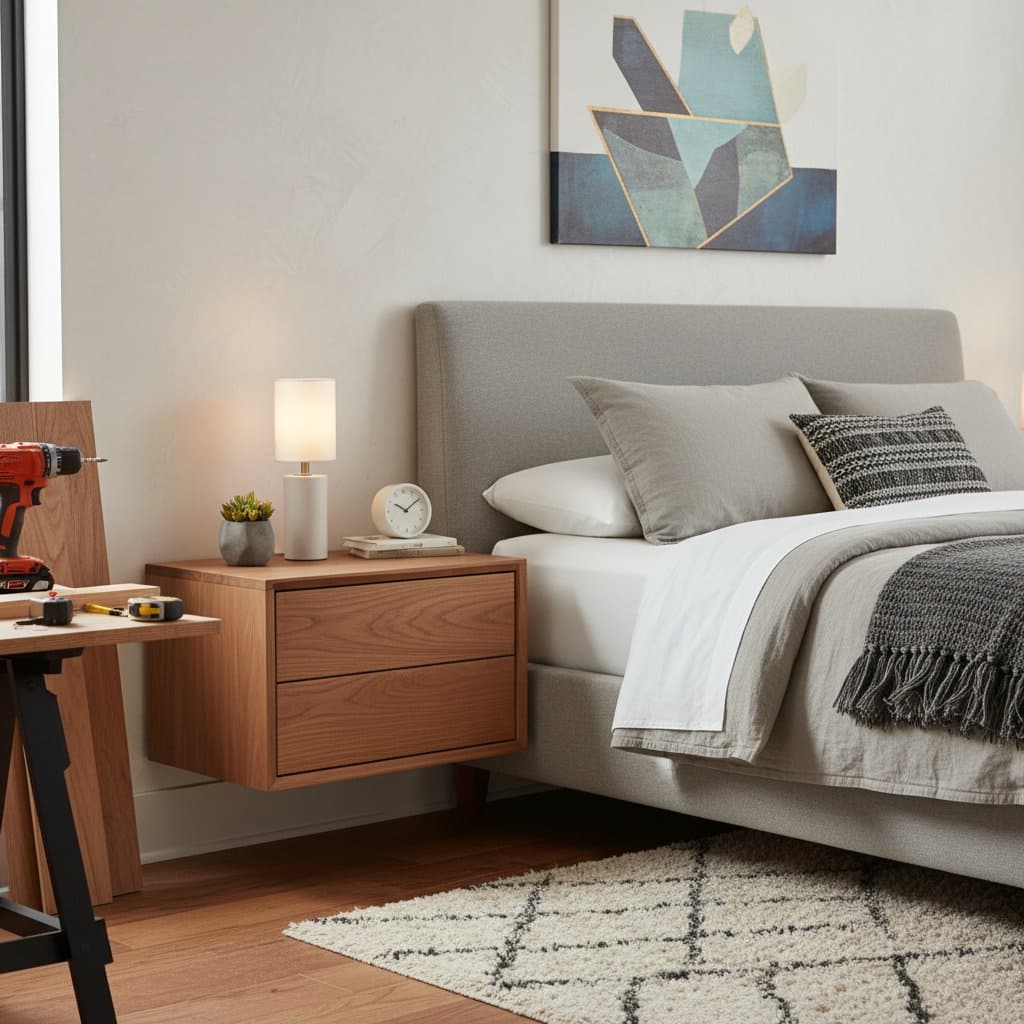
Build Floating Nightstands for $45 to $120 This Weekend
Floating nightstands offer a modern solution for bedrooms with limited space. These wall-mounted designs free up floor area while providing convenient storage for essentials like books, lamps, and remotes. With basic woodworking skills and a weekend of effort, you create sturdy pieces that support up to 40 pounds and feature a clean, professional finish.
This guide details everything from material selection to installation. Costs range from $45 for a basic version to $120 for enhanced options with added shelves or premium wood. Follow the steps to achieve custom results that match your bedroom decor.
Materials and Cost Breakdown
Select materials based on your budget and desired style. Pine provides an affordable, lightweight option, while oak or maple adds durability and a richer appearance. All pieces fit standard lumber dimensions for easy sourcing at home centers.
Basic Build ($45 Total)
- One 1x12-inch pine board, 8 feet long: $15 (cut into shelves and sides)
- One 1x6-inch pine board, 6 feet long: $10 (for bracing)
- Wood screws (1.25-inch and 2-inch): $5
- Wood glue: $5
- Sandpaper (assorted grits): $5
- Finish (stain or paint): $5
Upgraded Build ($120 Total)
- One 1x12-inch oak board, 8 feet long: $40
- One 1x6-inch oak board, 6 feet long: $25
- Heavy-duty shelf brackets (hidden): $20
- Wood screws and anchors: $10
- Wood glue and clamps: $10
- Fine sandpaper and premium finish: $15
Purchase extra materials if you plan multiple nightstands. Quantities assume a pair, but halve for a single unit.
Tools Required
You need only basic tools for this project. Rent or borrow power tools if you lack them to keep costs low.
- Measuring tape and pencil
- Miter saw or handsaw with miter box
- Drill with bits (for pilot holes and screws)
- Clamps (at least two)
- Orbital sander or sanding block
- Level and stud finder (for installation)
Safety gear includes gloves, safety glasses, and a dust mask. Work in a well-ventilated area when applying finishes.
Step-by-Step Construction
Prepare your workspace by clearing a flat surface. Measure twice to ensure accuracy, as precise cuts lead to seamless assembly.
1. Cut the Pieces
Measure and mark the boards according to your nightstand dimensions. A standard size is 18 inches wide, 12 inches deep, and 24 inches tall, but adjust for your needs.
- Shelf: 18 inches by 12 inches (one per nightstand)
- Sides: 24 inches by 12 inches (two per nightstand)
- Braces: 18 inches long (two per nightstand, cut at 45-degree angles for support)
Use the miter saw for clean, straight cuts. Sand edges lightly after cutting to remove splinters.
2. Assemble the Frame
Apply wood glue to the edges where pieces join. Position the sides vertically and attach the shelf horizontally at the top using clamps.
Drill pilot holes to prevent splitting, then secure with 1.25-inch screws. Repeat for the bottom brace, placed 4 inches from the floor level for stability.
For the upgraded version, add a middle shelf by cutting an additional 18-inch by 10-inch board and attaching it midway up the sides.
3. Reinforce and Finish
Install diagonal braces inside the frame for added strength. Cut 1x6-inch pieces to fit from the back of one side to the front of the other, securing with glue and 2-inch screws.
Sand the entire assembly starting with 120-grit paper, progressing to 220-grit for a smooth surface. Wipe away dust, then apply your chosen finish in thin coats. Allow 24 hours drying time between coats.
Installation Guide
Mount the nightstands securely to wall studs for safety. Locate studs using a finder, marking positions 30 to 36 inches above the floor.
Mounting Steps
- Hold the assembled nightstand against the wall at the desired height. Use a level to ensure it remains even.
- Mark screw locations through pre-drilled holes in the back of the frame.
- Drill pilot holes into the studs, then insert wall anchors if needed for hollow areas.
- Secure with 3-inch lag screws, tightening until flush.
Test stability by applying gentle pressure. For heavier loads, add metal L-brackets behind the frame.
Avoid Common Mistakes
Rushing measurements leads to uneven units. Always double-check cuts against your bedroom layout.
Neglecting to level during installation causes wobbles over time. Use shims if the floor or wall is uneven.
Skipping finishes exposes wood to moisture and wear. Apply sealant to edges for longevity.
Overloading before full curing risks sagging. Wait 48 hours post-installation before placing items.
Customize and Maintain Your Nightstands
Adapt the design with routed edges for a decorative touch or integrated cable management holes for chargers. Paint or stain to complement your bedding.
Clean surfaces with a damp cloth weekly. Tighten screws annually to maintain support. These nightstands not only save space but also add a personal flair to your bedroom sanctuary.