
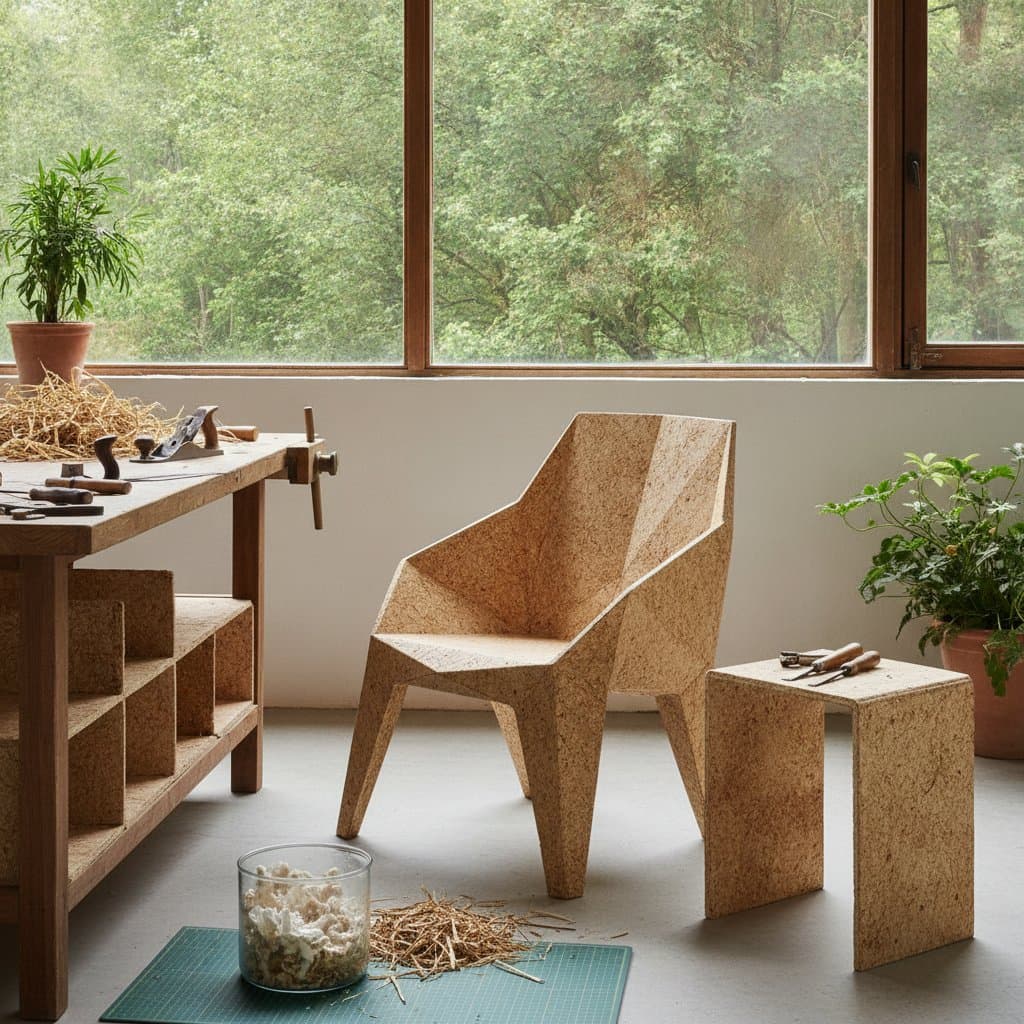
Mycelium Wood: Revolutionizing Sustainable DIY Furniture
Building furniture that looks beautiful and helps the planet can feel like a tradeoff. Traditional hardwoods are durable but often costly and resource intensive. Particleboard and MDF rely on adhesives that release formaldehyde. A new material known as mycelium wood is changing that balance with a natural and renewable alternative that you can grow instead of mill.
At a Glance
- Material: Mycelium bio-composite
- Average DIY cost: $4 to $8 per square foot
- Curing time: 5 to 10 days
- Best uses: Furniture panels, lighting, sculptural forms
- Skill level: Intermediate woodworking or design
What Mycelium Wood Is and Why It Matters
Mycelium wood is made from the root structure of fungi grown through agricultural byproducts such as sawdust, hemp hurds, or corn stalks. When the material is packed into a mold and left in a warm, humid environment, the mycelium binds the particles into a solid mass. Once dried and heat cured, you get a lightweight, rigid, and biodegradable panel that can replace plywood or foam.
This process uses about 80 percent less energy than making MDF or particleboard. It requires no petrochemical binders and produces almost no waste. For small woodworking shops, this means a cleaner workspace and fewer disposal fees. The material is also compostable, which makes it attractive for makers who care about end-of-life sustainability.
To start experimenting, you can buy a pre-inoculated mycelium kit for about $40 that yields roughly one cubic foot of material. Larger batches can be grown in reusable molds lined with wax paper or thin plastic sheeting.
How It Performs in Furniture Projects
Mycelium panels have a density of about 15 to 25 pounds per cubic foot, similar to lightweight foam. They can be sanded, cut, and veneered using standard woodworking tools. The surface is porous, so sealing with a natural oil or shellac improves durability.
Furniture makers use mycelium for chair shells and stools where low weight and organic shapes matter. They also apply it to tabletops laminated with thin hardwood veneer for strength. Lighting fixtures benefit from the material warm, diffused glow.
Tests from bio-composite research labs show compressive strength between 0.3 and 1.2 megapascals. That is lower than plywood but enough for decorative or occasional-use furniture. Reinforcing with thin bamboo ribs or embedded jute mesh adds extra rigidity without losing sustainability benefits.
Costs and Budget
Expect to spend between $150 and $300 to produce a small batch of panels suitable for one coffee table. Most of that cost comes from molds, substrate materials, and curing energy. Once you have molds, each future batch costs closer to $60.
Money-saving tips include using local agricultural waste instead of store-bought substrate. Sharing molds among community makerspaces helps as well. Air drying when weather allows instead of electric curing reduces expenses further.
Avoid cutting costs on sterilization. Contamination from other fungi ruins entire batches and wastes time.
DIY or Professional
You can grow mycelium wood at home, but temperature and humidity control are key. A small grow tent with a heat mat works well for DIY. If you want consistent panels for retail furniture, partnering with a biofabrication studio or using a professional incubator is worth the investment.
When hiring a fabricator, check that they follow safety protocols and have insurance covering biological materials. Ask to see sample panels and compression test results before ordering large runs.
Common Mistakes
- Skipping sterilization of substrate, leading to mold contamination.
- Overdrying, which causes brittleness and cracking.
- Using thick molds without internal airflow, slowing growth.
- Ignoring surface sealing, which shortens lifespan when exposed to moisture.
Each issue can be avoided by maintaining stable humidity around 70 percent and drying gently at low heat.
Scaling Up Your Designs
Start small with decorative panels or lamp bases, then scale up as you learn how the material behaves. Keep detailed notes on substrate mix, growth time, and moisture levels.
Mycelium wood will not replace every species of lumber, but it gives you another tool for sustainable design. With patience and experimentation, you can craft furniture that is light, renewable, and truly grown from the ground up.