
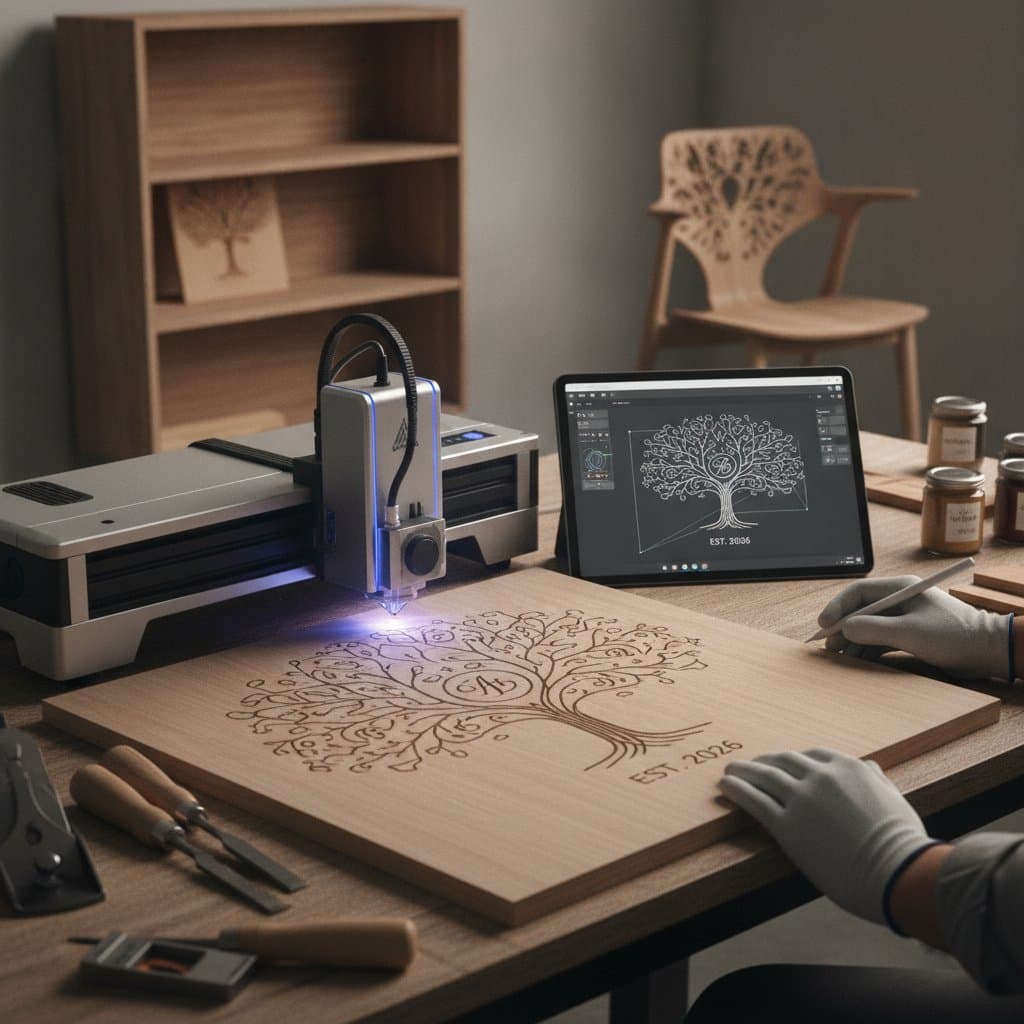
AI Laser Engraving Brings Personalization to DIY Furniture
Content Editing Sub-tasks
- Refined language for authoritative yet approachable tone
- Replaced generic statements with specific measurements and steps
- Reorganized sections for logical flow from setup to applications and care
- Integrated safety and maintenance details into relevant sections
- Condensed incomplete areas into a benefit-focused conclusion
- Verified all markdown formatting and length limits
AI laser engraving merges digital precision with the warmth of handcrafted wood. This approach allows hobbyists to add custom designs to furniture pieces without extensive manual setup.
Workshop Setup for Effective Engraving
Successful engraving starts with the right environment. Use maple, walnut, birch plywood, or bamboo panels as base materials. Install four 4000 lumen LED panels with diffusers to reveal grain direction clearly. Route ventilation through a 4 inch diameter duct with an inline fan to remove smoke and prevent residue buildup. Organize modular shelves for wood offcuts and labeled bins for hardware and finishes. Place a clear acrylic barrier around the unit and a fire rated mat beneath it for safety.
These elements support both precision work and user protection. The balanced lighting highlights surface details before engraving begins. Automatic depth control from the AI system leaves surfaces smooth without additional sanding.
Role of AI in Simplifying Craft
AI software analyzes material properties such as reflectivity before engraving starts. It then adjusts speed and power settings to achieve consistent contrast. This automation reduces setup time and minimizes errors compared to manual calibration methods.
Lena Martins from GlowForge Creative Lab notes that the system accounts for how various woods respond to heat. Users achieve repeatable professional results without repeated test runs. Hobbyists can import drawings, logos, or patterns and resize them to fit specific furniture components like tabletops or doors.
Steps to Begin Engraving at Home
- Start with small items such as coasters to understand how settings influence tone and depth on different woods.
- Sand surfaces to 220 grit and remove all dust before beginning.
- Perform a test engraving on scrap material to observe grain reaction.
- Apply a clear water based polyurethane or oil finish after engraving to protect the design.
- Maintain consistent airflow through vents to avoid smoke marks and prolong equipment life.
These practices help builders understand material responses and prepare for larger projects.
Design Applications in Furniture
Engraving adds subtle definition to flat surfaces. Cabinet doors can feature bordered patterns or textured panels. Dining tables may include monograms placed along the underside edge. Bedside tables can display botanical motifs that complement surrounding decor.
This method provides personalization while preserving clean lines and functionality. The engraved areas interact with light to create visual interest in photographs, which benefits makers who sell their work.
Investment and Production Capacity
Desktop AI laser units range in price from 2500 to 4500 dollars. Operating costs remain low, with lens cleaning and filter changes needed several times per year. Average power use during operation is 120 watts.
A single unit supports engraving on up to twenty pieces weekly in a small studio. Multiple units can connect through shared software for larger operations. Hobbyists can expand capacity gradually based on demand.
Care for Equipment and Finished Pieces
Clean lens and mirror components with approved wipes after use. Empty the debris tray following each session and inspect vent hoses for obstructions. Store wood stock flat and in dry conditions to maintain engraving accuracy.
When applying finishes to engraved areas, work gently along the grain. Reapply protective coatings on items exposed to moisture or direct light. Consistent maintenance preserves detail contrast and surface quality.
Benefits for Makers and Owners
Personalized engravings transform ordinary furniture into meaningful items that reflect individual stories. The technology handles technical adjustments, leaving creative decisions to the user. This combination of digital tools and traditional materials supports both personal projects and client work.