
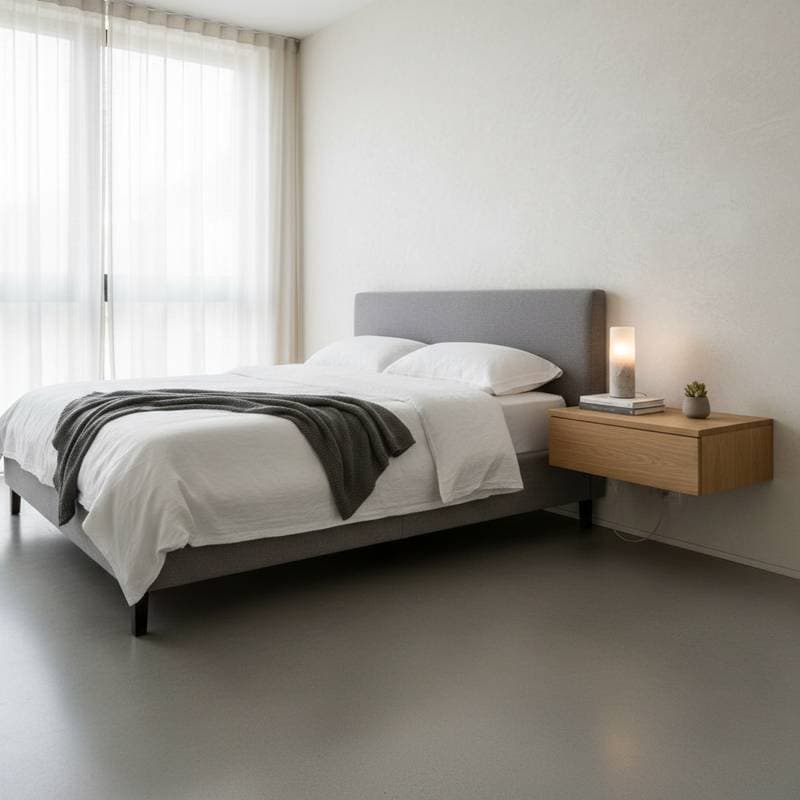
Wall-Mounted Nightstands Free Up Floor Space Fast
A floating nightstand costs between 90 and 250 dollars. It can make a bedroom feel larger and more organized. Traditional nightstands often crowd the floor and restrict layout choices. Lifting the surface off the ground creates visual breathing room and simplifies daily cleaning.
Before installation it helps to review design options, mounting methods, and upkeep routines. These details determine how well the units perform over time. The right choices turn even a compact bedroom into a calm and practical space.
How Floating Nightstands Improve a Room
Wall-mounted nightstands open up floor area and produce clean horizontal lines that enlarge the visual field. The space below accommodates baskets, shoes, or a low bench. Because the units fasten straight to the wall they remain level regardless of uneven flooring common in older homes.
The design also removes the narrow gap behind a conventional table where dust collects. Vacuuming or sweeping underneath takes only seconds. Homeowners report that the open layout encourages them to keep surfaces clear and route cords neatly out of sight.
Key advantages include consistent height for reading or device charging and concealed hardware that delivers a built-in appearance. Measure from the top of the mattress to the preferred surface height, typically near 25 inches, and mark the wall before purchasing or building.
Installation Steps for Reliable Results
Accurate placement and secure fastening protect both the furniture and the wall. Follow this sequence to achieve a stable mount.
- Use a stud finder to locate solid framing and mark each stud with painter tape.
- Measure 25 to 28 inches from the floor according to mattress height.
- Hold the mounting bracket or French cleat level against the wall.
- Pre-drill holes slightly smaller than the screw diameter.
- Drive at least two screws into studs or into heavy-duty anchors rated for 50 pounds.
- Slide the nightstand onto the bracket until it seats firmly.
- Test stability by applying gentle downward and sideways pressure, then tighten any loose fasteners.
Verify the published weight capacity before loading the surface. Most small shelves support 20 to 30 pounds while reinforced units handle up to 60 pounds.
Choosing Between DIY and Professional Help
A homeowner who owns a drill and level can finish the project in a few hours when studs are accessible and the unit weighs less than 40 pounds. This approach suits simple drywall installations under 24 inches wide.
Professional installation becomes preferable when walls contain metal studs or masonry, when hidden wiring for USB ports or lighting is required, or when the furniture is custom and heavy. A carpenter or handyman usually charges 75 to 125 dollars per hour, bringing the total for two nightstands to roughly 150 to 300 dollars including hardware.
Living With and Caring for the Units
Once mounted, the nightstands become part of everyday use. The most immediate change is the sense of open floor area. Even a modest bedroom gains visible square footage, and cleaning underneath requires almost no effort.
Personalize each unit by adding a felt liner, installing a dimmable sconce above for reading, or aligning matching floating shelves to create a unified wall arrangement. Wipe wood surfaces weekly with a damp microfiber cloth and avoid placing drinks directly on the finish. Check mounting screws annually to maintain tightness.
Solid-wood units benefit from periodic protective oil. Painted or laminate surfaces need prompt touch-ups to prevent moisture intrusion. When repainting or remodeling, remove the bracket with care rather than prying to preserve both the wall and the hardware. Store spare screws and anchors for future adjustments.
Floating nightstands also enhance a bedroom listing by presenting a modern, built-in appearance that buyers notice immediately.