
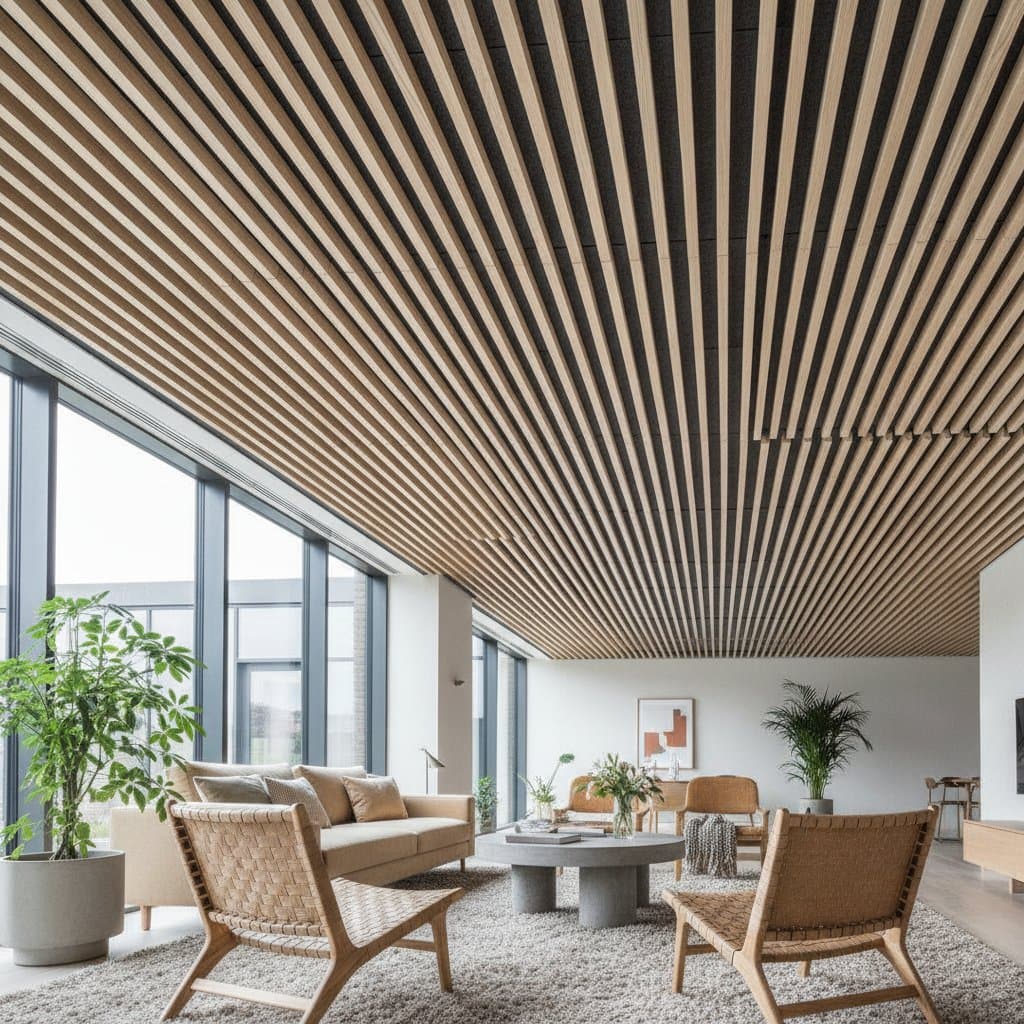
Why Wood Slat Ceilings Define the 2026 Acoustic Trend
Modern studios, restaurants, and homes often feature slim wood slats running across the ceiling. These elements soften sound and introduce texture along with warmth. Designers and homeowners select wood slat ceilings for both visual appeal and proven acoustic advantages. Proper spacing, backing, and finish allow these panels to reduce echo by up to 70 percent.
Acoustic Design Gains Importance in Contemporary Interiors
Open layouts with concrete and glass create bright spaces that also reflect sound excessively. Reverberation times of 1.5 to 2.0 seconds make conversations difficult. Wood slat ceilings address this issue effectively.
Each slat functions as a sound baffle. Gaps permit sound waves to reach an acoustic backing for absorption. This process creates a balanced sound environment. The improvement resembles moving from a noisy gym to a quiet library.
These systems originated in commercial projects. They now appear in homes where owners seek acoustics similar to hotels and studios. Natural wood combined with sound control supports wellness in design.
Record a voice memo in various rooms to identify echo issues. Long reverberation indicates a need for acoustic treatment.
Flexible Design Options Enhance Visual Interest
Slat ceilings add rhythm and depth to minimalist rooms. Finishes such as oak, walnut, ash, and bamboo provide variety. Black stained or whitewashed options suit modern tastes.
Slats can run in one direction or cross to define areas. Suspended sections accommodate lights and vents. This adaptability works for new builds and renovations.
Place slats parallel to the longest wall to extend narrow rooms visually. Alternate directions in office bays to manage sound across large areas.
Installation Choices: DIY or Professional
Modular panels allow intermediate DIY installation with basic tools. Professional assistance suits complex projects.
DIY Approach
- Skill level required is intermediate.
- Required tools include a drill, level, stud finder, saw, safety glasses, and hearing protection.
- Installation takes one to three days for a medium room.
- Main challenges involve seam alignment and fixture cuts.
Clip systems simplify the process. Attach rails to joists and snap panels into place. Maintain a one inch air gap behind the backing.
Professional Approach
Engage a licensed carpenter or acoustical contractor for irregular ceilings. Integration of lighting or HVAC also requires experts. Fire rated materials demand compliance.
Professionals achieve precise leveling and concealed wiring. Standard projects complete in two to three days.
Verify contractor insurance and review past work before hiring. Confirm the specific NRC rating for the system.
Performance Comparison with Alternative Materials
Several options exist for sound control. The following table outlines key differences.
| Material Type | NRC Range | Appearance | Maintenance | Cost (per sq. ft.) |
|---|---|---|---|---|
| Fabric Panels | 0.75 to 0.95 | Limited textures | Can stain | 8 to 14 dollars |
| Acoustic Tiles | 0.60 to 0.85 | Plain grid | Replaceable | 4 to 10 dollars |
| Spray Treatments | 0.65 to 0.80 | Uniform matte | Hard to patch | 6 to 12 dollars |
| Wood Slats | 0.55 to 0.90 | Natural and modern | Wipe clean | 9 to 18 dollars |
Wood slats offer superior aesthetics and durability despite slightly lower peak NRC values in some cases. They avoid fiber shedding and maintain appearance over time.
Combine slat ceilings in main spaces with wall panels near seating areas for optimal results.
Simple Maintenance Extends Service Life
Routine dusting with a microfiber tool preserves the surface. Damp cloths with neutral soap handle deeper cleaning. Finishes last 10 to 20 years under typical conditions.
Refinishing is possible without panel removal if fading occurs. Store spare slats to match future replacements accurately.
Long Term Value Considerations
Quality installation protects the acoustic and visual benefits for years. Regular care ensures continued performance in daily use.