
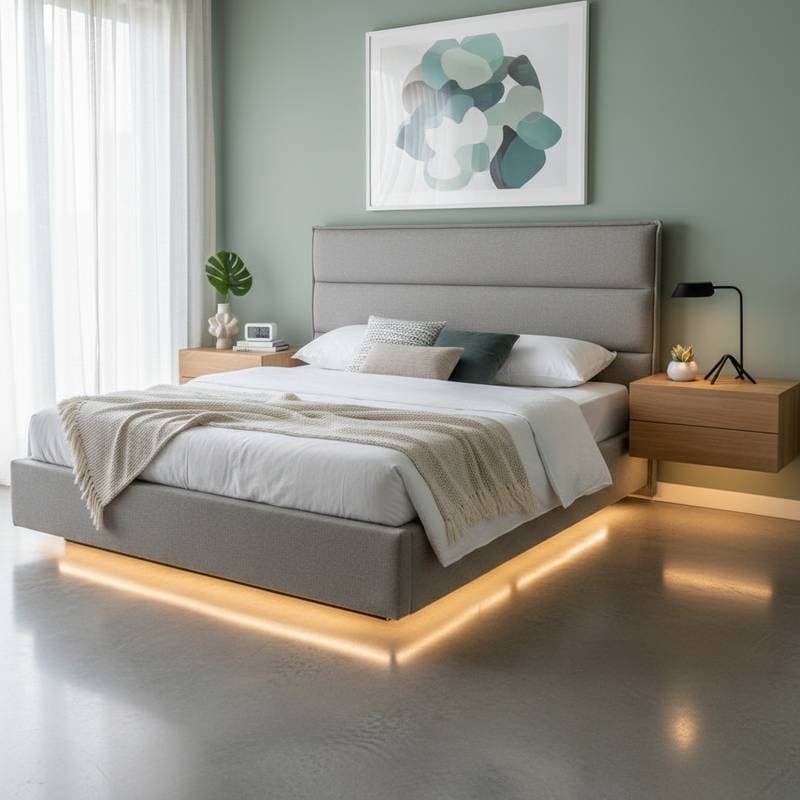
Floating Nightstands: The Essential Trend for Modern Bedroom Makeovers
Floating nightstands have emerged as a key element in contemporary bedroom transformations. These fixtures conserve floor space, foster a sense of visual tranquility, and impart an airy quality to compact rooms. The concept involves a wall-mounted surface that liberates the floor area and enhances the intentionality of the bed wall.
At a Glance
Who lives here: A couple seeking a clean, minimal bedroom that retains warmth and functionality
Location: Portland, Oregon
Size: 170 square feet (15.8 square meters)
Design team: Studio Lark Interiors
Photographer: Jamie Patel
Before
The original setup featured bulky freestanding tables that encroached on the bed area and accumulated dust beneath. Electrical cords trailed across the carpet, and protruding drawers narrowed the walkway. “We loved the symmetry of bedside tables, but they felt heavy and cluttered,” the homeowner noted. The primary objective was to preserve storage capacity while expanding the visual openness of the space.
After
The design team substituted the tables with floating nightstands crafted from solid maple, positioned twelve inches (30 centimeters) above the floor. Each unit includes a single drawer and an open shelf suitable for a book or phone. A warm gray paint application on the wall behind the bed accentuates the pale wood tones and amplifies the floating illusion. Recessed wall sconces supplant traditional table lamps, ensuring a clear surface.
The designer explained that this wall-mounted approach aligns with the couple's desire for a lighter, more breathable environment. The elevated design permits light to penetrate all corners and facilitates straightforward floor maintenance. The outcome is a serene, equilibrated room that appears more expansive without altering the physical dimensions.
Design Details
- Materials: Solid maple boxes featuring half-blind dovetail joinery, finished with a matte water-based sealant for enhanced durability and subtle luster.
- Hardware: Undermount slides equipped with soft-close mechanisms, supported by concealed brackets capable of bearing 100 pounds (45 kilograms).
- Lighting: Hardwired sconces incorporating integrated LED bulbs on each side, operated via bedside dimmer switches.
- Storage: A six-inch (15-centimeter) deep drawer per unit, complemented by an open cubby for device charging.
- Mounting height: Twelve inches (30 centimeters) from the finished floor to allow ample clearance for vacuuming.
Every element addresses practical daily needs. The drawer conceals cords and chargers, whereas the open space underneath maintains unobstructed sightlines. The sconces eliminate lamp cords and support nighttime reading without illuminating the entire space.
Implementing the Design in Your Home
Floating nightstands adapt to diverse bedroom configurations. Success depends on accurate sizing and secure installation. Target at least two wall studs per unit, or employ a French cleat system to distribute weight uniformly. Maintain a minimum of three inches (7.5 centimeters) between the nightstand top and mattress top for comfortable access.
Follow these steps for a weekend construction project:
- Measure the space. Identify the bed's centerline and determine nightstand widths, typically ranging from 16 to 24 inches (40 to 60 centimeters).
- Construct the box. Select 3/4-inch (1.9-centimeter) plywood or solid wood; apply glue and clamps to edges, followed by thorough sanding.
- Incorporate drawer or shelf. Opt for finger-pull fronts to preserve clean lines.
- Secure the mounting. Employ a level alongside robust wall brackets or cleats; verify the height suits seated reach from the bed.
- Apply the finish. Use clear matte urethane or natural oil to achieve a warm, moisture-resistant tone.
A pair of floating nightstands can be assembled for less than two hundred dollars, contingent on material choices. In rental situations or for interim solutions, L-shaped metal brackets anchored with toggle bolts into drywall provide a viable option.
The Significance of This Design Shift
As bedrooms diminish in size, individuals seek furniture that integrates seamlessly rather than imposing on the space. Floating nightstands fulfill this requirement by merging storage, lighting, and aesthetics into a single efficient form. Elevating pieces off the floor exposes more baseboard and generates visual respite. This approach proves particularly effective with hardwood or polished concrete floors, where light reflects dynamically across the surface.
Designers highlight the wellness advantages as well. “When the floor is clear, the room feels calmer,” interior designer Lena Brooks observed. “You see more of the flooring and less clutter, which helps the mind settle before sleep.” This organized aesthetic directly enhances everyday comfort.
Essential Insights
- Space efficiency: Floating nightstands liberate floor area and enlarge the perceived scale of compact rooms.
- Simplified maintenance: Absence of legs keeps dust and cords hidden, streamlining vacuuming tasks.
- Versatile aesthetics: Compatible with modern, mid-century, or Scandinavian styles based on selected finishes.
- Tailored dimensions: Adjust height, width, and depth precisely to align with bed height and user reach.
- Seamless lighting integration: Wall sconces or under-shelf LEDs minimize visual clutter while boosting utility.
Maintaining and Enhancing the Installation
After installation, floating nightstands require minimal care. Clean surfaces weekly and examine brackets seasonally. For a refined touch, line drawers with felt or incorporate leather pulls. Renters may opt for a single floating shelf as a streamlined alternative, paired with a wall-mounted sconce to retain the airy ambiance.
This design trend excels in harmonizing style with utility. It delivers storage precisely at the point of need while preserving lightness and openness. Precise mounting and proportional planning remain crucial, whether undertaking a personal build or engaging a woodworker.
A floating nightstand transcends basic utility for a lamp or phone. It influences navigation around the bed, the interplay of light on walls, and the overall tranquility as lights dim for rest.
Sources or Credits
Design team: Studio Lark Interiors
Photographer: Jamie Patel
Contributor quotes: Lena Brooks, interior designer; Homeowner interview provided by Studio Lark Interiors.