
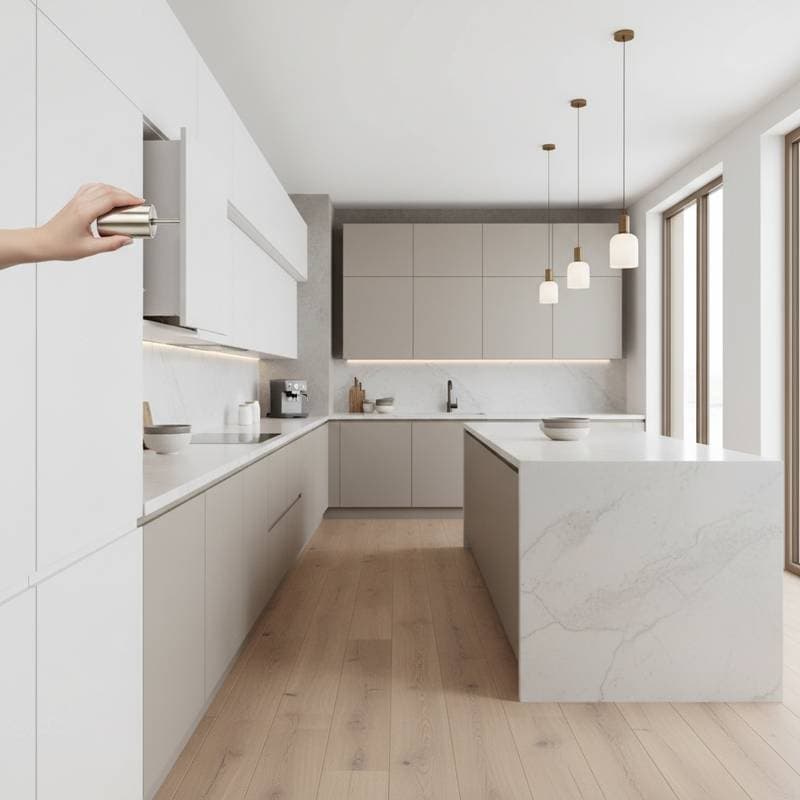
Magnetic Push Hardware Enables Sleek Handleless Cabinets
A cabinet front without visible handles creates a clean, contemporary appearance in kitchens and workshops. Magnetic push-to-open systems achieve this by allowing users to press the door or drawer front to release the latch. This approach supports modern design trends and reduces the surfaces that collect dust and fingerprints.
At a Glance
| Feature | Typical Range | Notes |
|---|---|---|
| Hardware cost | $8 to $25 per door or drawer | Quality magnets cost more but last longer |
| Installation time | 5 to 15 minutes each | Depends on cabinet type and alignment |
| Lifespan | 10,000 to 50,000 cycles | Based on manufacturer test ratings |
| Skill level | Beginner to intermediate | Basic tools and careful setup required |
How Magnetic Push Hardware Works
Magnetic push-to-open hardware uses a spring-loaded catch or piston that sits inside the cabinet frame. When pressure is applied to the door surface, the magnet releases the latch and the door swings open slightly. A second press re-engages the latch to close it. Some systems rely on a simple magnet and strike plate, while others incorporate a mechanical push piston for consistent operation.
Magnet strength and latch travel distance determine reliable performance. A unit rated at 10 to 15 pounds of holding force suits most medium cabinets. Larger pantry doors benefit from 20-pound magnets or paired units to maintain a flush fit. The handle-free surface preserves uninterrupted grain patterns and finishes.
Most push latches mount with two screws inside the cabinet frame. Frameless cabinets accept surface-mount styles or clip-on plates for faster placement. Proper alignment allows the door to open about half an inch with light pressure.
Precision and Durability Benefits
Handleless designs depend on accurate gaps and consistent closing force. Magnetic catches deliver both without exposed hardware that can wear or loosen. Fewer visible components also simplify cleaning and help finishes remain uniform over years of use.
Selecting Appropriate Hardware
Cabinet materials and door weights influence hardware choice. Three primary categories address different needs.
- Basic magnetic catches rely on simple polarity attraction and offer low cost with easy replacement.
- Spring-loaded push latches combine a magnet with a spring mechanism for smoother, quieter action.
- Integrated drawer runners include push-to-open slides that hide the mechanism entirely.
Budget $8 to $12 per latch for small doors, $15 to $25 for heavy-duty drawers, and up to $40 per pair for premium runners. Always verify the projection length of the latch when fully extended. A mismatch of even one-eighth inch can prevent proper alignment.
Matching Hardware to Door Styles
Push-to-open systems pair well with slab-style doors in laminate, veneer, or painted MDF. Solid-wood doors require confirmation that seasonal movement will not bind against the frame. Installers often add small silicone bumpers to minimize rebound and operating noise.
Step-by-Step Installation
Careful measurement produces consistent results. Follow this sequence for each door or drawer.
- Mark the latch location on the cabinet frame roughly one inch from the hinge side.
- Drill pilot holes to the depth specified by the manufacturer.
- Secure the magnetic unit with screws or adhesive pads.
- Attach the strike plate or metal disk to the inside of the door.
- Test operation and adjust strike alignment until the door opens evenly.
Adjustable mounts on frameless European-style cabinets allow fine-tuning of release distance. Plan approximately ten minutes per door once tools are prepared.
Budget Considerations
A complete kitchen or workshop installation typically ranges from $250 to $600. Higher-end systems with integrated slides reach $900 to $1,200. The added expense reflects smoother motion, longer service life, and wider adjustment range.
Control costs by reserving premium hardware for visible upper cabinets and using standard catches in utility spaces. Bulk packs further reduce per-unit expense. Avoid inexpensive fasteners that can loosen and produce rattling doors.
Installation Options
DIY installation succeeds when a drill, screwdriver, and measuring tape are used with care. Maintain consistent reveal lines by marking edges with a soft pencil before drilling. One person can complete most standard cabinets.
Professional installation is advisable for full-height pantry doors, integrated slides, or high-gloss finishes. Expect rates of $45 to $85 per hour. Confirm that the installer carries insurance and has experience with push-to-open hardware.
Avoiding Common Errors
Measure twice before drilling to prevent misaligned strikes. Test each door after installation rather than assuming uniform results across a run of cabinets. Replace worn magnets promptly to preserve smooth operation and prevent door damage.
Maintaining Long-Term Performance
Periodic checks of screw tightness and magnet strength keep systems operating quietly. Clean strike plates and latch faces with a soft cloth to remove residue that could affect release. These simple steps preserve the handleless aesthetic and reliable function for many years.