
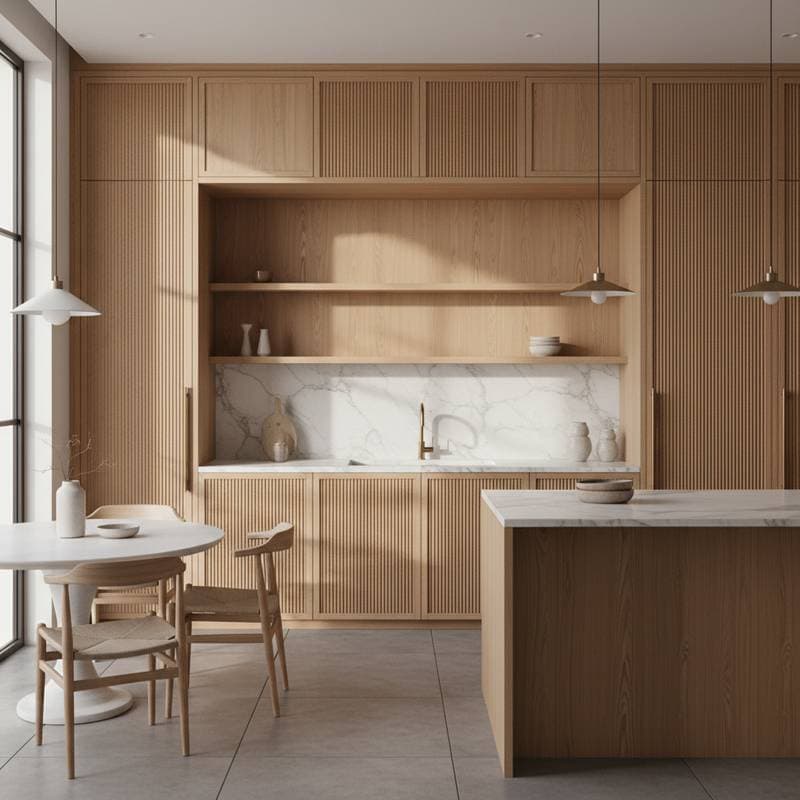
Why Ribbed Oak Cabinets Are the Latest Kitchen Trend
Texture defines modern kitchens more than ever. Ribbed oak cabinets lead this shift by adding depth, shadow, and warmth without color or metal accents. Vertical grooves catch light at different angles throughout the day and turn storage into sculpture. This tactile approach suits both sleek contemporary kitchens and relaxed natural interiors.
Project Overview
Homeowners: A couple with two young children
Location: Portland, Oregon
Size: 310 square feet (28.8 square meters)
Design Team: Studio Mae Interiors
Photographer: Erin Lawson
Original Condition
The kitchen featured flat white laminate surfaces that reflected light but offered no character. Storage functioned adequately yet felt clinical. The homeowners sought texture and warmth while preserving clean lines. Homeowner Lisa Tran noted that plain fronts no longer matched their lifestyle.
Updated Design
Vertical ribbed oak fronts now cover the island and upper cabinets. Grooves measure one quarter inch deep and sit evenly across each panel. Daylight creates moving shadows between the ribs and gives the cabinetry a shifting pattern. The island reads as carved furniture instead of a flat box.
Designer Mara Ellis explained that the choice brought tactile calm to a busy family space. Rift cut white oak received a matte finish that stays light enough to reflect brightness yet warm enough to ground the room. Smooth quartz counters and integrated pulls keep attention on texture rather than hardware.
Lighting layers enhance the effect. A concealed LED strip under the upper cabinets grazes the ribs and emphasizes depth. Two soft dome pendants provide diffused overhead light that complements the oak. Evening light turns the vertical lines into quiet shadows that echo the backsplash tile.
Material Specifications
- Material: Rift cut white oak veneer on solid oak substrate
- Finish: Water based matte sealer with low sheen
- Rib depth: 0.25 inch (0.6 centimeter)
- Spacing: 0.5 inch (1.2 centimeters) between ridges
- Hardware: Integrated finger pulls routed along top edges
- Lighting: Under cabinet LED strip at warm 2700K, dimmable
- Storage: Deep drawers below cooktop and full height pantry with adjustable shelves
- Countertops: White quartz with subtle veining
- Backsplash: Glazed handmade tile sized 2 by 8 inch (5 by 20 centimeter)
The ribbed treatment extends to the refrigerator panels and creates one unified surface. This reduces visual clutter while the texture invites touch. Ellis observed that people run their hands along the surface without realizing it.
Current Relevance
Ribbed oak signals a move toward sensory interiors. After years of flat matte fronts, homeowners seek warmth and authenticity. The vertical repetition introduces movement yet maintains order. Lines draw the eye upward and make rooms feel taller.
The texture adapts across styles. Scandinavian spaces pair it with pale stone and soft fabrics. Mid century layouts gain rhythm that matches classic paneling. Ultra modern apartments receive organic character against glass and steel.
Oak remains favored for its grain consistency and strength. Rift cut boards reveal straight lines that echo the ribbed pattern. A light stain keeps the tone neutral for easy coordination with flooring or stone.
Fabrication Process
Cabinetmakers mill parallel grooves into solid or veneered panels with CNC routers or custom shaper heads. Depth and spacing vary according to desired visual weight. Shallow ribs produce subtle shadow while deeper cuts create sculptural relief.
Each panel receives hand sanding to soften edges. A thin water based finish seals the pores without filling grooves. This preserves the tactile surface and allows natural aging.
Cabinetmaker Henry Lowe of Portland Woodworks noted that every rib catches dust or oil from hands and gains character over time. The finish leaves the wood feeling alive yet protected.
Spatial Adjustments
The ribbed fronts redefined circulation in the kitchen. Vertical ribs on the island break reflections and anchor the center of the room. The tall pantry wall now feels architectural. Texture directs sightlines toward the cooking zone where smooth surfaces support easy cleaning.
A 42 inch (107 centimeter) walkway around the island allows two people to pass comfortably. Upper cabinets stay at 14 inch (35 centimeter) depth to keep shadows consistent and the space airy.
Ribbed panels conceal storage innovation. A pull out spice ladder extends 8 inches (20 centimeters) behind what appears as a single tall door and returns flush. Vertical lines disguise seams so the cabinetry reads as continuous.
Lighting Considerations
Ribbed oak requires thoughtful lighting to reveal relief. Designers combine ambient ceiling light, task lighting under cabinets, and accent lighting that grazes the ribs. In this kitchen the oak grain catches under cabinet light at alternating angles and creates changing light and shadow throughout the day.
Test lighting on a small sample before committing to groove depth. Shallow ribs benefit from side lighting while deeper ribs hold shadow under direct light.
Suitable Applications
Ribbed oak performs well in open kitchens that merge with living areas. The tactile pattern resembles furniture detailing and softens transitions between zones. Designers also apply the finish in butler pantries, bars, and mudroom storage.
In smaller kitchens the treatment serves as an accent on an island or single pantry wall. Pairing with smooth painted fronts maintains balance and controls cost.
Care Guidelines
Shallow grooves allow dust removal with a microfiber cloth. Sealed finishes resist stains and water marks. A matte low build finish lets the wood breathe. Glossy coatings fill grooves and reduce texture. High traffic households benefit from a hardwax oil blend that permits spot repair.
Ellis advised that maintenance should forgive fingerprints rather than demand perfection.
Investment and Options
Ribbed cabinetry costs 15 to 25 percent more than flat fronts depending on milling method and species. Custom tooling and hand finishing add labor yet produce unique results. Stock lines now offer ribbed veneers on composite cores in standard widths.
DIY approaches use reeded moldings or router bits though consistency across large panels proves challenging. Professional CNC routing maintains accuracy within one thirty second inch for seamless joins.
Style Adaptations
Designers explore diagonal or cross cut patterns for dynamic effects. Mixing smooth and ribbed panels defines zones within one kitchen. Popular finishes include natural oak, smoked oak, bleached oak, and ebonized oak. Pairing ribbed oak with stone or plaster creates rich contrast through shadow and reflection.
Implementation Steps
- Add a ribbed oak panel to an island base to draw focus without overwhelming the room.
- Install ribbed drawer fronts on a bar or coffee station for a custom feel in a compact area.
- Apply ribbed oak to open shelf brackets or range hood trim to tie zones together.
Keep other finishes quiet. Matte counters and simple tile allow the wood to stand out. Avoid competing grain patterns nearby.
Summary Points
- Ribbed oak transforms flat storage into sculptural surfaces.
- Vertical grooves add height, warmth, and visual rhythm.
- Oak stability supports precise milling.
- Layered lighting reveals depth and shadow.
- Low sheen finishes simplify maintenance.
- Costs exceed flat fronts yet deliver distinct character.
- The treatment suits both modern and classic settings.
Daily Experience
The kitchen feels calmer and more grounded once installed. The tactile surface encourages slower movement and mindful cleaning. Light shifts across the ribs and adds soft animation that flat panels cannot match.
Lisa Tran stated that the cabinets feel alive and draw comments from everyone. This quality elevates ribbed oak beyond a passing feature. It represents a return to craft and touch in spaces often dominated by smooth screens.
Designers value the balance of modern precision with organic warmth. Ribbed oak fronts organize space, shape light, and invite connection.