
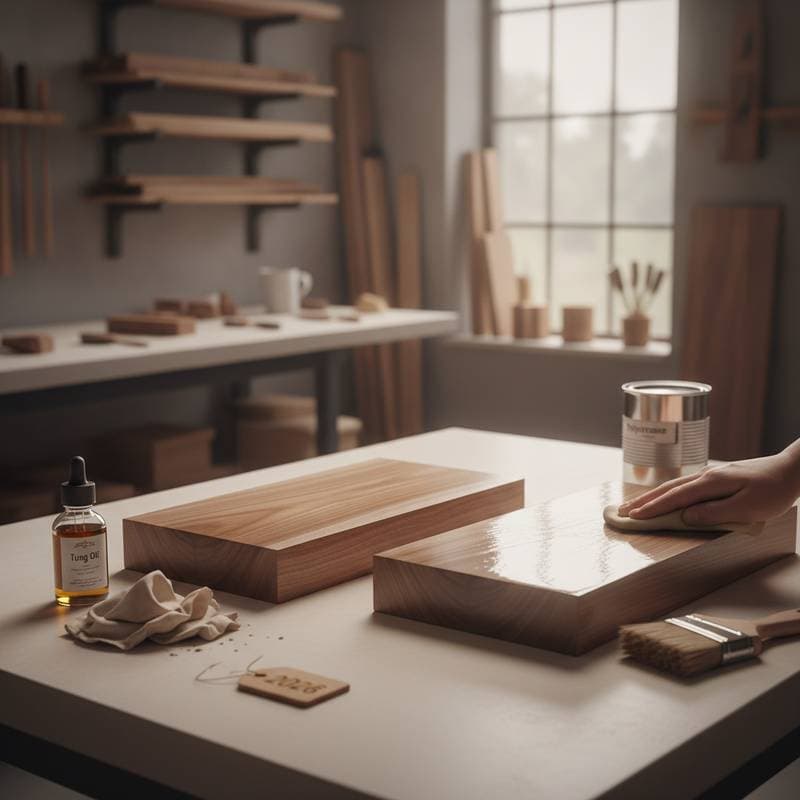
Why Tung Oil is Beating Polyurethane as a Natural Finish
A wood finish determines both the appearance and longevity of any project. Many woodworkers who once relied on polyurethane now select tung oil for its health advantages, ease of repair, and alignment with demand for natural materials that develop character over time.
At a Glance
| Factor | Tung Oil | Polyurethane |
|---|---|---|
| Cost per quart | $15 to $30 | $20 to $45 |
| Dry time | 24 to 48 hours between coats | 6 to 12 hours between coats |
| Maintenance | Reapply every 1 to 3 years | Recoat every 5 to 10 years |
| Finish look | Matte to low sheen, natural grain | Gloss to semi-gloss, plastic-like |
| VOC content | Low to zero | Moderate to high |
Why Woodworkers Are Switching
Tung oil moves into the wood fibers to produce a surface that retains a living quality. Polyurethane creates a rigid film on the exterior. Scratches in that film usually require sanding the full section before refinishing. Tung oil allows spot repair through the application of a small quantity of oil followed by removal of surplus material.
One quart of pure tung oil covers 400 to 500 square feet on softwoods and 250 to 300 square feet on hardwoods. Successive coats penetrate, oxidize, and integrate with the wood. The outcome supplies water resistance while preserving texture. This quality suits cutting boards, casework, and flooring in areas of limited traffic.
The polymerization process yields a flexible and permeable layer. Moisture is repelled without entrapment, which lowers the chance of cracks that develop in heavy polyurethane films.
Test a limited area first. Apply a single coat, permit full cure, and evaluate texture and appearance against a polyurethane sample.
Real-World Performance
Tung oil surfaces change gradually. They do not peel or haze. Instead they soften in tone and accept a new coat for renewal. Polyurethane frequently yellows, particularly on maple or ash. Many makers regard this measured change as an asset.
Three to five coats deliver adequate moisture protection for interior furniture. High-use tabletops benefit from an annual maintenance coat that requires less than one hour.
Application follows these steps. Sand to 220 grit and clear dust. Spread a thin coat with a lint-free cloth. Permit 30 minutes of absorption, then remove excess. Allow 24 to 48 hours before the next coat. Complete three to five coats to reach a durable hand-rubbed result.
Costs and Budget
Pure tung oil ranges from $15 to $30 per quart. Polymerized grades that cure more rapidly reach $45. Expect $1 to $2 per square foot for a complete multi-coat application. Polyurethane appears lower in material cost, yet brushes, abrasives, and fume protection bring total expenses into alignment.
A 1:1 blend of tung oil with citrus solvent or mineral spirits on the first coat improves absorption and reduces waste. Avoid products labeled tung oil finish that contain minimal actual oil.
DIY or Professional Help
Tung oil suits direct application by individuals who possess basic tools, patience, and ventilation. Respirators and specialized protective equipment are unnecessary. Oil-based polyurethane demands dust management, masking, and respiratory safeguards.
Engage a professional when coverage exceeds 300 square feet or when antique stock is involved. An experienced finisher can build layers that achieve long-term results with minimal upkeep.
Maintaining the Natural Beauty Over Time
Regular light coats restore surface integrity without full refinishing. This approach preserves the wood character while extending service life in daily use.