
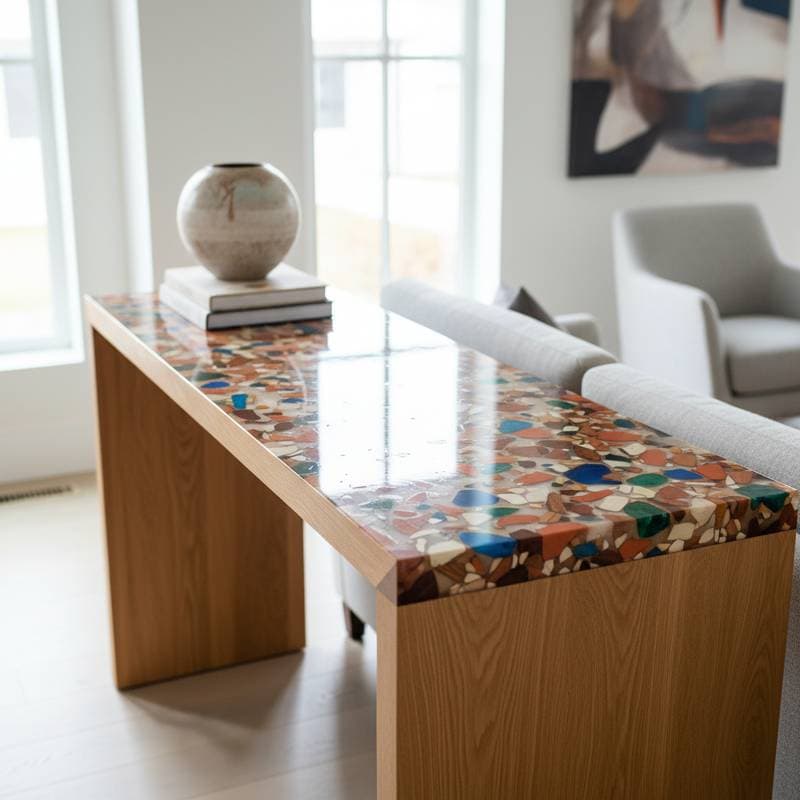
Terrazzo Wood Inlays Shape Modern Furniture Design
Terrazzo wood inlays combine the natural appeal of wood grain with the vibrant patterns of terrazzo. This approach adds texture and visual interest to furniture pieces. Makers integrate hardwood surfaces with resin and stone chips to produce custom designs.
Core Elements
Primary Materials: Hardwood such as oak or walnut, resin binders, and chips from marble or recycled stone.
Core Processes: Routing patterns into wood, casting colored resin mixtures, sanding surfaces level, and applying protective finishes.
Notable Studios: Studio Forme, Grain Workshop, Atelier Sora.
Featured Photography: Work by Marco Dela Cruz and Mia Lin.
Origins of the Approach
Furniture design previously separated into minimal wood forms or bold lacquered colors. Makers sought options that convey skill and introduce pattern. One designer noted that clients sought distinctive character while retaining wood warmth.
Surfaces often appeared uniform. Standard finishes offered protection without visual surprise. Woodworkers explored methods to restore depth to solid panels.
Current Applications
Terrazzo inlays address this need effectively. Walnut tabletops now feature curving ribbons of pale terrazzo that follow the grain. Ash cabinets display subtle dots in coral and gray tones. Light interacts differently with each element.
Workshops test recycled materials and custom pigments. Some incorporate regional stone to connect pieces to specific locations. Others prepare resin panels first and insert them into prepared wood areas. Outcomes suggest both heritage and innovation.
Designer Alina Perez observed that the terrazzo complements wood warmth through its textured play and reflects light in unique ways.
Practical Specifications
- Materials include oak, walnut, or ash combined with resin terrazzo containing marble, glass, or concrete fragments.
- The process involves cutting recesses in wood, filling with pigmented resin and chips, and finishing to a uniform level.
- Finishes use low-sheen oils or matte varnishes to emphasize material differences.
- Lighting from the side or overhead pendants accentuates the sparkle in terrazzo and the depth in wood.
- Color combinations often feature white terrazzo within walnut or soft pink with gray in oak.
The materials offer contrasting sensations. Terrazzo provides a cool density while wood delivers familiar warmth.
Implementation Guidance
- Position inlays in limited areas such as borders or fronts to maintain visual focus. Excessive coverage reduces impact.
- Both components withstand regular use. Protect from intense heat and clean gently. Reapply oil to wood surfaces as needed.
- Employ multiple light sources to highlight color variations in the terrazzo.
- Incorporate local or reclaimed aggregates to emphasize sustainability and uniqueness in each piece.
- Custom work typically ranges from 80 to 120 dollars per square foot based on materials and effort.
Daily Integration
This furniture style encourages interaction through its varied surfaces. It complements fabrics like linen alongside metal or glass details. Spaces ranging from modern to midcentury styles accommodate these pieces well. The result elevates routine items with crafted detail.
Makers gain expanded possibilities through these methods. Owners receive durable items that introduce color and skill into their surroundings. The style reflects preferences for personal expression and lasting quality in everyday objects.
Credits
Design Teams: Studio Forme, Grain Workshop, Atelier Sora.
Photographers: Marco Dela Cruz, Mia Lin.
Designer Quote Source: Alina Perez.