
Tadelakt Plaster: A Waterproof Alternative to Wood Finishes
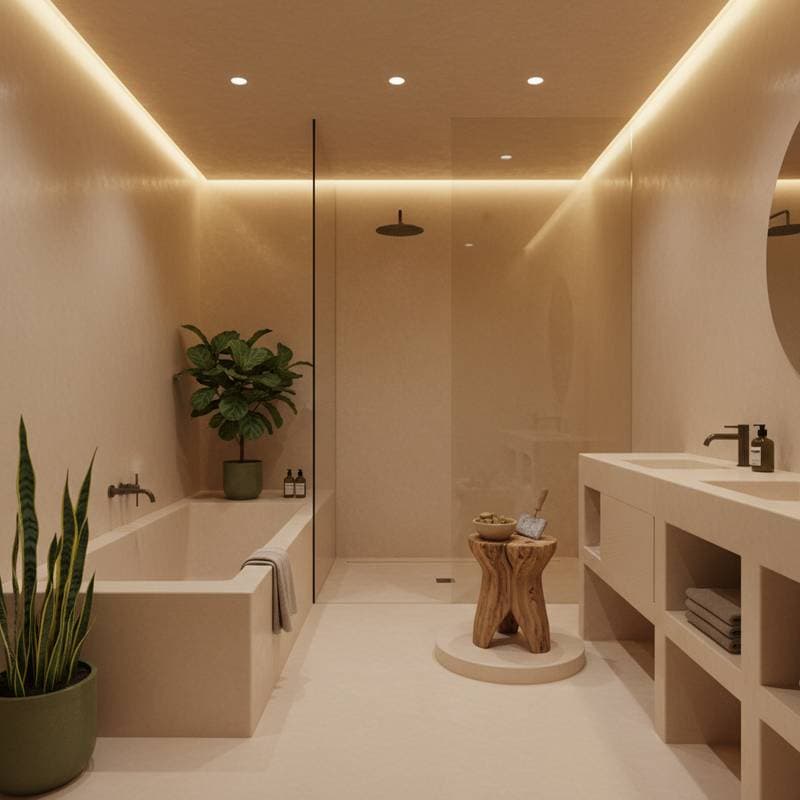
Tadelakt plaster, renowned for its smooth luster in traditional Moroccan bathhouses, emerges as a robust option for woodshops and contemporary designs. This ancient method employs lime plaster blended with stone powder and olive soap to produce a continuous, moisture-resistant layer comparable to treated hardwood or synthetic sealants. Woodworkers and designers value tadelakt for its organic feel, superior longevity, and eco-conscious profile.
At a Glance
Primary users: Furniture fabricators, finishing specialists, and architects exploring eco-friendly surface treatments
Common applications: Bespoke bathrooms, kitchen splash zones, wooden feature walls, and integrated storage units
Coverage per batch: Approximately 50 to 70 square feet, or 4.6 to 6.5 square meters
Notable practitioners: Atelier Khamsa, Studio Kett, and solo artisans who fuse heritage plastering with timber and hybrid builds
Image credits: Provided by Atelier Khamsa and Marla Vance Studio
Challenges with Traditional Wood Finishes
Wood craftsmen traditionally apply varnishes, oils, or polyurethanes to safeguard against water. These solutions perform adequately at first but tend to discolor with age and demand repeated applications plus meticulous drying periods. In steamy environments like bathrooms and kitchens, persistent dampness and spills accelerate the breakdown of even premium protections.
Homeowner Laura Benton shared, "Every year or two, I was sanding back and resealing my vanity tops. It looked great at first, but the upkeep was exhausting." Her team's pursuit of a resilient, authentic appearance introduced them to tadelakt.
The Tadelakt Transformation
Preparation sets the foundation. Artisans spread tadelakt in delicate layers onto a firm base, including marine plywood, cement board, or a primer suited to lime. After initial hardening, they polish the surface using a flat stone and apply black olive soap. The lime interacts with the soap to generate calcium stearate, an inherent sealant that integrates directly into the plaster.
This yields a gentle glow that remains plush under touch while repelling liquids. In washrooms, tadelakt supplants tiles and seams, forming unbroken expanses on walls and surfaces. For wooden pieces, it imparts a lithic quality resistant to abrasions and marks, free from the artificial sheen of synthetic varnishes.
Designer Karim Douiri noted, "We select tadelakt for areas where wood would falter. It delivers the coziness of handcrafted work alongside stone's resilience."
Core Specifications
-
Ingredients: Hydrated lime, marble powder, subtle sand, earth-derived colors, and olive soap
-
Overall depth: About 1/8 inch, or 3 millimeters, post-compression
-
Luster level: From matte satin to subtle gloss, influenced by polishing intensity
-
Upkeep routine: Wipe with mild soap solution; refresh polish periodically for vibrancy
-
Suitable bases: Lime undercoat, cement panels, or humidity-stabilized wood with permeable sealant
-
Available hues: Neutral tones like cream and beige to richer shades of clay and slate, all from natural minerals
Layers compact during drying to form a compact, crystalline matrix. Water repellency arises from molecular change rather than a overlay, suiting it for moisture-prone settings where timber treatments erode.
Significance for Woodworking
Tadelakt expands finishing options by uniting artistry, science, and green practices. It avoids chemical additives, cuts reliance on polymers, and infuses hand-made elegance into realms typically ruled by factory-made barriers. The method promotes deliberate pacing, exact layering, and intimate material insight.
Plaster expert Hannah Roe observed, "Tadelakt teaches patience. You cannot hurry it, and that is part of its strength. The finish rewards you with something that feels alive."
Step-by-Step Application in the Workshop
Substrate Preparation
Select a rigid, movement-free foundation. Opt for marine plywood or sealed MDF with a lime-friendly primer for cabinetry or fixtures. Steer clear of dimensionally unstable woods. Achieve a level plane, as flaws will show through the slim application.
Mixing and Coloring
Blend hydrated lime, marble dust, and fine aggregate with water to form a yogurt-like consistency. Allow maturation for enhanced handling. Incorporate pigments here, verifying shade on a trial piece after drying and buffing.
Layering the Plaster
Distribute the initial layer using a metal trowel, embedding it securely. When it firms up, add the next layer and consolidate with sweeping motions. Restrict buildup to under 1/8 inch for optimal strength.
Polishing and Sealing
During setting, rub with a river stone or synthetic tool. Introduce thinned olive soap sparingly and persist in buffing. This reaction produces calcium stearate, closing gaps and bestowing the signature soft radiance.
Final Curing and Care
Permit multi-day hardening before wetting. For ongoing care, use neutral soap; eschew corrosives. To revive dull spots, buff gently with fabric and soap.
Durability Versus Wood Treatments
Tadelakt excels through its unified form. It forgoes fragile topcoats, achieving impermeability via mineral evolution. This resists fine fissures and enables flawless mends.
Lab humidity trials reveal tadelakt surfaces retaining under 2 percent water after extended contact, versus 8 percent for oiled timber and 4 percent for sealed variants. Its minor pliability averts peeling amid base shifts.
Texture and Illumination Effects
Images capture tadelakt's diffused glow over stark shine. Hues vary gently with light direction, suiting dynamic natural illumination. On storage, it mimics buffed rock; on partitions, refined calcite.
Illumination experts match it with soft LED lines or indirect fixtures to highlight its plush grain. It diffuses harsh rays, fostering serene atmospheres.
Real-World Installations
Studio Kett's Compact Bath
Studio Kett coated an 85-square-foot bathroom in light beige tadelakt, forgoing tiles. Fluid walls meet at edges without seams. A suspended timber sink shares the treatment for harmony.
Homeowner Alan Pierce remarked, "Moisture used to collect behind the sink splash. Now water beads and runs off. The space feels unified and easy to maintain."
Atelier Khamsa's Kitchen Feature
Atelier Khamsa clad a splash area in dark tadelakt adjacent to walnut tops. The low-sheen plane offsets wood patterns and conceals spills. Its inorganic nature withstands stove warmth. The faint relief enriches the scheme without overwhelming.
Marla Vance Studio's Table Design
A side table in ivory tadelakt atop primed MDF drew acclaim. It evoked veined marble at reduced weight. It outperformed lacquered wood against spills and imprints. The approach defined their collection's sensory appeal.
Essential Insights
-
Tadelakt delivers waterproofing without solvents as a wood finish substitute
-
Chemical integration ensures enduring protection over surface layers
-
Best suited to damp zones like lavatories, cooking areas, and wellness spaces, or items desiring mineral aesthetics
-
Complements organic and sleek decors with authentic charm
-
Requires simple soap-based renewal instead of full recoats
Skill Development and Considerations
Mastering tadelakt involves timing coats precisely and gauging pressure intuitively. Ambient conditions influence setting, and novices may encounter marks. Practice on scraps or seek guidance for major efforts.
Costs exceed basic plasters yet undercut premium synthetics, roughly 4 to 6 dollars per square foot including work. Proficiency yields a lasting result surpassing repeated varnish cycles.
Budget-Tailored Implementation Guide
Basic Start: Test on a panel or accessory using pre-blended kits; hone soap application
Moderate Scale: Cover sink surrounds or counters; edge with treated wood for visual play
Premium Execution: Encase showers or full elevations; engage skilled applicators for uniform results
Sustainability Advantages
Tadelakt's green credentials stem from its makeup. Lime sequesters carbon as it hardens, mitigating emissions. Lacking artificial glues, it emits no harmful vapors. Paired with organic bases, it permits vapor passage, curbing condensation and growths.
For shops aiming to minimize toxins, this replaces acrid odors with earthy notes and the steady cadence of stone work.
Long-Term Experience
Tadelakt acquires a soft aging rather than erosion. Light scuffs yield to soap buffing. Mineral stability preserves tones without fading. In busy spots, brief renewal revives without removal.
Owners appreciate its inviting warmth and solidity, akin to caressed stone. Such surfaces encourage interaction, uncommon among repellent barriers.
Preserving the Surface
Routine cleaning involves damp cloths and neutral solutions. Annual light polishing maintains depth. Address stains promptly to avoid etching. Professional refresh every five years ensures peak condition for high-use areas.