
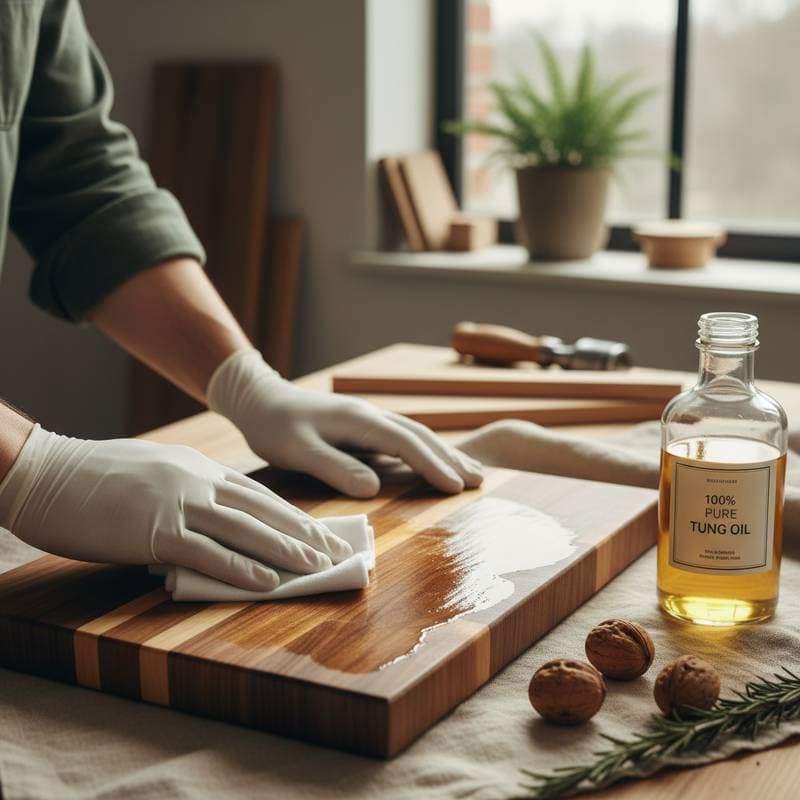
Why DIYers Swap Poly for Tung Oil's Revival
Polyurethane has long been the go-to finish for woodworkers who want durability and shine. Yet, a quieter movement is taking hold in workshops and garages. More DIYers are swapping poly for tung oil, drawn by its natural feel, food-safe quality, and forgiving application. The shift is not just about nostalgia for hand-rubbed finishes. It is about control, health, and the look of living wood that breathes over time.
At a Glance
Home woodshops across the country
Average project size: small furniture and kitchen boards, 10 to 50 square feet (0.9 to 4.6 square meters)
Design and material focus: natural tung oil finishes by brands such as Real Milk Paint Co. and Tried & True
Photography: courtesy of local DIY makers and finish suppliers
Before
For decades, polyurethane dominated because it was easy to find, quick to dry, and hard to damage. The glossy plastic film it left behind became a standard for durability. Yet many hobbyists felt disconnected from the material. Once the coat cured, the surface seemed sealed off from touch. Scratches were hard to repair, and the smell during application drove many to work outdoors.
"I loved the protection of poly," said hobbyist builder Erin Chang, "but I missed the feel of wood under my fingers. It looked perfect, but it did not feel alive."
The pain points multiplied as more makers began finishing cutting boards, countertops, and toys. They wanted finishes that were food-safe and nontoxic, yet still protective. Polyurethane required ventilation, disposal care, and re-coating that often meant sanding down entire surfaces.
After
The transformation came as tung oil reentered the conversation. Makers discovered that pure or polymerized tung oil could be built up in thin layers for a soft luster that feels authentic. The finish soaks into fibers, creating a bond that resists water without sealing off the surface.
When applied correctly, tung oil leaves a matte or satin sheen that enhances grain depth. In photos, you can see the difference immediately. Walnut boards show deeper chocolate tones. Maple glows warmer, and oak takes on a honeyed depth. The light catches fibers, not film, giving pieces a visual softness.
Designer and woodworker Luis Herrera said, "Tung oil matches my goal for honest materials. You still sense the grain, but it is protected. It looks good even after years of use because you can refresh it anytime."
The results are convincing. In a small kitchen remodel, a butcher block island finished with tung oil gained warmth and resilience. The homeowner can reapply a maintenance coat every few months with a rag instead of tearing down layers. The daily flow feels easier, and the wood surface stays tactile.
Design Details
- Finish type: 100 percent pure tung oil or modified blends for faster curing
- Application: wipe-on with lint-free cloth, 5 to 7 coats for full build
- Drying time: 12 to 24 hours between coats depending on temperature and humidity
- Maintenance: light reapplication every 6 to 12 months
- Sheen: natural matte to low satin, depending on polishing
Why It Matters
This revival fits the broader home trend toward natural materials. People want finishes that are safe, repairable, and tactile. Polyurethane and lacquer still serve high-traffic or commercial surfaces, but at home, the balance is shifting toward authenticity and sustainability.
Tung oil's appeal comes from several factors:
- Food safety. Pure tung oil is non-toxic once cured, making it suitable for cutting boards, salad bowls, and children's items.
- Repairability. Scratches can be spot-treated without stripping the entire piece.
- Sustainability. Derived from the seeds of the tung tree, it is a renewable resource.
- Aesthetic warmth. The oil deepens tone and highlights grain without the plastic look of poly.
- Connection. Applying by hand creates a personal rhythm that many find meditative.
The Science Behind the Sheen
Tung oil polymerizes as it cures. Oxygen molecules link with oil compounds, forming a flexible network inside the wood fibers. Unlike surface coatings that create a film, tung oil bonds within the wood, allowing it to expand and contract naturally. This molecular change prevents peeling and cracking, even in variable humidity.
A single coat penetrates about 1/64 inch (0.4 millimeter) into open-grained woods such as oak or ash. Multiple coats add depth and water resistance. After the final cure, the surface becomes slightly hydrophobic, causing water to bead and roll off. Tests show resistance to mild acids and alcohol, though not as much as high-build varnish. The trade-off is a more organic look and easier upkeep.
Application Basics for DIYers
Applying tung oil requires patience, not perfection. You can achieve professional results with simple tools and clear timing.
Step 1: Surface Prep
Sand wood to 220 grit, then wipe with a tack cloth. Any dust left behind will show through because oil accentuates texture. For reclaimed wood, use a scraper or card to even out grain without over-sanding.
Step 2: First Coat
Flood the surface with oil using a cloth or brush. Let it soak for 15 to 30 minutes. Wipe off excess until the piece feels dry to the touch. Leaving oil on the surface can lead to sticky spots.
Step 3: Re-Coating
After 24 hours, apply another thin coat. Repeat up to seven times for dense hardwoods. The color will deepen slightly with each layer, and the sheen will even out. Between coats, buff lightly with 0000 steel wool or a white non-abrasive pad.
Step 4: Curing and Buffing
Once the last coat has cured for several days, buff the surface with a clean cloth. The result should feel smooth, not waxy. If you want more gloss, apply a top coat of wax or a mix of tung oil and citrus solvent for a soft glow.
Step 5: Maintenance
To refresh, wipe on a thin coat every few months. There is no sanding or stripping required. The finish slowly builds character as it ages.
Smart Storage Moves
Woodworkers often struggle with leftover finishes. Pure tung oil has a long shelf life if stored properly.
- Keep it in a metal container with minimal air space.
- Add glass marbles to raise the liquid level and limit oxygen exposure.
- Store in a cool, dark cabinet away from direct light.
- Dispose of oily rags in a sealed metal container to prevent combustion.
Comparing Poly and Tung Oil
| Feature | Polyurethane | Tung Oil |
|---|---|---|
| Finish type | Surface film | Penetrating oil |
| Sheen | Gloss to semi-gloss | Matte to low satin |
| Repairability | Requires sanding | Spot repair possible |
| Application | Brush or spray | Wipe-on |
| Drying odor | High VOC | Low VOC |
| Food safety (after cure) | Limited | Excellent |
| Feel | Plastic smooth | Natural tactile |
The table highlights a clear shift in values. DIYers are choosing feel and safety over mirror gloss. It is less about performance in a lab and more about comfort in daily use.
Designer Insight
Professional finishers see the change too. Interior finisher Dana Ruiz said, "Clients want wood to look honest. Poly can feel too perfect. Tung oil lets the material speak for itself." She adds that it fits the slower movement in home design, where materials age gracefully. "A little wear becomes part of the story," she said.
The tactile quality also influences lighting. In photos, surfaces finished with tung oil reflect light more softly. Under pendant or daylight, the grain shows subtle variation that adds depth to interiors.
Where It Works Best
Tung oil suits a wide range of applications:
- Cutting boards, salad bowls, and butcher blocks
- Tabletops, desks, and shelving
- Hand tools and handles
- Musical instruments
- Interior trim or wainscoting
It is less ideal for floors or outdoor furniture unless combined with UV-resistant additives or varnish. For exterior use, many makers mix tung oil with mineral spirits or polymerized variants for faster curing and better penetration.
Budget and Time
A quart (0.9 liter) of pure tung oil covers about 100 to 125 square feet (9.3 to 11.6 square meters) with multiple coats. Expect to spend between thirty and sixty dollars depending on purity and brand. While the cost per quart is higher than poly, the ease of touch-up offsets long-term expenses. No sanding, no dust, and no toxic fumes means less equipment and fewer barriers to small-space finishing.
Key Takeaways
- Natural feel wins: DIYers want to touch real wood, not a plastic film.
- Easy upkeep: Reapplication is simple, with no sanding required.
- Health and safety: Low VOC and food-safe once cured.
- Visual warmth: Matte sheen highlights grain and depth.
- Sustainable choice: Renewable source and less chemical waste.
Living with Your Finish
Once applied, tung oil invites ongoing interaction with your wood pieces. The finish evolves subtly, gaining patina from use that tells a story of daily life. Homeowners report that surfaces remain inviting, encouraging touch and care without the barriers of synthetic coatings. This approach fosters a deeper appreciation for craftsmanship in everyday settings.