
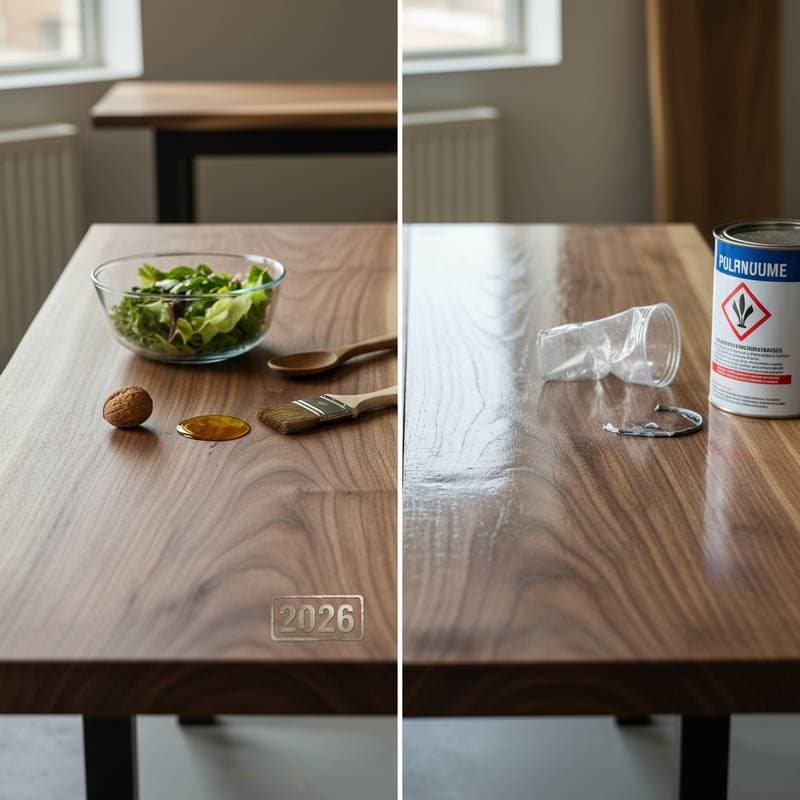
Why Walnut Oil Will Surpass Polyurethane as the Premier Wood Finish by 2026
Woodworkers increasingly question traditional definitions of an effective finish. A movement from synthetic varnishes to natural oils accelerates, with walnut oil at the forefront. This oil enhances wood grain depth, provides water resistance after curing, and maintains food safety. Previously limited to items like wooden bowls, walnut oil now serves as a viable option for furniture and cabinetry projects.
The Driving Forces Behind the Shift
Polyurethane held dominance for decades due to its durable, glossy barrier against scratches. However, this came at the cost of an artificial appearance and persistent odors. Walnut oil integrates directly into the wood structure, creating a tactile matte finish. Professionals note that clients prefer surfaces that feel organic to the touch and appear inviting in images.
Furniture maker Leo Tran from River Bend Studio observes, "People want to see the wood, not a coating." He adds, "Walnut oil delivers that subtle sheen while safeguarding pieces for everyday use."
This preference stems from evolving priorities in craftsmanship. Natural finishes align with demands for authenticity in design.
Broader Implications for Safety, Sustainability, and Maintenance
The rise of walnut oil mirrors wider industry concerns regarding health, environmental impact, and ease of upkeep. Polyurethane application demands solvents and proper ventilation to mitigate fumes. In contrast, walnut oil derives from pressed nuts through a simple filtration process, eliminating harmful vapors. After full curing, it proves safe for contact with food on surfaces such as countertops, children's toys, and cutting boards.
Small workshops benefit particularly from this shift, as finishing occurs in communal areas without health risks. The process reduces operational expenses related to safety equipment.
Upkeep with walnut oil remains straightforward. A gentle application of additional oil revives the surface, bypassing the need for abrasive sanding or complete removal of old layers. Polyurethane, when marred, often requires extensive refinishing. This simplicity ensures walnut oil surfaces retain their appeal over years with minimal intervention.
Application Process and Performance Expectations
Walnut oil soaks into wood fibers, forming a strong internal bond. Begin with an initial coat that fully saturates the material. Allow brief drying time, then remove any surplus with a clean cloth. Apply multiple thin layers to develop a gentle luster, which highlights the natural patterns in woods like walnut, cherry, or maple.
Curing occurs through oxidation, necessitating good air circulation and time. The outcome yields a permeable surface that allows wood to expand and contract naturally with humidity changes.
Ambient lighting influences the finish's appearance significantly. Warm LED illumination produces a soft, uniform radiance from walnut oil. Polyurethane, however, creates harsh reflections. In versatile spaces like modern kitchens or dining rooms, this nuance enables wood elements to harmonize with daylight variations, enhancing overall aesthetics.
Core Benefits in Professional Practice
Walnut oil distinguishes itself through several practical strengths:
- Food Safety Compliance: Fully cured applications adhere to standards for direct food contact, suiting countertops, cutting boards, and utensils.
- Ease of Repair: Minor scratches disappear with a fresh oil application; no intermediate sanding proves necessary between layers.
- Eco-Friendly Origins: Sourced from food-grade nuts, it promotes resource efficiency in agriculture.
- Authentic Aesthetic: It amplifies wood's inherent colors and textures without imposing an unnatural overlay.
These attributes make walnut oil adaptable for diverse projects, from custom cabinetry to artisanal decor.
Integrating Walnut Oil into Your Workflow
Professionals find walnut oil streamlines operations while delivering superior visual and tactile results. It responds to market trends favoring materials that develop character over time. Although polyurethane retains utility for heavily trafficked commercial installations, natural alternatives gain traction in residential and boutique settings. Clients seek finishes that enhance daily life rather than merely endure it.
To explore this option, select a modest project such as a serving tray or cabinet door. Prepare the surface by sanding to a fine grit, then apply the oil evenly. Observe the grain's transformation as it absorbs the treatment and the aroma dissipates into neutrality. Regular maintenance evolves into a rewarding ritual, preserving the wood's essence. Embracing walnut oil centers attention on the material's inherent qualities, positioning it as the essential finish for forward-thinking creators.
Sources
Insights on design provided by River Bend Studio; photography courtesy of Mason Grey Interiors.