
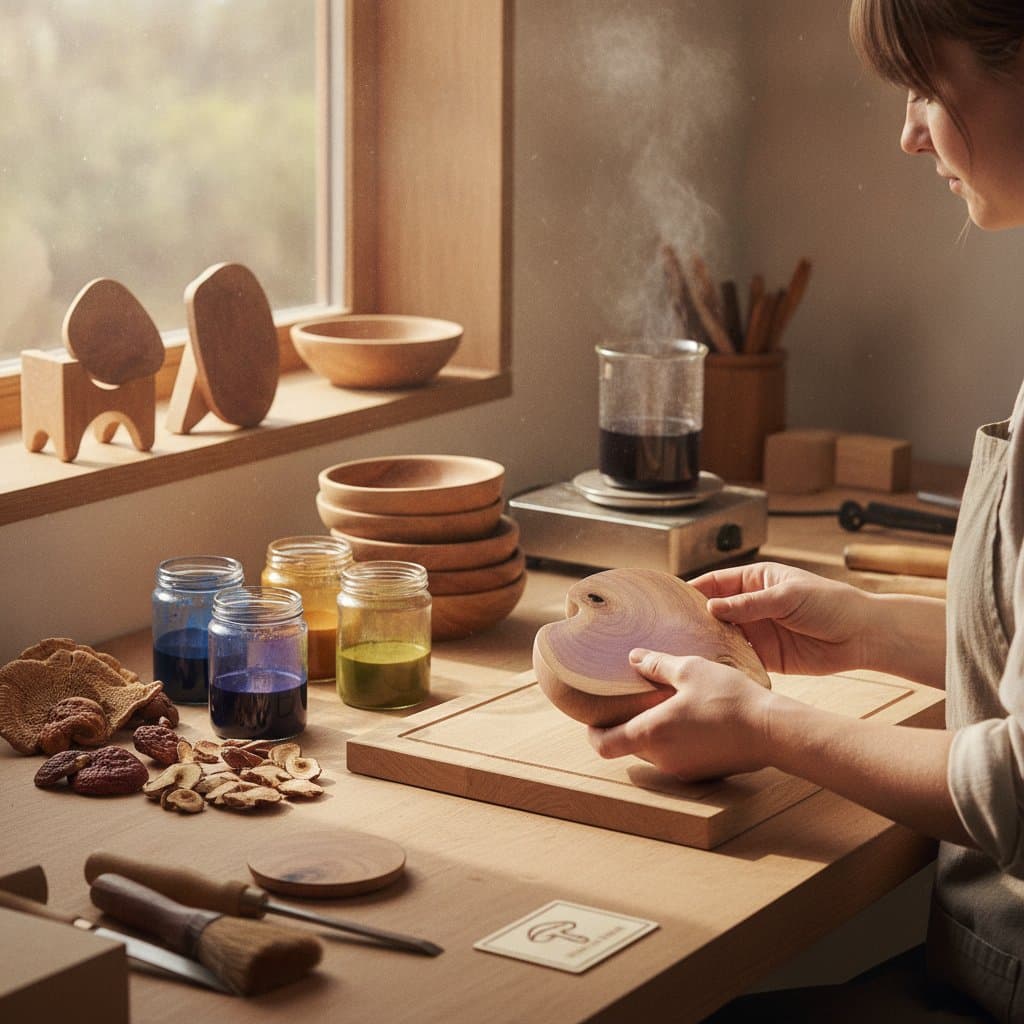
Mushroom Dyes Bring Eco-Friendly Color to Wood in 2026
Natural colorants are moving from textiles and paper into woodworking studios. Mushroom dyes, once a niche curiosity among fiber artists, are becoming a serious option for finishing wood. They offer a surprising palette, from golden ochres and deep violets to smoky grays. The shift matters because makers are searching for finishes that highlight grain, avoid harsh solvents, and leave a smaller environmental footprint.
At a Glance
Who: Independent woodworkers and small studios adopting natural dye processes
Where: Across North America and Europe
Size: Small batch production, typically one to five gallons (3.8 to 19 liters) per dye run
Design Team: Collaborative field research by artisan finisher Maya Ren and the Natural Pigment Lab
Photographer: Daniel Holt
Before
Most woodworkers relied on synthetic stains or oil-based finishes that delivered consistent results but left strong odors and required respirators. Water-based stains improved air quality yet often flattened the depth of grain. "I missed the warmth of an old linseed finish," said Ren, "but I wanted something biodegradable and quiet to work with." The challenge was to find color that bonded with wood fibers naturally, without synthetic binders or heavy metals.
After
The new process uses pigment extracted from mushroom caps and mycelial tissue. Species like Cortinarius semisanguineus yield soft reds, while Phaeolus schweinitzii gives rich browns and greens. When applied to oak, maple, or birch, the result is a translucent tint that behaves more like watercolor than stain. The fibers absorb color unevenly, accenting curl and ray patterns. The finish can be sealed with natural wax or protein-based resin for durability.
Photographs show maple panels hung vertically, each with a different hue. The golden panel glows under raking light, while the violet-gray board shows a subtle shimmer within the grain. The shift from industrial uniformity to natural variation gives each piece a live quality. "The wood looks alive again," Ren said.
Design Details
- Pigment Source: Dried mushroom caps ground to powder, steeped in warm water for six to eight hours
- Binder: Casein or soy protein for adhesion
- Application: Brushed or wiped on with soft cotton cloth, two to three coats recommended
- Dry Time: About two hours between coats at 70 degrees F (21 degrees C)
- Finish Options: Beeswax, shellac, or plant resin for added protection
- Storage: Refrigerated liquid dye keeps for up to three weeks
Color Range
- Golden Brown from Phaeolus schweinitzii matches walnut and teak tones.
- Red Violet from Cortinarius semisanguineus pairs beautifully with maple or ash.
- Olive Green from Hydnellum peckii creates earthy contrast on birch.
- Slate Gray from Thelephora terrestris provides a neutral base for modern interiors.
Each pigment reacts differently to tannins in wood. High-tannin woods intensify color, while lighter species produce softer pastels. Testing on scrap pieces remains essential before committing to a final project.
Why It Matters
Synthetic stains depend on petrochemical solvents that can release volatile organic compounds. Mushroom dyes rely on biodegradable ingredients and gentle heat extraction. The environmental benefits appeal to both craftspeople and clients who value indoor air quality. The process also creates less waste since leftover dye can be composted.
In professional studios, the biggest surprise has been the range of achievable tones. "People assume natural dyes only give browns," said Ren. "Once you see the purple from Cortinarius or the green from Hydnellum, you realize how broad the spectrum really is."
Stepwise Process for Makers
- Collect and Prepare: Gather mushrooms in season. Dry them thoroughly and store in paper bags.
- Extract Color: Simmer one ounce (28 grams) of dried mushroom per cup (240 milliliters) of water. Keep temperature below boiling to preserve pigment.
- Filter and Mix: Strain through cheesecloth. Add small amounts of casein or soy protein for binding.
- Test on Scrap: Apply one coat to a test piece. Observe tone after full drying.
- Apply to Project: Brush or wipe evenly with the grain. Allow each coat to dry before adding another.
- Seal: Use beeswax or shellac for a low-sheen natural finish.
These steps suit small workshops without special ventilation. The materials are non-toxic, so cleanup requires only warm water and mild soap.
Practical Applications
Mushroom dyes fit best in furniture pieces, cabinet fronts, and decorative panels where variation is an asset. They are less suited for high-traffic flooring that demands heavy sealing. The color depth varies with wood density and exposure to sunlight. Periodic waxing maintains tone and protects against fading.
Design studios are experimenting with controlled layering. One team brushed successive coats of red and green dye on birch, creating a muted bronze effect under clear wax. Another combined violet dye with pale ash veneer, achieving a tone similar to aged plum. In photography, these finishes read as soft and luminous, drawing out the character of each board rather than masking it.
Trade Offs to Consider
- Pigment batches vary. Makers should document ratios for repeat results.
- Natural dyes may fade under direct sunlight. Use UV-resistant topcoats when needed.
- Extraction can be time-consuming compared to commercial stains.
- Cost depends on mushroom availability and harvest labor.
Despite these factors, many woodworkers find the slower process rewarding. The tactile connection to material and the calm pace of preparation add meaning to each project.
Mini Guide: Try It Three Ways
- Budget-Friendly: Use locally foraged or dried mushrooms with simple casein binder. Perfect for small boxes or picture frames.
- Studio Level: Combine multiple species for layered tones on furniture-grade panels. Seal with beeswax for a soft glow.
- Professional Finish: Partner with natural pigment suppliers for consistent batches. Mix with plant resin binder for commercial durability.
Each approach keeps the same principles: low toxicity, visible grain, and a finish that breathes with the wood.
Key Takeaways
- Mushroom dyes provide vivid, eco-friendly alternatives to chemical stains.
- They emphasize natural grain and variation rather than obscuring it.
- The process supports sustainable workshop practices and healthier indoor air.
- Makers can adapt recipes for their region and wood species.
When integrated into modern woodworking, mushroom dyes bridge craft tradition with environmental responsibility. Their tones feel both ancient and newly discovered, reminding makers that color can come directly from the forest floor.
Sources or Credits
Design and Research: Maya Ren, Natural Pigment Lab
Photography: Daniel Holt
Contributing Makers: Studio Pike, Green Grain Workshop, and Woodfield Design
The movement toward mushroom dyes shows how material science and craft can overlap in quiet, practical ways. These finishes invite closer attention to texture, light, and the living stories inside each board. For woodworkers, the reward is not only color but a deeper connection to the natural cycle that produced both the pigment and the wood itself.