
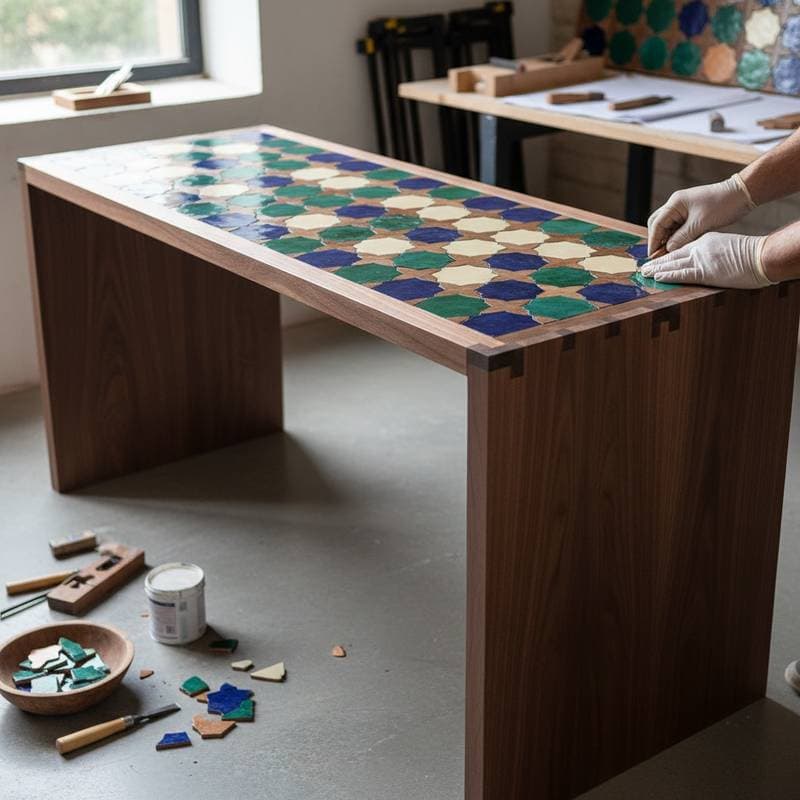
Zellige Inlays: Elevating Custom Wood Furniture Art
A single tile alters the atmosphere of a room. When that tile consists of hand-cut Zellige embedded in fine hardwood, the effect proves profound. Zellige inlays infuse the luster of Moroccan craftsmanship into the warmth of custom wood furniture. The outcome yields pieces that blend ancient heritage with contemporary appeal, offering decoration that resonates on a personal level.
At a Glance
| Feature | Details |
|---|---|
| Average cost per square foot | $45 to $85 for authentic Zellige tile |
| Typical inlay depth | 0.25 to 0.5 inches |
| Skill level | Intermediate to advanced woodworking |
| Lead time for custom projects | 4 to 10 weeks |
| Key benefit | Combines ceramic artistry with fine joinery for unique heirloom-quality pieces |
What Makes Zellige Unique
Zellige tile emerges from a tradition that embraces imperfection. Artisans hand-shape each piece from natural clay, sun-dry it, and apply mineral-based glazes. The firing process introduces subtle shifts in tone and sheen, which produce the signature shimmering mosaic quality.
Pairing this organic character with the exactitude of fine woodworking generates a compelling contrast. The tile's irregularity encounters the wood's structured lines. This union results in furniture that pulses with vitality, texture, and cultural depth.
Why It Works
Effective Zellige inlays depend on harmonious material integration. Wood expands and contracts with humidity fluctuations, whereas tile remains inflexible. Skilled makers incorporate a narrow expansion gap around each tile, secured with tinted epoxy or flexible grout. Such measures avert fractures and maintain secure joints across seasonal variations.
Zellige complements warm-toned woods exceptionally well. Species like oak, walnut, and cherry amplify the tile's palette, spanning soft ivory to intense cobalt. Alternatively, lighter options such as maple or ash accentuate the tile's uneven contours and vivid glazes.
Action Step
Prior to commencing work, evaluate tile-wood compatibility. Carve a modest recess in scrap wood, install a tile using flexible adhesive, and observe performance across a humidity range. A stable joint confirms suitability for broader applications.
Designing with Zellige Inlays
Zellige inlays suit tabletops, cabinet doors, headboards, and ornamental panels. Optimal designs position tile as a highlighted feature rather than extensive surfacing.
Possible configurations include:
- Geometric medallions encircled by hardwood frames.
- Linear strips along drawer or shelf perimeters.
- Mosaic sections embedded in dining or coffee tables.
- Central accents on bespoke cabinet fronts.
Proportion guides success. With tiles measuring approximately 2 by 2 inches, the encircling wood requires sufficient presence to counterbalance. Bold grain patterns pair best with monochromatic tiles; subdued woods invite multicolored or patterned varieties for dynamism.
Layout Planning
Zellige edges exhibit natural inconsistencies. Accommodate these by arranging tiles without adhesive prior to wood preparation. Define boundaries according to measured tile sizes, bypassing standard dimensions.
For seamless framing, route the inlay channel 1/16 inch wider than the tile array, then seal peripheral spaces with tinted epoxy. This technique conceals variances and safeguards tile margins from daily wear.
Action Step
Draft a full-scale layout sketch. Annotate tile hues, grout paths, and wood margins. This blueprint directs fabrication, minimizes material loss, and facilitates replication for subsequent commissions.
Step-by-Step Inlay Process
Constructing a Zellige inlay requires meticulous attention and accuracy. Advanced woodworkers and furniture specialists follow this sequence.
- Prepare the substrate. Mill wood to ensure flatness and stability. Tabletops benefit from a plywood base veneered in hardwood to restrict movement.
- Mark the tile field. Outline the installation zone. Apply painter's tape to shield adjacent areas from marring.
- Cut the recess. Employ a router or chisel to achieve depth matching tile thickness plus 1/16 inch for bonding. Uniform depth ensures a level surface.
- Dry fit tiles. Position pieces sans adhesive to verify alignment. Refine edges using a diamond file as necessary.
- Apply flexible adhesive. Select premium urethane or epoxy formulated for wood-tile adhesion. Steer clear of inflexible thinset.
- Set tiles. Press each into place with firm pressure. Achieve even elevation by tapping with a rubber mallet over a level block.
- Grout or fill. After curing, introduce flexible grout or tinted epoxy into voids. Clean excess prior to hardening.
- Seal and finish. Coat wood with penetrating oil or polyurethane, protecting tiles from overspray. Upon drying, polish tile surfaces.
Time and Tools
A 4-square-foot tabletop inlay demands 10 to 14 hours, distributed over multiple sessions. Essential equipment encompasses a router with precise depth adjustment, diamond file, epoxy applicators, and fine-grit sandpaper. Tile trimming utilizes a wet saw or tile nippers.
Action Step
Construct a practice panel beforehand. Errors in recess depth or adhesive type compromise final results. Prototyping also refines interactions between tile glaze and wood coatings.
Costs and Budget
Zellige inlay expenses fluctuate according to tile sourcing, design intricacy, and workmanship.
- Materials: Genuine Moroccan Zellige ranges from $45 to $85 per square foot. Comparable domestic or fabricated alternatives cost $20 to $40.
- Adhesives and finishes: Allocate $40 to $90 for superior epoxy, grout, and sealers in modest undertakings.
- Labor or shop time: Professionals bill $60 to $120 hourly. A standard table inlay may incur $800 to $1,800 in labor.
Budget Tips
Incorporate Zellige sparingly as accents to curb tile expenditures. Acquire tiles in volume for ongoing work to offset transport fees. Align finishing timelines for efficient curing phases. Reserve 10 percent additional tile for cuts and mishaps.
Where Not to Cut Corners
Rigid grout or inferior adhesives invite tile failure amid wood shifts. Similarly, applying wood sealants to tiles risks glaze dulling from oil absorption.
Action Step
Document time and expenses for initial projects. This record informs pricing for ensuing work and substantiates investments in premium materials or robust finishes.
DIY or Professional Collaboration
Zellige inlays appeal to enthusiasts and experts alike. Selection hinges on expertise and resources.
When DIY Makes Sense
Individuals proficient in veneer, parquetry, or marquetry can tackle modest inlays. Opt for straightforward motifs, like 12-inch panels or trays. Pre-assembled mosaic sheets streamline placement over individual tiles.
When to Hire a Professional
Large surfaces or load-bearing elements necessitate specialists versed in woodworking and tile integration. Experts handle humidity management, bonding choices, and post-inlay planing with specialized apparatus.
Vetting a Contractor
Examine completed wood-tile hybrids. Confirm familiarity with pliable adhesives and relief joints. Secure material specifications in writing and verify insurance coverage. Reputable makers detail strategies against long-term tile displacement.
Action Step
For outsourced work, furnish a detailed brief. Specify tile variety, motif arrangement, frame elements, and completion techniques. This clarity prevents discrepancies and upholds standards.
Common Mistakes
Mixed-media endeavors challenge even seasoned practitioners. Foreknowledge of pitfalls preserves effort.
- Neglecting acclimation. Allow wood to equilibrate in the workspace for days pre-recessing. Sudden moisture shifts warp cavities.
- Selecting rigid grout. Cement varieties fail on wood bases; prioritize flexible formulations.
- Excessive edge sanding. Proximity to tile risks glaze abrasion, eroding authenticity. Mask meticulously during refinement.
- Omitting expansion allowances. Overly snug tile-wood contacts lead to seasonal ejections.
- Variable recess depths. Inconsistent routing produces ledges that trap debris and dampness.
Fixes and Workarounds
For cracked tiles, soften adhesive with controlled heat and extract with a chisel. Install reserves and reseal judiciously. Tinted epoxy disguises small fissures sans disassembly.
Action Step
Stock five extra tiles per batch. While variations define Zellige, reserves enable imperceptible mends.
Living with Your Design
Zellige inlaid furniture requires light upkeep for enduring appeal. Clean with a moist cloth and neutral soap. Eschew acidic agents that erode grout or glaze.
Annually renew wood with wax or oil, ensuring uniform application. On functional surfaces, deploy felt protectors beneath weights. Though resilient, tiles chip from direct blows. In humid locales, apply grout sealers suited to exposure.
Long-Term Value
These singular creations gain worth through scarcity and skill. Viewed as artful utilities, they endure across eras with periodic refinishing.
Action Step
Initiate your project by sourcing authentic tiles and sketching initial concepts. Consult local woodworkers for compatibility tests, then proceed to fabrication for a piece that endures.