
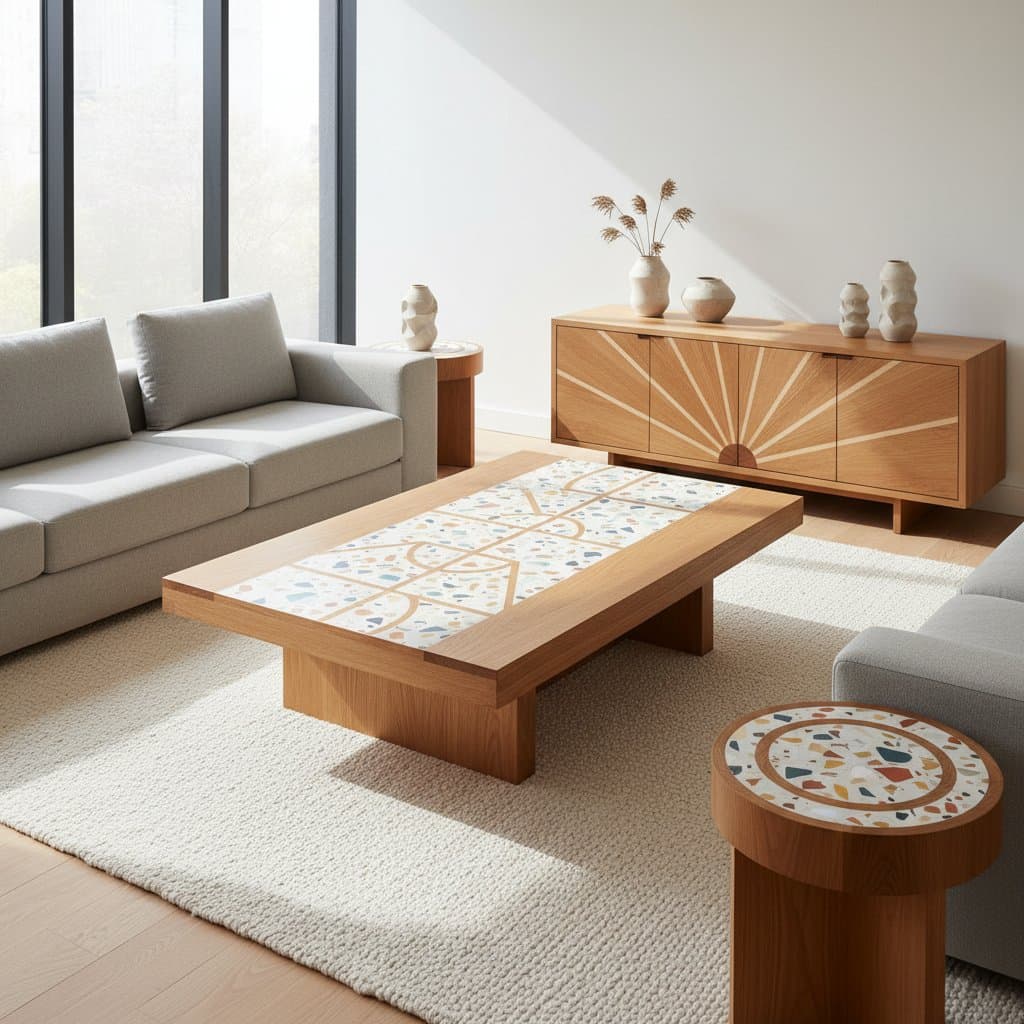
Terrazzo Wood Inlays: 2026's Game-Changing Furniture Trend
Terrazzo wood inlays reshape furniture design through a blend of warmth, craftsmanship, and intricate patterns. This hybrid surface integrates the natural grain of hardwood with the vibrant speckles of terrazzo, resulting in pieces that bridge classic and contemporary styles. The finish offers tactile appeal, exceptional durability, and versatile adaptability. Designers position it as the emerging statement material for tables, cabinetry, and custom built-ins.
What Sets Terrazzo Wood Inlays Apart
Traditional terrazzo consists of marble, quartz, or glass chips embedded in cement or resin. Paired with wood, the material adopts a lighter tone and more inviting character. The interplay between polished terrazzo and matte wood grain captures attention and introduces depth. Techniques enable geometric insets, curved edges, or freeform mosaics that accentuate form without overwhelming it.
Furniture artisans explore varying inlay scales, from narrow terrazzo strips along table edges to expansive panels on cabinet doors. This approach develops a fresh visual vocabulary that harmonizes meticulous craftsmanship with bold color expressions.
"Clients seek furniture that conveys personalization and longevity," notes interior designer Lara Nguyen of Studio Noma. "Terrazzo and wood together deliver that artisanal depth alongside a contemporary sharpness."
Quick Overview
- Trend emphasis: Terrazzo and wood inlay applications in furniture
- Primary materials: Solid oak, walnut, maple, alongside resin-based terrazzo composites
- Typical applications: Dining tables, console units, vanity surfaces, cabinet fronts
- Pioneering design studios: Studio Noma, Atelier Forma, Grainline Workshop
- Notable photographers: David Rojas, Miko Chen
From Monotone Surfaces to Dynamic Textures
Solid wood and consistent finishes long defined the furniture landscape. These surfaces provided reliability but often lacked visual intrigue. Artisans depended on stains or joinery to inject interest, leaving many pieces sturdy yet understated. The divide between handmade quality and patterned expressiveness persisted.
Furniture creator Theo Alvarez observes that clients frequently request designs that are "streamlined yet engaging, embellished without excess." Achieving layered depth remained a persistent challenge. Materials capable of uniting these elements proved scarce.
Layered Finishes That Encourage Interaction
Terrazzo wood inlays address this need. Artisans route precise cavities in wood and pour terrazzo directly into them, yielding flush patterns. The surface glides smoothly under touch while offering nuanced tonal and reflective shifts. In images, the pieces respond uniquely to light across material boundaries. Terrazzo enhances luminosity, as wood anchors the overall design.
Designers typically employ a 3/8-inch (1-centimeter) recess for the terrazzo, which levels after sanding for seamless integration. This method ensures strength without added bulk. On dining tables, inlaid terrazzo often outlines the edges, framing the wood grain effectively. In cabinetry, geometric terrazzo segments within door panels establish rhythmic patterns along walls.
Alex Petrov, lead designer at Studio Forma, explains, "We incorporate terrazzo inlays to emphasize joinery. This approach honors the build process rather than concealing it."
Technical Specifications
- Core materials: American walnut, white oak, or ash combined with terrazzo chips of marble, quartz, or recycled glass in resin
- Surface treatments: Matte polyurethane on wood, polished resin on terrazzo to foster subtle contrast
- Edge designs: Gentle bullnose or beveled corners to safeguard joints from damage
- Color schemes: Subdued terrazzo tones with light woods for serene spaces, or vivid chips against dark walnut for drama
- Fabrication methods: CNC routing for accurate cavities prior to terrazzo application
- Care instructions: Sealed finishes repel stains; clean with mild soap as needed
These choices bolster both resilience and aesthetic impact. The workflow merges digital precision with manual refinement, elevating woodworking standards.
The Rising Relevance of This Material Pairing
Contemporary homeowners desire enduring yet evolving surfaces. Terrazzo wood inlays fulfill this by evoking mid-century techniques while suiting current interiors. The style spans budgets, from compact side tables to expansive wall installations. It aligns with eco-conscious practices through recycled terrazzo aggregates and certified sustainable timber.
Illumination enhances the effect. Terrazzo particles capture natural or artificial light, introducing subtle shimmer that varies hourly. Photographs reveal tonal adaptations based on viewing angles. This interplay infuses spaces with vitality minus unnecessary complexity.
Nguyen adds, "Light brings terrazzo to life in ways solid wood cannot. It infuses motion into the surface, enlivening entire rooms."
Studio Innovations in Application
Grainline Workshop in Portland
Grainline Workshop combines white oak with light terrazzo derived from recycled quartz. Console tables incorporate inlays that follow drawer contours, elevating utility into design. The studio limits terrazzo to 25 percent of the surface to preserve organic warmth. Miko Chen's photography illustrates how these lines parallel the wood grain, generating deliberate visual harmony.
Atelier Forma in Montreal
Atelier Forma employs a 1/4-inch (0.6-centimeter) terrazzo overlay on cabinet doors, supported by wood bases. This yields colorful accents with structural integrity. Kitchen islands exemplify the method, with terrazzo on drawer faces framed by oak edges for ergonomic appeal. Designer Emilie Rousseau states, "It resembles sculpture yet performs as functional cabinetry. Every contact surface receives thoughtful attention."
Studio Noma in Los Angeles
Studio Noma advances color blocking with terrazzo blends of mint green and cream chips in maple bases. The results strike a balance of whimsy and sophistication, particularly under diffused LED illumination. David Rojas's shots highlight terrazzo bands syncing with table legs, forging a seamless flow from surface to support.
Essential Insights
- Adaptable integration: Suits minimalist and layered interior schemes alike
- Personalization potential: Unique terrazzo mixes enable bespoke designs
- Robust performance: Sealed terrazzo withstands scratches more effectively than typical stones
- Eco-friendly aspects: Incorporates recycled elements and FSC-certified woods to minimize footprint
- Optical balance: Terrazzo diffuses light as wood tempers it, yielding harmonious warmth
These qualities propel terrazzo inlays from niche workshops to broader manufacturing. Producers now develop modular terrazzo inserts compatible with conventional furniture frames, facilitating wider adoption.
Emerging Techniques and Pairings
Advancements in patterning lie ahead. CNC tools enable intricate carvings filled seamlessly by terrazzo, paving the way for checkerboard, herringbone, or circular motifs beyond simple outlines. Artisans integrate brass or resin dividers between materials for enhanced clarity.
Palette explorations will broaden. Delicate blush terrazzo with maple or deep charcoal variants with oak adapt to shifting trends. The finish complements adjuncts such as rattan, leather, or stone, supporting diverse material assemblages.
Practical Ownership of Terrazzo Wood Pieces
Owners of terrazzo inlay furniture appreciate its ease of upkeep and enduring visual depth. Dust routinely and reseal periodically to sustain vibrancy. Resin-based terrazzo repels moisture and heat superior to veneers. The material fusion conceals gradual wear, maintaining an artfully aged patina over years.