
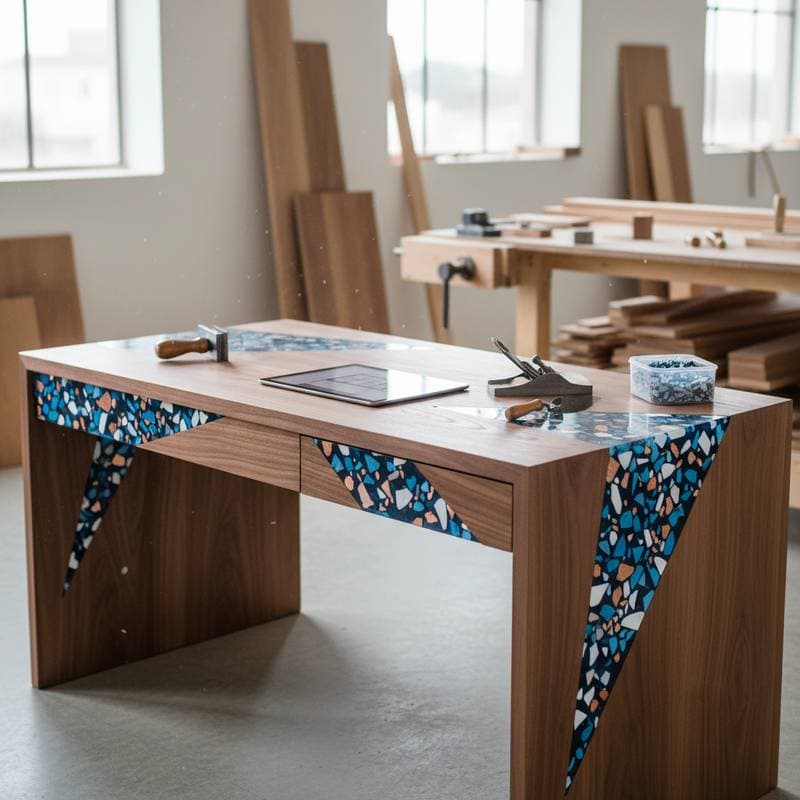
Introduction to Terrazzo Inlays
Terrazzo inlays combine chips of stone, glass, or marble bound with resin to form a composite material that integrates seamlessly into wood surfaces. This technique adds durability and visual interest to furniture, countering wood's vulnerability to wear while introducing subtle patterns and colors. In 2026, woodworkers embrace terrazzo for its ability to elevate simple builds into sophisticated, long-lasting creations.
The material's appeal lies in its versatility. It withstands daily use without fading or chipping easily, and its speckled appearance provides a modern twist on traditional woodworking. Whether for home decor or shop fixtures, terrazzo inlays offer a balance of aesthetics and functionality.
Maintenance: Clean surfaces with mild soap and water. Reseal annually to maintain a consistent sheen and protect against moisture.
Getting Started with Terrazzo Inlays
Home woodworkers can incorporate terrazzo without advanced equipment. Begin with a modest project like a trivet, box lid, or side table top. The process involves precise cutting, mixing, pouring, and finishing, rewarding careful execution with professional results.
Follow these steps for success:
-
Cut the recess. Secure the wood piece and use a router fitted with a straight bit to create a cavity 0.25 inch (6 millimeters) deep. Maintain even depth to ensure a flush fit.
-
Mix the terrazzo. Follow kit instructions to blend resin with aggregate chips. Prepare a test batch to verify color and consistency before committing to the full pour.
-
Pour and cure. Fill the cavity slightly above the wood surface to account for shrinkage. Allow full hardening, typically 24 hours, then sand level using 220-grit sandpaper or finer.
-
Apply finishes. Seal both wood and terrazzo with penetrating oil or polyurethane. This step unifies the appearance and enhances longevity.
Patience during curing and sanding yields a smooth integration. The emerging pattern from the terrazzo creates a custom effect, even on basic designs.
Effective Wood and Terrazzo Pairings
Successful combinations balance wood's natural tones with terrazzo's varied textures. Select pairings that complement rather than compete, enhancing the overall design.
-
Walnut paired with cream terrazzo: Dark walnut grains provide a natural frame for the soft, pale composite.
-
White oak with green and amber chips: These earthy hues accentuate the oak's ray patterns for a cohesive, organic look.
-
Ash alongside black terrazzo: The sharp contrast suits modern pieces, emphasizing clean lines.
-
Birch with multicolor chips: Vibrant speckles add a playful, graphic element to storage or casual furniture.
Designer Mia Torres notes, “You can tune terrazzo to echo the undertone of your wood. That harmony keeps it from looking trendy and makes it feel intentional.”
How Light Enhances Terrazzo Surfaces
Terrazzo's embedded chips reflect light uniquely, surpassing the capabilities of standard wood finishes. This property illuminates shadowed areas in workshops or homes, such as under cabinets or along worktops.
Pair it with a matte wood finish to create an integrated accent. Position pieces near windows or warm LED lighting to maximize refraction from glass or marble fragments. Throughout the day, these highlights shift, imparting subtle movement to stationary furniture.
Durability and Practical Advantages
Terrazzo resists expansion and contraction, unlike solid wood, making it ideal for stabilizing surfaces. Incorporate it into drawer fronts or cabinet inserts to guard against dents and maintain structural integrity.
In high-use areas like kitchens or craft spaces, terrazzo repels stains from oils and adhesives. A single sealant application prevents absorption, prolonging the furniture's lifespan. For those seeking low-maintenance options, it outperforms veneers or painted surfaces.
Sustainability in Terrazzo Design
Contemporary terrazzo incorporates recycled materials, including crushed mirror or surplus marble chips. This approach aligns with efficient resource use, attracting environmentally conscious makers.
Suppliers provide small-batch options tailored for hobbyists, available in compact packaging. Woodworkers may cast panels from project scraps like stone or colored glass, producing one-of-a-kind patterns. Such practices reinforce sustainability while promoting unique, handmade results.
Factors Driving the Terrazzo Trend
Design movements propel terrazzo into DIY furniture:
-
Hybrid materials: Blending natural wood with composites mirrors modern lifestyles that fuse craft and innovation.
-
Tactile elements: The smooth terrazzo contrasts with wood's grain, engaging senses through varied touch.
-
Versatile patterns: Multitone speckles conceal wear and harmonize with diverse color schemes.
-
Enduring quality: Terrazzo's resilience meets demands for durable, heirloom pieces.
These influences position terrazzo as a enduring advancement in woodworking.
Case Study: A Terrazzo-Accented Writing Desk
Furniture designer Jae Lin crafted a compact writing desk for a client seeking practicality with distinction. The oak base supported a 48-inch by 24-inch (122 by 61 centimeters) top, featuring a 4-inch (10 centimeters) wide diagonal terrazzo inlay.
“The line of terrazzo breaks the grain and catches light,” Lin explains. “It guides your eye as you sit down.” The client employs the inlay as a coaster area, free from marks or rings. Simple lines direct attention to the material interplay.
Strategic lighting amplified the effect. A pendant fixture targeted the band, generating a shifting glow. This example demonstrates how a slim inlay can transform a basic layout.
Key Specifications
-
Top thickness: 1 inch (25 millimeters) solid oak
-
Inlay width: 4 inches (10 centimeters)
-
Finish: Water-based satin clear coat
-
Hardware: Concealed drawer slides with brass pulls
-
Estimated cost: 650 to 850 dollars, varying by supplier
Precision Techniques for Workshop Inlays
Achieve professional results with these targeted methods:
-
Outline accurately: Apply painter's tape to demarcate the area and avoid resin overflow.
-
Protect wood edges: Coat with shellac to block resin penetration into pores.
-
Sand in stages: Progress from 120 grit to 400 grit for a refined surface.
-
Align sheens: Buff terrazzo to match the wood's matte level, avoiding high gloss mismatches.
-
Verify bonding: Test resin compatibility with wood finishes prior to assembly.
These practices ensure the inlay appears seamless and deliberate.
Ideal Home Applications for Terrazzo Inlays
Terrazzo excels in visible, functional spots requiring both style and resilience.
-
Entryway benches: Withstands shoe scuffs on high-traffic surfaces.
-
Kitchen islands: Provides spill-resistant sections without complete stone replacement.
-
Bathroom vanities: Manages humidity superior to untreated wood.
-
Coffee tables: Introduces pattern and durability to social areas.
-
Shelving or cabinet fronts: Elevates storage to decorative elements.
Its flexibility suits diverse settings where wood encounters routine demands.
Cost Considerations and Sourcing
Terrazzo kits for small projects range from 50 to 150 dollars, depending on aggregate quality and resin type. Larger panels or custom mixes may cost 200 to 500 dollars. Factor in tools like routers if not already owned.
Local suppliers or online retailers offer hobbyist-friendly options, including recycled aggregates. Start with pre-mixed samples to minimize waste and experiment affordably. Over time, investing in bulk materials reduces per-project expenses.
Maximizing Value Through Terrazzo Integration
Incorporating terrazzo inlays extends furniture lifespan while adding distinctive character. This approach not only protects wood from wear but also infuses projects with contemporary flair. Woodworkers gain satisfaction from creating pieces that blend tradition with innovation, suitable for everyday use and display.