
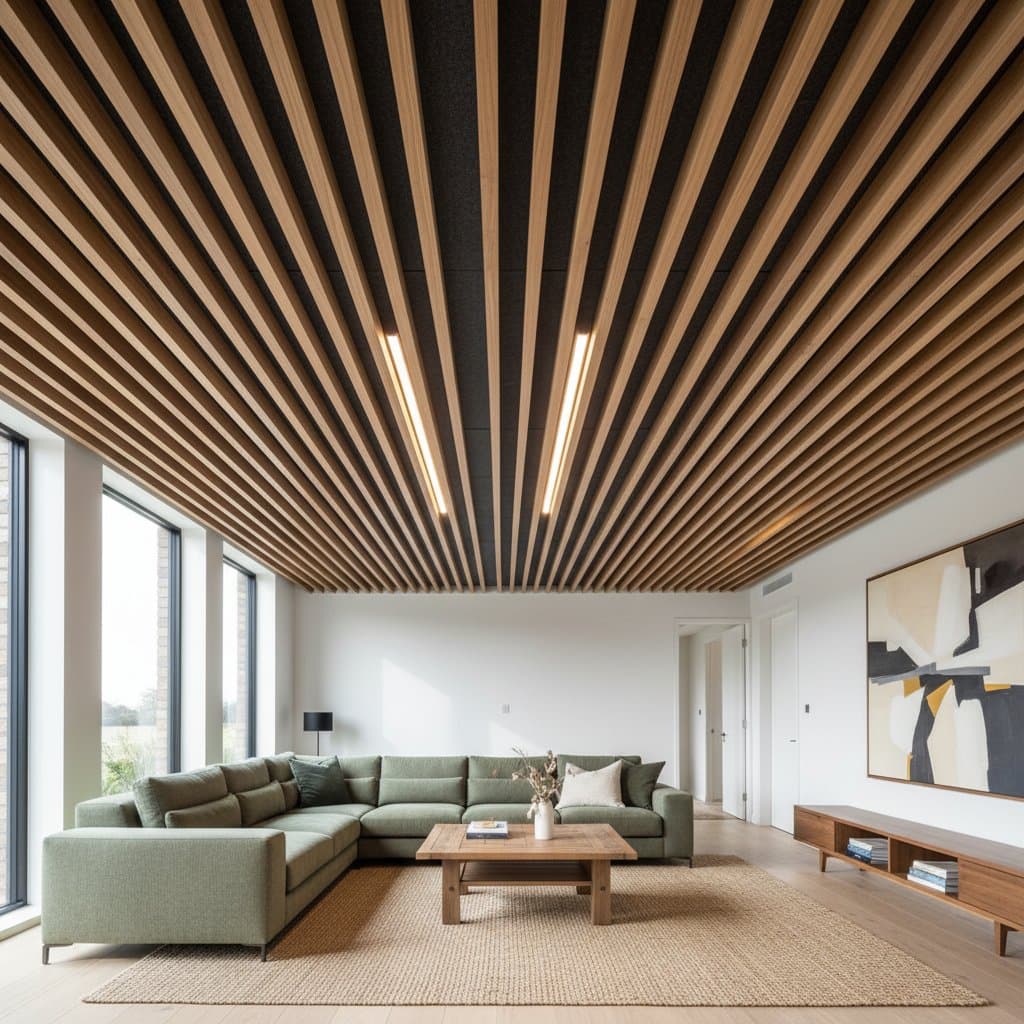
Elevate Rooms with DIY Acoustic Wood Slat Ceilings
Echoing rooms often feel incomplete, regardless of other design elements. An acoustic wood slat ceiling addresses this issue effectively. Homeowners complete the project for $8 to $16 per square foot through DIY methods, whereas professional services range from $25 to $40 per square foot. The result delivers a warm, contemporary appearance that dampens noise and increases property value.
Understanding the key features, necessary materials, and installation process ensures safe and efficient execution.
Why Acoustic Wood Slat Ceilings Perform Effectively
Acoustic wood slat ceilings integrate sound absorption with visual appeal. Slats diffuse sound waves to disrupt echoes, and the underlying fabric or felt captures reflected noise. Proper installation shortens reverberation time by up to 0.5 seconds, which clarifies speech and enriches audio playback.
This style adapts to diverse interiors. Oak or walnut slats provide a classic, enduring vibe. Pine or birch imparts a light, Nordic essence. In professional settings like offices or recording areas, dark-stained slats paired with black felt foster a concentrated environment.
Action Step: Select wood species at the outset. Apply stain samples and observe them under room lighting at different times to assess tonal shifts.
Materials and Tools Checklist
Preparation with all items prevents interruptions. Essential components include:
- Wood slats, precut to room dimensions or in panel form
- Acoustic felt or mineral wool panels, 1 to 2 inches thick
- 1x3 furring strips to form the support framework
- Construction adhesive suitable for wood and fabric
- Wood screws or finish nails
- Level, chalk line, and measuring tape
- Miter saw or table saw for slat adjustments
- Safety equipment such as eye protection and dust mask
For a suspended design, incorporate hanging wire kits or metal channels to lower the ceiling 2 to 6 inches. This method conceals electrical wiring or HVAC elements without compromising sound control.
Action Step: Arrange materials on a flat surface prior to starting. Verify color uniformity and grain alignment for seamless visual continuity.
Installation Process
Follow these steps for a secure, professional outcome.
- Measure the ceiling area and mark furring strip positions every 16 inches, aligning with joists.
- Install furring strips using screws anchored into joists, ensuring level alignment with a laser tool.
- Attach acoustic backing to the strips with adhesive and staples, covering the entire surface without gaps.
- Cut slats to length, maintaining 0.5-inch spacing; use spacers for consistency.
- Secure slats to furring strips with screws or nails, starting from one wall and progressing evenly.
- Trim edges near walls or fixtures for a fitted finish; sand and stain as needed.
- Integrate lighting by routing wires through gaps and anchoring fixtures to joists.
Allow 24 hours for adhesive to set before final testing.
Action Step: Practice spacing on a test board to refine technique before full installation.
Costs and Budget Considerations
Quality of materials primarily influences expenses. Anticipate these ranges:
- DIY materials: $8 to $16 per square foot
- Professional installation: $25 to $40 per square foot
- Drop ceiling hardware: Additional $2 to $4 per square foot
- Lighting integration: $150 to $300 per fixture
Plywood slats offer the lowest price point. Solid oak or walnut increases costs twofold for superior longevity and depth. Acoustic felt runs $1.50 to $3.00 per square foot; mineral wool costs marginally more yet provides enhanced noise reduction.
To optimize spending, apply hardwood selectively in prominent zones and pine in concealed areas. Opt for prefabricated slat panels to shorten assembly time.
Action Step: Allocate an additional 10 percent of the budget for finishes, fasteners, and minor modifications.
Common Mistakes and Prevention Strategies
Misaligned Slats
A quarter-inch deviation amplifies over distance. Employ spacers and a laser level for precision.
Omitting Backing
Absence of acoustic material diminishes noise control. Incorporate a pliable underlayer universally.
Selecting Wrong Fasteners
Drywall screws risk splitting slender slats. Opt for wood screws with pilot holes to avoid damage.
Neglecting Moisture Management
In humid areas like bathrooms or basements, use sealed or composite slats against warping. Install a vapor barrier where needed.
Improper Fixture Mounting
Avoid securing heavy lights or fans solely to slats. Fasten directly to joists via the support grid.
Action Step: Prepare a checklist covering backing securement, interval verification, and fastener choices before commencing.
Resources and Visual Aids
Suggested Visuals:
-
Cutaway diagram illustrating slats, felt backing, and furring strips.
Alt text: Cross-section of acoustic wood slat ceiling layers. -
Before-and-after room photos demonstrating echo reduction and style enhancement.
Alt text: Echoing room transformed by wood slat ceiling installation. -
Step-by-step installation sequence images.
Alt text: Sequential guide to DIY acoustic ceiling assembly.
Plan Your Installation Timeline
Schedule the project over two to three weekends: one for preparation and framing, another for slat attachment and finishing. Test acoustics post-installation by playing sound and noting improvements. This addition not only refines your space but also appeals to future buyers seeking modern, functional upgrades.