
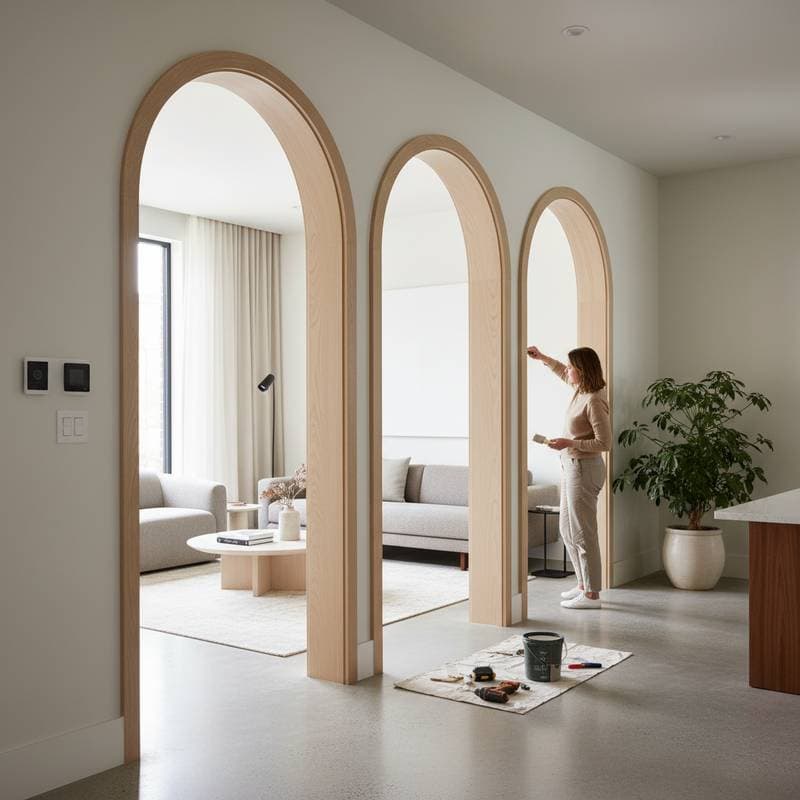
Skill Level: Intermediate DIY or professional carpenter
Best Materials: MDF, plywood, flexible trim, joint compound
Understanding the Arched Doorway Conversion Process
Transforming a standard doorway into an arched one requires careful reshaping of the upper portion of the opening. This involves constructing a curved frame using plywood or flexible boards, followed by applying drywall or trim for a finished appearance. Although the task may appear complex, the required calculations and supplies remain straightforward for those with basic woodworking knowledge.
The overall project enhances spatial flow while preserving the home's structural integrity. Homeowners often select this upgrade to introduce architectural interest without disrupting daily routines. Completion typically spans several days, allowing for drying times between finishing steps.
Here is a detailed overview of the process:
-
Determine Measurements and Radius: Select the desired arch height. A subtle elevation of 6 to 8 inches above a standard 36-inch door width provides visual balance in typical residential settings. Measure the existing opening precisely, accounting for any irregularities in the wall framing to ensure the curve aligns symmetrically.
-
Create Templates and Install Framing: Fabricate two identical plywood templates using a jigsaw, based on your radius calculations. Secure these templates to the sides of the current door frame with nails or screws, reinforcing the structure to support the added weight of finishing materials.
-
Apply Drywall or MDF Covering: Bend flexible drywall sheets or thin MDF panels across the arch form. Fasten them in place using corrosion-resistant screws spaced every 6 inches, ensuring the material conforms smoothly to the curve without excessive force that could cause fractures.
-
Complete the Finishing Touches: Spread joint compound over seams and imperfections, allowing each layer to dry fully before sanding to a fine surface. Prime the area thoroughly, then apply paint in thin coats. For added detail, affix flexible molding that follows the arch's contour seamlessly.
Projects on single doorways generally demand 12 to 20 hours of hands-on effort. Factor in additional time for material curing, which can extend the timeline by one to two days depending on humidity levels.
Deciding Between DIY and Professional Assistance
Individuals with prior experience in drywall installation, curved cutting, and accurate measurements find this project fulfilling and cost-effective. Novices may encounter challenges with the arch's curvature, which demands precision to avoid uneven results. Evaluate your skills and resources before proceeding.
Indicators for Tackling It Yourself
Opt for a DIY approach if the following conditions apply:
- You possess essential tools such as a jigsaw, spirit level, and power drill.
- You feel assured in producing clean plywood templates through careful marking and cutting.
- You maintain the diligence required for layering and refining joint compound applications.
This method allows full control over the design and timeline, often resulting in a personalized touch that reflects your vision.
Situations Calling for Expert Help
Engage a professional under these circumstances:
- The doorway involves load-bearing walls or significant structural modifications.
- Ceilings exceed 9 feet, complicating access and material handling.
- You plan intricate trim designs or work with delicate plaster surfaces.
Skilled carpenters deliver impeccable symmetry and fluid transitions, minimizing long-term maintenance. They frequently source specialized flexible millwork unavailable at standard retailers, ensuring superior durability.
When selecting a contractor, review photographs of completed arches from previous installations. Verify their possession of liability insurance and adherence to local building regulations. Interior non-structural alterations seldom require permits, yet always consult your municipal authority prior to commencing work.
Essential Techniques from Seasoned Craftsmen
Experienced installers employ specific methods to streamline the workflow and elevate quality. These strategies address common hurdles like material resistance and surface inconsistencies.
-
Employ a String-Based Compass: Anchor a nail at the arch's central point, attach a taut string, and trace the radius with a pencil. This tool guarantees uniformity across the curve, eliminating guesswork in template creation.
-
Condition Drywall for Bending: Spritz flexible drywall lightly with water and drape it over a rounded form, such as a large cylinder, for several hours. The moisture softens the material, facilitating easier shaping and preventing splits during attachment.
-
Apply Primer Prior to Final Coats: Arches reflect light in unique ways compared to straight walls, potentially highlighting imperfections. A robust primer seals the surface, promoting even paint adhesion and a cohesive finish.
-
Replicate Surrounding Textures: Match the arch's surface to nearby walls, whether smooth, stippled, or textured with an orange peel effect. Use a spray texture tool or roller for consistency, creating an integrated appearance.
For trim applications, consider flexible polyurethane options from reputable suppliers. These moldings adapt to sharp curves without splintering, install via standard miter cuts, and accept paint for a custom sheen.
Expanding on material choices, MDF offers affordability and ease of shaping, while plywood provides greater strength for wider spans. Select joint compounds formulated for curved surfaces to minimize shrinkage during drying.
Experiencing the Impact of Arched Doorways
Upon installation, an arched doorway alters the home's atmosphere profoundly. The gentle curve tempers angular edges, directs sightlines gracefully, and infuses spaces with artisanal quality absent in standard constructions. Consider accentuating the arch's interior with a complementary hue to emphasize its form, or select a matching tone for understated sophistication.
Beyond aesthetics, these features boost property appeal. Real estate experts observe that prospective buyers prioritize distinctive architectural elements during viewings. Strategic arch placements convey bespoke design, elevating perceived value without invasive overhauls.
In practical terms, arches facilitate smoother traffic flow between rooms, particularly in open-plan layouts. They also accommodate varying decor styles, from rustic to minimalist, adapting seamlessly to evolving tastes.
Preparing to Launch Your Arched Doorway Project
Begin by sketching your space and selecting an arch radius that complements the room's proportions. Gather tools and materials in advance, budgeting approximately $800 to $1,200 for a basic installation, including supplies and potential tool rentals. If opting for professional aid, obtain multiple quotes to compare expertise and pricing.
Test your skills on a small-scale mockup if new to curves, building confidence before full commitment. Schedule the work during mild weather to optimize drying conditions. With these preparations, you position yourself for a successful transformation that enhances your home's character and functionality.