
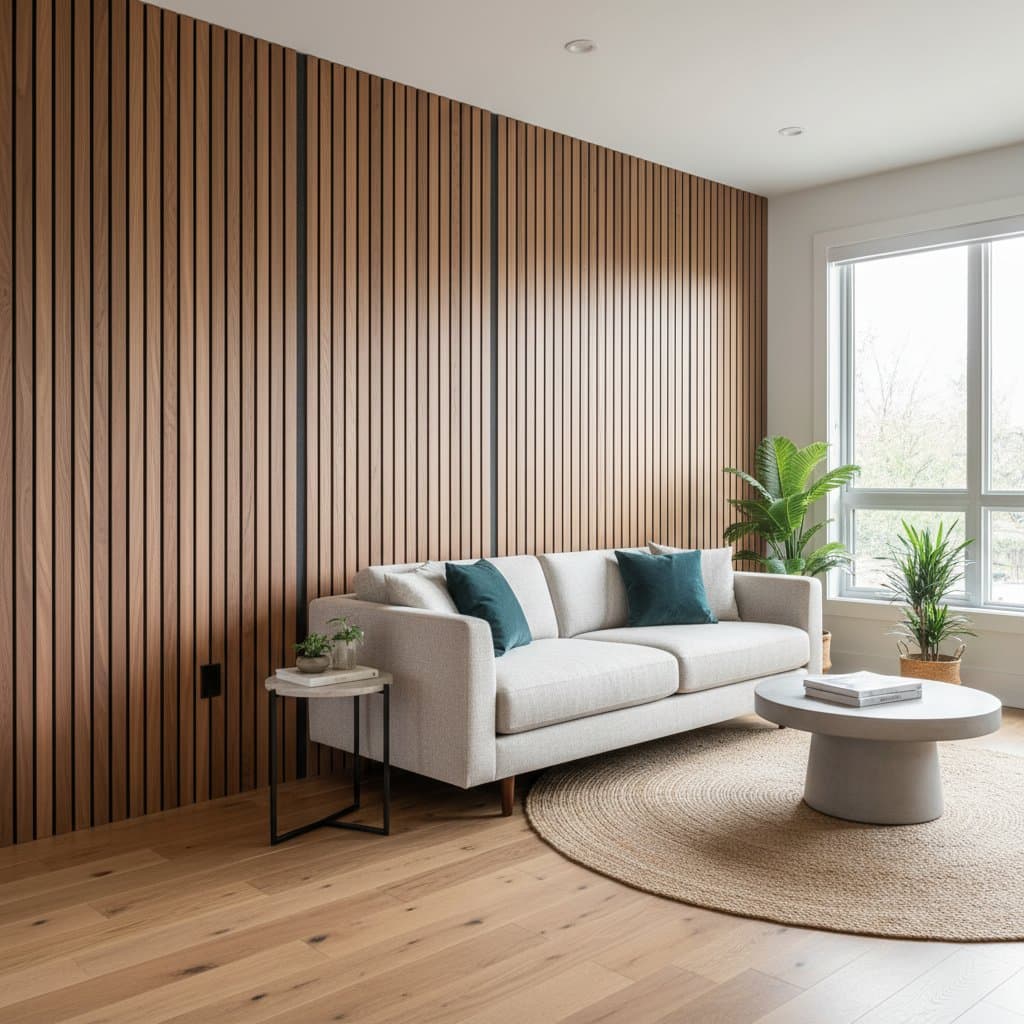
DIY Acoustic Slat Panels: Reduce Room Noise by Up to 40 Percent
Noisy environments disrupt comfort in even the most appealing homes. Hard surfaces reflect sound waves, amplifying conversations into persistent echoes. DIY acoustic slat panels offer an effective solution to restore tranquility. These panels integrate sound absorption with contemporary aesthetics, delivering both acoustic benefits and visual appeal. Basic woodworking tools, select lumber, and methodical preparation enable completion of the project over a single weekend.
How Acoustic Slat Panels Enhance Sound Quality
Acoustic slat panels mitigate echoes and temper sound intensity by interrupting reflections. The wooden slats absorb certain frequencies while scattering others. An underlying layer of felt or mineral wool traps low-frequency sounds that typically rebound from walls.
Typical components include:
- Wooden slats: Strips of oak, pine, or walnut, approximately 1 inch wide by ¾ inch thick.
- Backing material: Felt or acoustic insulation, ½ to 1 inch thick, composed of recycled polyester or mineral wool.
- Air gap: A ½-inch space between the panel and wall to optimize absorption.
In spaces featuring hard flooring and minimal furnishings, installation yields noticeable results. Sound levels often decrease by 20 to 40 percent. The effect proves most pronounced in open layouts, home offices, or recording studios where audio travels freely.
Action step: Measure the target wall surface. Calculate square footage by multiplying width by height, then allocate one panel for every 20 to 25 square feet.
Step-by-Step Guide to Constructing and Installing DIY Slat Panels
Assemble each panel with standard carpentry equipment. Allocate one day for cutting and assembly, followed by another for attachment.
Step 1: Prepare the Slats
Trim wood strips to uniform lengths, typically 8 feet. Sand all surfaces starting with 120-grit paper, progressing to 220-grit for refinement. Lightly round edges to minimize splinter risks during handling.
Step 2: Set Up the Backing
Position felt or insulation on a level workspace. Use a straightedge to mark slat placements. Maintain ¾-inch gaps between slats to harmonize absorption efficiency with aesthetic spacing.
Step 3: Secure the Slats
Apply construction adhesive or employ a pneumatic stapler to affix slats to the backing. Ensure alignment remains precise. Even a 1/8-inch deviation accumulates over expansive panels, so proceed deliberately.
Step 4: Attach Panels to the Wall
Fasten panels to wall studs via screws penetrating the backing. Incorporate washers to sustain a ½-inch air gap. Verify plumb with a laser level or extended spirit level for seamless integration.
Step 5: Refine Edges and Apply Finishes
Enclose edges with coordinating trim or a painted frame. Clean surfaces to eliminate adhesive remnants, then coat with the selected finish for protection and sheen.
Action step: Post-installation, evaluate acoustics by clapping hands or playing audio. Expect reduced reverb and richer tonal quality right away.
Choosing Between DIY and Professional Services
Intermediate DIY enthusiasts can manage slat panel installation with relative ease. Key hurdles involve precise alignment and firm anchorage.
Suitable for DIY with these tools:
- Circular saw or miter saw for uniform cuts.
- Drill and stud finder for secure wall attachment.
- Level and tape measure for accurate positioning.
- Sandpaper and brushes for surface preparation.
Consider professionals for:
- Ceiling applications or high walls.
- Surfaces with irregularities or dampness concerns.
- Custom features like embedded LED strips or cable conduits.
Professional rates range from $8 to $12 per square foot, encompassing materials and labor. Such expertise justifies investment for complex undertakings.
Action step: When engaging contractors, verify insurance coverage and review references from similar acoustic installations. Obtain a detailed written estimate outlining materials and labor costs.
Integrating Panels into Daily Living
Installed panels alter room dynamics profoundly. Dialogues gain clarity as ambient noise diminishes. The inherent wood grain imparts organic texture, complementing minimalist, rustic, or modern schemes.
Extend application strategically:
- Envelop media room rear walls for even audio distribution.
- Install a focal panel behind seating or sleeping areas.
- Clad corridors or foyers to mute foot traffic.
Maintenance involves light dusting with a soft brush or vacuum nozzle. Steer clear of excessive moisture, which may cause wood expansion. For groove debris, deploy compressed air or a microfiber cloth.
Action step: Renew sealant coats every few years to preserve vibrancy and guard against humidity.
Ensuring Long-Term Panel Performance
Proper care extends acoustic slat panel lifespan across decades. Conduct annual inspections for loosened hardware or seam separations. Secure screws as necessary and apply clear adhesive to any fissures.
During renovations or color updates, panels detach for relocation. The backing remains undamaged when pried carefully from the base with a pry bar. This adaptability enhances overall utility.