
Why Tung Oil Outperforms Polyurethane for Natural Wood Finishes
Woodworkers seeking a finish that honors the inherent character of wood frequently select tung oil. This oil penetrates deeply, hardens within the fibers, and maintains the organic appearance that polyurethane often diminishes. The outcome is a surface that retains a vital, tactile quality rather than appearing encased in a glossy barrier.
This article explores the reasons tung oil serves as a preferred option for natural, food-safe, and resilient finishes. It examines the differences in performance compared to polyurethane and provides guidance on application to achieve enduring protection while preserving the wood's inherent warmth.
Ideal Applications
Primary users: Home woodworkers, cabinetmakers, furniture restorers, and individuals finishing cutting boards or live-edge tables.
Common settings: Workshops and home studios across the country.
Product options: Pure tung oil or polymerized blends for quicker drying.
Coverage estimate: One quart typically covers approximately 400 square feet over several coats.
Challenges with Polyurethane
Numerous woodworkers initially choose polyurethane for its promised resilience. This finish creates a thick layer that withstands scratches effectively. However, the appearance may seem contrived, with the plastic-like sheen dominating under illumination before the wood's texture emerges.
Over time, the film can discolor to yellow, flake, or fracture as the wood expands and contracts with moisture levels. One hobbyist remarked, while sanding away a flawed topcoat, “It looked sealed, but not alive. I missed the texture and the smell of real wood.”
Such disconnection prompts a reevaluation of protective strategies. For objectives centered on safety and sensory appeal, a penetrating oil offers an alternative approach.
Benefits of Tung Oil
Transitioning to tung oil alters both the application method and the final outcome. Instead of forming a surface layer, the oil seeps into the wood fibers and polymerizes internally. The result is a firm yet uncoated feel, where light diffuses across the grain, colors intensify, and the surface invites touch.
Professionals designing natural environments often recommend tung oil for its subtle clarity. This finish accentuates wood figure without reflective distraction, suiting species such as walnut, cherry, and maple where visual contrast proves essential. Cabinetmaker Laura Chen of Studio Grainline noted, “We wanted a finish that felt like skin, not armor. Tung oil lets the surface breathe.”
For items like cutting boards or butcher blocks, the food-safe formulation provides reassurance. After full curing, it remains non-toxic and repels water, making it suitable for kitchen surfaces or dining tables prone to food contact.
Essential Specifications
-
Composition: 100 percent pure tung oil or blends with polymerization agents for accelerated drying.
-
Application method: Spread thinly using a lint-free cloth, allow 40 minutes of absorption, then remove excess.
-
Curing process: Permit three to four days between applications for complete polymerization.
-
Coat recommendations: Apply three layers for lightly used items; extend to six for tabletops.
-
Sheen level: Achieves a natural matte or gentle satin finish based on buffing intensity.
-
Maintenance routine: Reapply annually through a light abrasion and thin new coat.
-
Performance attributes: Demonstrates strong resistance to water marks and moderate heat after curing.
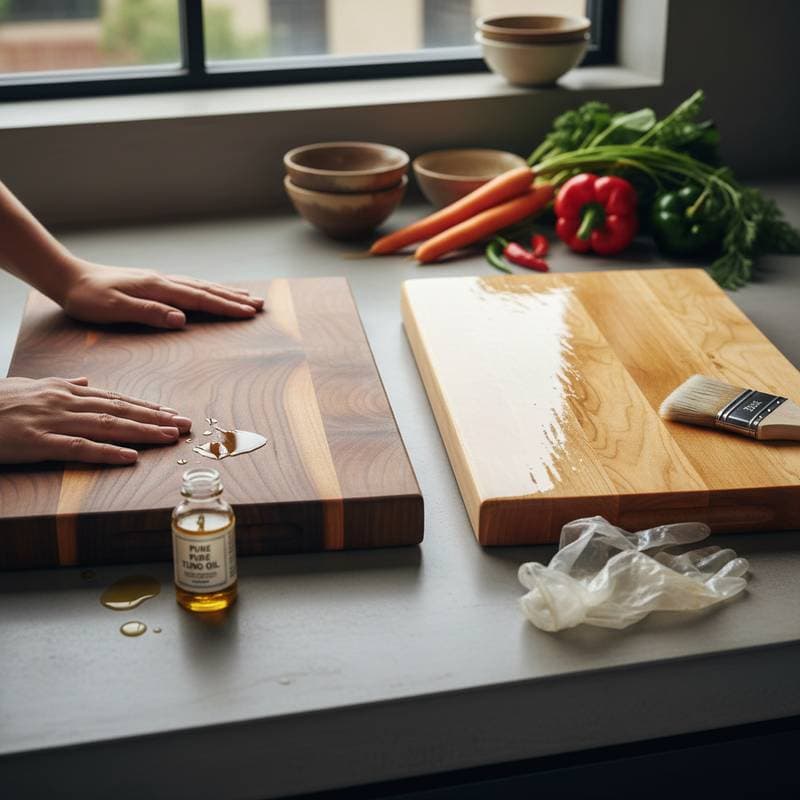
Visual examples illustrate how the oil enhances depth without harsh reflections. End grain takes on a subtle darkening for added dimension. On expansive panels, light distribution remains diffused and uniform. The sensory contrast stands out immediately: polyurethane surfaces feel slippery, whereas tung oil conveys warmth and subtle grip, encouraging interaction over hesitation.
Underlying Chemistry
The distinctive properties of tung oil stem from its composition. Derived from tung tree seeds, it undergoes natural polymerization upon oxygen exposure. This reaction occurs within the wood structure, forming a resilient yet adaptable matrix that accommodates seasonal shifts.
Polyurethane, by comparison, establishes a rigid surface barrier. While it delivers superior hardness, this layer separates the wood from its environment. Wood movement can lead to fine fissures at edges or seams. Repairs to polyurethane frequently necessitate complete removal to bare wood. Tung oil maintenance proves less invasive: a gentle scuffing suffices before adding a fresh coat, which integrates seamlessly with the existing finish.
Step-by-Step Application Guide
-
Prepare the surface: Sand progressively to 220 grit and eliminate all dust particles.
-
Apply the initial coat: Saturate the wood generously until absorption ceases, then remove any pooled oil after 40 minutes.
-
Add follow-up coats: Use sparse layers, allowing each to cure over several days.
-
Achieve final polish: Buff the completed coats with a soft cotton cloth or fine steel wool to develop a subtle sheen.
-
Establish care practices: Clean using mild soap and water; steer clear of abrasive chemicals or pore-clogging waxes.
When working with sizable furniture, conduct a test on scrap pieces to gauge color uptake. Dense, oily woods such as teak benefit from dilution or blended formulas to ensure proper penetration.
Evaluating Expenses and Endurance
Pure tung oil carries a higher price per quart than conventional polyurethane. However, its thin application layers enable greater overall coverage. A standard dining table might consume roughly 8 ounces for three coats. Following curing, the finish endures for years with occasional maintenance.
The primary consideration involves time investment. Oxygen-driven curing demands patience between steps. For artisans who appreciate meticulous processes, this deliberate pace enhances the sense of craftsmanship. The aroma of oxidizing oil marks advancement rather than hindrance.
Core Advantages
-
Preservation of character: Maintains the wood's original tone and tactile qualities.
-
Ease of restoration: Allows renewal without full refinishing.
-
Health considerations: Becomes food-safe post-curing for direct-contact items.
-
Visual appeal: Delivers matte depth that amplifies grain patterns.
-
Sustained performance: Offers flexibility and moisture resistance suited to variable conditions.
In modern settings, tung oil harmonizes with elements like linen textiles, stone accents, and clay fixtures. It supports subdued color schemes and ambient illumination, fostering spaces that evoke stability and serenity.
Sustaining Long-Term Performance
To preserve the efficacy of tung oil finishes, address spills without delay and prevent extended moisture exposure. Conduct annual reviews of frequently touched zones. Should dullness appear, perform a light cleaning followed by a maintenance coat. This routine requires minimal disruption and can occur in place.
As years pass, the finish acquires a gentle patina that enriches hue and narrative. Each renewal contributes depth without accumulation. Artisans often describe it as a dynamic finish, one that evolves alongside the wood through accumulated handling and attention.
Woodworkers pursuing an equilibrium of aesthetics, strength, and genuineness find tung oil unparalleled. It safeguards through integration rather than isolation, ensuring creations stay true to their elemental origins.