
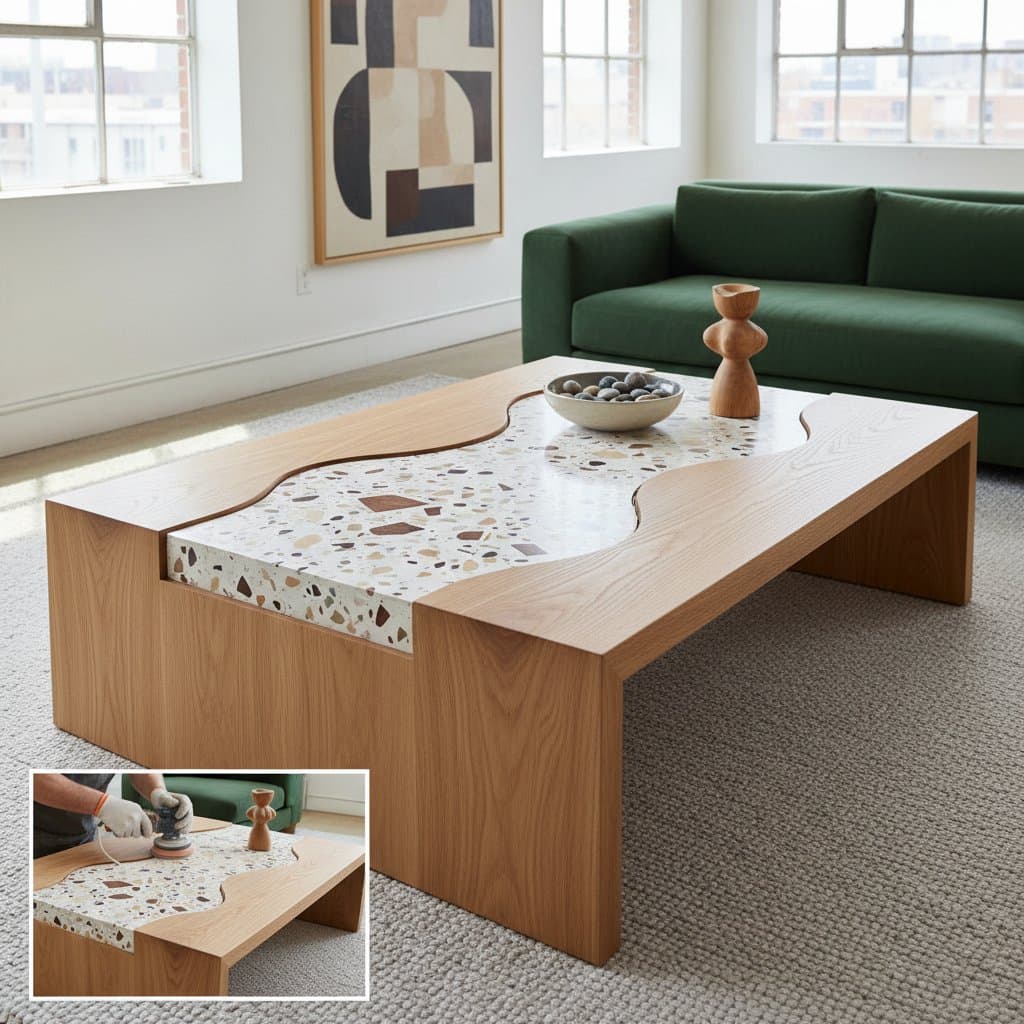
Terrazzo Inlays: Wood's Bold Mixed-Media Trend for 2026
A handmade walnut tabletop reflects light across its surface, where embedded colored chips create a subtle sparkle. This effect comes from terrazzo inlay, not paint or resin. Furniture makers and design studios combine wood with terrazzo composites to produce pieces that balance durability and sculpture. These inlays appear in tabletops, cabinet doors, stair treads, and wall panels. The approach signals that craftsmanship can innovate while honoring established methods.
Why Terrazzo Inlays Are Gaining Momentum
Terrazzo inlay merges wood furniture with a material typically used elsewhere. Terrazzo consists of stone chips bound by cement or resin, offering speckled texture and strength. Wood provides warmth, visible grain, and natural variation. Proper integration yields pieces that feel rooted in tradition yet push modern boundaries.
Designers highlight the power of contrast. Wood flexes with its fibrous structure, while terrazzo remains rigid and mineral-based. This pairing generates visual interest and physical depth. For makers, the technique allows precise color customization. Tailor terrazzo mixtures to complement wood hues or add striking accents.
Technically, terrazzo inlays promote efficiency. Incorporate small fragments of leftover stone, glass, or resin to minimize waste. Studios focused on sustainability value this method, as it avoids cutting large slabs. The workflow suits small operations and enhances market value.
Action step: Prepare a 12-by-12-inch sample board to evaluate bonding between your wood type, resin, and topcoat before scaling to a full project.
Costs and Budget Planning
Terrazzo inlay demands specialized supplies beyond typical woodworking tools. Accurate budgeting avoids unexpected expenses.
Material Breakdown
- Epoxy binder: $80 to $160 per gallon, varying by clarity and UV resistance.
- Aggregates: $10 to $25 per 10-pound bag for marble or glass chips.
- Pigments: $15 to $30 per set for durable colorants.
- Sealants and finishes: $25 to $60 per quart for suitable formulations.
For a small table featuring two square feet of inlay, materials total $150 to $300. Labor contributes another $200 to $500 based on detail level. Specialist-fabricated custom panels cost $65 to $120 per square foot.
Money-Saving Strategies
- Incorporate offcuts like reclaimed glass or marble to lower expenses and increase pattern diversity.
- Select neutral pigments, as vibrant options demand costlier stabilizers.
- Process multiple inlays in batches to optimize resin usage.
- Handle sanding in-house to bypass professional fees of $8 to $12 per square foot, provided time allows.
Where Not to Cut Corners
Always apply sealers and bonding primers. Omissions risk delamination or wood swelling from moisture. Choose topcoats with UV protection for sun-exposed items, since inferior products yellow or cloud with age.
Action step: Compare epoxy and cement-based systems for pricing. Epoxy involves higher initial outlay but delivers superior reliability with wood.
Common Mistakes to Avoid
Cured terrazzo inlays prove resilient, yet preparation missteps can compromise results. Address these issues proactively.
Forgetting Wood Movement
Wood shifts with humidity across its grain, unlike stable terrazzo. Pouring into live edges or across grain lines invites cracks. Opt for stable bases such as plywood or engineered panels in expansive designs.
Overfilling the Inlay
Too much terrazzo demands aggressive sanding, which heats and clogs resin. Fill channels just above flush, avoiding excess. Scrape level with a straightedge prior to curing.
Skipping Surface Prep
Residue like dust or oil hinders adhesion. Degrease wood with mineral spirits and allow full drying. Weak bonds manifest as gaps or edge lift after months.
Using the Wrong Finish
Certain oil finishes degrade resin. Verify compatibility on test scraps. Epoxy terrazzo works best with polyurethane or hardwax oils designed for composites.
Ignoring Safety
Resin mixing produces vapors. Operate in well-ventilated spaces, don gloves, and employ respirators. Cement-based mixes necessitate dust masks.
Action step: Maintain a checklist covering ratios, curing times, and sanding sequences. Records ensure consistency across projects.
Maintaining Your Investment
Terrazzo-inlaid wood withstands daily use but benefits from targeted upkeep. Protect against water and wear to preserve both components.
Routine Care
- Blot spills right away to avert stains.
- Clean with mild soap on a soft cloth.
- Steer clear of ammonia or citrus products that erode resin.
- Reapply sealant every two to three years based on usage.
Advancing Your Terrazzo Projects
Start small with coasters or drawer fronts to build confidence in routing and pouring. Experiment with aggregate sizes for varied textures, from fine powder for subtle flecks to larger chips for dramatic impact. Source materials from local suppliers to match regional stone availability. Collaborate with designers for unique color palettes that enhance wood species like oak or maple. These steps position your work at the forefront of 2026's mixed-media innovation, delivering pieces that captivate and endure.